others
Over 1 million attend pope’s Mass and flower-carpet procession in Madrid
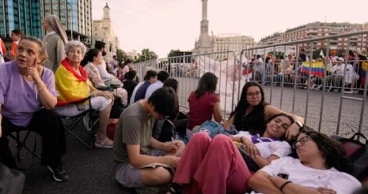
More than one million people gathered in central Madrid on Sunday for Pope Leo XIV’s main Mass and a grand religious procession featuring Spain’s traditional flower carpets, one of the country’s most iconic expressions of Catholic devotion.
The crowd filled Plaza Cibeles and surrounding streets, cheering loudly as the pope arrived in his popemobile. Many shouted, “This is the youth of the pope!” as he made his way through the packed venue surrounded by barricades.
Sunday’s Mass marked the Catholic feast of Corpus Domini, a day traditionally observed with processions in which priests carry the Eucharist through streets decorated with intricate floral designs. In Spain and other mainly Catholic countries, these flower carpets are a key part of the celebration.
Pope Leo XIV, who began his weeklong visit to Spain on Saturday, has been encouraging young people to connect with long-standing Catholic traditions and consider religious vocations.
At a vigil on Saturday night, around 600,000 young people joined the pope in prayer, many kneeling in silence. The large turnout suggested continued interest in religious life among youth in Spain, a country often described as highly secular.
“Don’t ever be afraid of thinking about a vocation to the priesthood or religious life, or other services in the church,” the pope told the gathering.
During the vigil, a young couple, Irati Valda and Javier Hormazal, who are set to marry on June 13, were invited close to receive the pope’s blessing after holding up a sign announcing their wedding plans.
“Seeing so many young people together is incredible. Half a million people in silence, it’s something you only experience once,” Valda said.
Organisers said about 1.2 million people attended Sunday’s Mass and procession under clear spring skies, with many more unable to enter the main area.
The flower carpet tradition, where detailed designs are created on streets and later destroyed as the procession passes over them, dates back around 200 years. It is also seen in parts of Latin America, where sand designs are used in similar rituals. The artworks are considered offerings to the Eucharist.
Spain’s Galicia region is among areas seeking UNESCO recognition for its tradition of flower carpets as part of global intangible cultural heritage, following Poland’s earlier recognition.
According to organisers, 16 floral carpets lined a half-kilometre procession route. More than 30,000 flowers were used, mainly in yellow and white to reflect the colours of the Holy See, along with religious symbols such as the keys of the Vatican.
Religious processions remain a strong cultural feature across Spain, especially during Holy Week, when brotherhoods carry statues of Christ and the Virgin Mary through the streets accompanied by music and large crowds of both worshippers and tourists.
Local fiestas also frequently honour patron saints, while pilgrimages such as Andalusia’s El Rocío draw up to a million participants who travel on horseback and decorated wagons in a mix of devotion and celebration.
Pope Leo XIV arrived in Spain on Saturday, calling for unity and an end to political polarisation. He is expected to meet members of his Augustinian order and address cultural leaders later on Sunday.
1 month ago
North Korea rejects US denuclearization push, vows to expand nuclear arsenal
The influential sister of North Korean leader Kim Jong Un has dismissed US calls for North Korea's denuclearization as an outdated fantasy, saying Pyongyang will continue to strengthen its nuclear capabilities in response to what it sees as threats led by Washington.
The remarks by Kim Yo Jong came a day before Chinese President Xi Jinping is scheduled to visit North Korea for talks with Kim Jong Un, marking his first trip to the country in seven years.
Kim Yo Jong said the United States has no authority to challenge North Korea’s status as a nuclear-armed state and described Washington’s position as unilateral rhetoric without legal force.
She also rejected US claims that President Donald Trump and Xi Jinping had reaffirmed their shared goal of denuclearizing North Korea during talks in Beijing last month, calling such assertions false.
According to Kim Yo Jong, some US officials remain trapped in what she described as an unrealistic and outdated view regarding North Korea’s nuclear programme.
North Korea has accelerated efforts to expand its nuclear weapons capabilities since diplomacy between Kim Jong Un and Trump collapsed in 2019. Analysts say Pyongyang seeks international recognition as a nuclear state to strengthen its position in negotiations and push for the removal of international sanctions.
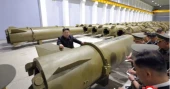
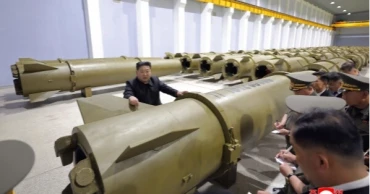
Last week, Kim Jong Un visited a newly built nuclear materials production facility and said the country's nuclear forces would grow at an “exponential” pace. North Korean state media reported Sunday that he also inspected a weapons factory a day earlier and ordered a 2.5-fold increase in missile production capacity under the current five-year development plan.
In her statement, Kim Yo Jong accused the United States and South Korea of continuing military build-ups, saying North Korea’s policy of strengthening its nuclear deterrent for self-defence is irreversible and will be pursued without conditions.
Experts say Xi’s visit is largely aimed at reinforcing China’s influence over North Korea at a time when Pyongyang has been drawing closer to Russia. They believe Xi is unlikely to press the denuclearization issue directly and may instead focus on economic cooperation and assistance.
North Korea has provided troops and conventional weapons to Russia to support its war in Ukraine. Officials in South Korea and the United States say Moscow has responded by offering economic and other forms of assistance to Pyongyang.
1 month ago
Fresh Gulf clashes test fragile Iran ceasefire
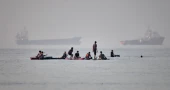
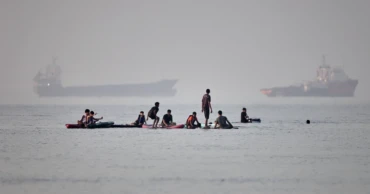
Iran fired ballistic missiles and drones toward Bahrain and Kuwait early Saturday, Bahrain’s government said, adding that they were intercepted. It called on Tehran to immediately cease attacks on Gulf neighbors that it deemed a “serious escalation.”
Iran’s foreign ministry said the U.S. early Saturday attacked surveillance facilities on Qeshm Island and near Sirik that it said were used to protect borders and “ensure the security of navigation in international waters.” Tehran called the attack a violation of the fragile ceasefire.
The latest exchange of fire came as the Trump administration pressed Iran to make a deal to end the war that has strained the global economy and threatened a hunger crisis in some of the world’s most vulnerable countries.
Iran said it targeted the U.S. military
The U.S. military earlier said it shot down several Iranian missiles and drones launched toward the Strait of Hormuz and Gulf Arab allies, and struck some of the Islamic Republic’s coastal surveillance radar sites in response.
“The attack drones posed an immediate threat to regional maritime traffic,” U.S. Central Command said on social media. It confirmed it hit radar sites, including an island in the strait, “to defend against further attacks.”
Iran’s Revolutionary Guard said it targeted the Ali Al Salem air base, which hosts U.S. forces in Kuwait, and the U.S. Navy’s 5th Fleet in Bahrain, according to the state-run IRNA news agency. The U.S. military said there were no reports of harm to U.S. personnel.
Earlier in the week, Iranian drones heavily damaged a passenger terminal at Kuwait’s main airport, killing one person and wounding dozens.
The U.S. military kept up its blockade on Iranian ports in response to Tehran’s chokehold on the crucial corridor for global oil and natural gas shipments, which has sent energy prices spiking and posed political problems for President Donald Trump’s Republican Party ahead of midterm congressional elections.
Trump promises a quick end to US-Iran conflict
Despite concerns that the ceasefire could collapse, Trump told reporters Friday that “the situation with Iran seems to be going quite well.” He told an event that “we’re going to come out of Iran very quickly and it’s going to be very strong one way or the other, whether it’s a piece of paper or the very tough way.”
Trump increasingly appears to be boxed in on the war. U.S. and Iranian negotiators reached a tentative agreement a week ago to extend the ceasefire by 60 days and start a new round of talks on Iran’s nuclear program. But Trump has called for unspecified changes and Iranian officials have shown no public sign of agreeing to the deal.
Asked on Friday why it was taking so long, Trump told NBC’s “Meet the Press” it was because “it’s a very hard thing for them.”
He added that the Iranians still have 21% to 22% of their missiles. One of the war’s stated aims was destroying Tehran’s missile program.
The ongoing fighting in Lebanon, where Israeli forces have seized large swaths of the south while saying it targets the Iranian-backed Hezbollah militant group, also challenges efforts to end the Iran war and reopen the Strait of Hormuz. Iran has demanded that any lasting truce extend to Lebanon.
The Trump administration has touted the latest ceasefire agreed to earlier in the week by the Lebanese government and Israel after U.S.-brokered talks in Washington. However, Hezbollah has rejected the agreement.
Israeli airstrikes on southern Lebanon on Saturday killed nine people including three members of the Lebanese military, the Lebanese army and state media said. Israel’s military said it was reviewing the incident and that it operates against Hezbollah and not the Lebanese army.
1 month ago

West Ham co-chairman David Sullivan quits
West Ham joint-chairman David Sullivan stepped down on Saturday ahead of what the English soccer club called “historic allegations” to be made against him by British media.
Sullivan was “made aware of the impending publication of serious historic allegations,” West Ham said.
The BBC said later Saturday that the broadcaster and the Times newspaper were due to publish a joint investigation into Sullivan's “behavior.” The BBC said its story will run on Monday.
West Ham said it “understood none of the allegations relate to West Ham United or any of its operations.”
The east London club added that Sullivan denied any wrongdoing but decided to step down to “avoid disruption” to the club while he handles the undisclosed matter “privately.”
It gave no further information on what the allegations could be or who would make them.
West Ham also separately published a statement from Sullivan, where he said he was planning to sue the BBC and other media for libel.
Sullivan said he became aware of “factually incorrect and entirely false, decades-old allegations concerning my personal life due to be broadcast and published.”
Sullivan, 77, published porn magazines and films in the late 1970s and 1980s.
“After a lifetime spent building businesses in the adult industry in which I have met thousands of women, it is sadly inevitable that a small number of improper conduct claims are being made against me. I categorically deny these claims," he said.
“None of these allegations relate to my more than 30 years in football.”
Sullivan got involved in soccer when he bought into Birmingham City in 1993. He left in 2009 and a year later bought a stake in West Ham.
West Ham was relegated from the Premier League this season.
The club said interim CEO Karim Virani would continue to manage the club’s daily operations.
West Ham was already dealing with the exit of vice chair Karren Brady in April.
David Gold, co-chairman of West Ham, was Sullivan's long-time business partner dating to his beginnings in adult entertainment and his ventures into soccer ownership. He died in 2023.
1 month ago
Lebanon’s proposed amnesty sparks debate as families of victims demand justice
Lebanon is preparing to introduce its largest amnesty in more than three decades, a move that could lead to the release of thousands of prisoners but has also triggered strong opposition from families of victims and exposed the country’s long-standing sectarian divisions.
The draft law, expected to be approved by parliament and signed by the president in the coming weeks, would replace death sentences with reduced prison terms, shorten life sentences and eventually allow the release of convicted militants, drug offenders and thousands of long-term detainees.
However, serious crimes including rape, human trafficking, corruption, financing terrorism and premeditated murder would not be covered by the amnesty. Those convicted of killing Lebanese soldiers could also receive reduced sentences.
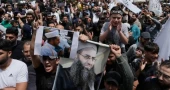
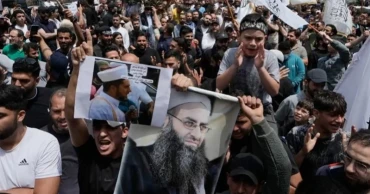
Among those opposed to the measure is Samira Bou Saab, whose son George, a Lebanese army first lieutenant, was killed in clashes with supporters of radical Sunni cleric Ahmed al-Assir in the southern city of Sidon in 2013.
Bou Saab said she had hoped to see justice carried out against her son’s killer, who was sentenced to death but could now benefit from the proposed law. She questioned why those convicted of killing soldiers should be allowed to reunite with their families while the families of victims continue to suffer.
Meanwhile, al-Assir’s wife, Amal Shamseddine, criticized the draft law from a different perspective, arguing that her husband is innocent and was targeted through a conspiracy involving Hezbollah. She said detainees such as her husband should have been released long ago.
The proposed legislation comes as Lebanon struggles with overcrowded prisons. More than 3,000 of the country’s nearly 8,600 detainees could be freed, including inmates who have spent at least 14 years in prison without trial.
Families of fallen soldiers have staged protests against the measure, placing dozens of empty military boots outside parliament in Beirut to symbolize their opposition.
Lebanon’s last major amnesty was introduced in 1991 following the end of the country’s 1975-1990 civil war, which killed an estimated 150,000 people. The measure was intended to promote national reconciliation after years of conflict involving militias, Palestinian factions, Syria and Israel.
The current proposal has once again highlighted Lebanon’s sectarian politics. Sunni lawmakers have pushed for the release of Islamist prisoners, Shiite politicians have advocated amnesty for drug-related offenders, while Christian lawmakers have sought leniency for Lebanese citizens who fled to Israel after Israeli forces withdrew from southern Lebanon in 2000.
Lawmaker Nabil Badr, a supporter of the bill, said the legislation has become entangled in political bargaining, with different groups seeking benefits for their constituencies.
One of those closely watching the debate is Maryam Younnes, who fled to Israel with her family as a child in 2000. She hopes the amnesty will allow her to return to Lebanon, visit her father’s grave and reunite with relatives.
However, she said her return would depend on broader political changes, including peace between Lebanon and Israel and the removal of Hezbollah’s weapons.
The draft law states that Lebanese citizens returning from Israel would be treated under a 2011 law requiring former members of the Israeli-backed South Lebanon Army to be detained and given a fair trial upon arrival.
Despite the political and security challenges, Younnes said she remains hopeful that relations between Lebanon and Israel will eventually improve, allowing her to return home.
1 month ago

Armenia heads to crucial election amid tug-of-war between Russia and the West
Armenia goes to the polls on Sunday in a high-stakes parliamentary election widely seen as a decision on the country’s geopolitical direction, as Prime Minister Nikol Pashinyan pushes for closer ties with the European Union and the United States despite long-standing links with Russia.
Analysts say Pashinyan’s Civil Contract party is still the frontrunner to retain control of parliament. However, several opposition groups campaigning on pro-Russia platforms have turned the vote into a broader contest over Armenia’s international alignment.
In the run-up to the election, Russian President Vladimir Putin and other officials have warned that deeper cooperation with the EU could severely damage Armenia’s economy by disrupting trade with Moscow and its allies.
“This is the first time in Armenia’s history where geopolitical orientation has become a decisive issue,” said analyst and former MP Mikayel Zolyan, speaking from Yerevan. “Armenia was long assumed to be within Russia’s sphere of influence. Now that is being questioned.”
Strained ties after Karabakh conflict
Relations between Yerevan and Moscow deteriorated sharply after Azerbaijan took full control of the Karabakh region in 2023. Armenia had supported ethnic Armenian forces there for decades in a long-running conflict.
Armenian officials accused Russian peacekeepers of failing to prevent the Azerbaijani advance. Russia rejected the claim, saying its forces had no mandate to intervene, as it was preoccupied with the war in Ukraine.
“The idea of Russia as Armenia’s security guarantor collapsed after the Karabakh war,” said Alexander Iskandaryan, director of the Caucasus Institute in Yerevan.
Since then, Pashinyan has taken cautious steps away from Moscow, including joining the International Criminal Court in 2023 and suspending participation in the Russia-led Collective Security Treaty Organization in 2024.
Armenia has also announced its intention to pursue EU membership and hosted the European Political Community summit in Yerevan in May.
A strong electoral mandate for Pashinyan would allow him to continue this Western shift and advance a potential peace deal with Azerbaijan.
Western support and incentives
Western countries have highlighted potential benefits of closer cooperation.
In August, US President Donald Trump hosted Pashinyan and Azerbaijani President Ilham Aliyev for an agreement aimed at ending decades of conflict, including plans for a new transit corridor linking Azerbaijan to its Nakhchivan exclave. A separate February agreement could allow a US firm to build a new nuclear reactor in Armenia.
European Commission President Ursula von der Leyen has also pledged EU support for Armenia’s energy sector and growing digital industry.
Trump has publicly backed Pashinyan, calling him a “great friend” and praising his leadership in making Armenia “strong, wealthy, and very secure.”
Opposition favors closer Russia ties
Armenia’s opposition remains largely pro-Russia and critical of normalizing relations with Azerbaijan. Several leaders have called for Pashinyan’s resignation over the loss of Karabakh.
A total of 19 political forces, including two blocs and 17 parties, are contesting the election.
Pashinyan’s main challenger is the Strong Armenia Party, which advocates closer economic ties with Russia and accuses the prime minister of risking conflict with Moscow. It is led by Armenian-Russian billionaire Samvel Karapetyan, who is currently on trial over alleged calls to overthrow the government. He denies the charges.
Former President Robert Kocharyan also leads the Hayastan bloc, which accuses Pashinyan of damaging ties with Russia.
Moscow’s economic pressure
Russia, which maintains a military base in Armenia, has warned that a Western pivot could carry serious political and economic consequences.
Putin has compared Armenia’s path to Ukraine’s, suggesting EU aspirations could trigger instability. Russian officials have also tightened import rules on Armenian goods, including flowers, wine, cognac, vegetables and dried fruits.
Armenia’s membership in the Russian-led Eurasian Economic Union has also come under review, with discussions of possible suspension.
At a recent meeting in Kazakhstan, Russia and its allies even called for Armenia to hold a referendum on whether it should remain in the bloc or pursue EU membership. Pashinyan has rejected the idea.
Government data shows 38% of Armenia’s exports in 2025 went to Eurasian Economic Union countries, mostly Russia, while only 8% went to the EU.
In response to Moscow’s measures, the EU announced a 50 million euro support package for Armenia, with von der Leyen accusing Russia of “weaponizing” economic ties.
Growing uncertainty and interference concerns
Russia’s influence remains strong, particularly through energy supplies and infrastructure control, including discounted gas exports.
“Armenia cannot realistically escape Russian influence in the short term,” analyst Zolyan said.
Meanwhile, civil society groups have raised concerns about Russian-backed disinformation campaigns ahead of the vote. Moscow denies any interference.
Daniel Ionnisyan of the Union of Informed Citizens told the Associated Press that monitoring groups have documented suspected Russian-linked activity, including social media manipulation, cyberattacks, vote buying and pressure on journalists.
Similar concerns were raised by a delegation from the Parliamentary Assembly of the Council of Europe, which reported evidence of foreign interference aimed at influencing Armenia’s political process.
“These hybrid tactics aim not only to shape public opinion but to secure long-term geopolitical leverage over Armenia,” the delegation said.
1 month ago
UN warns Iran war driving millions into hunger as food prices rise
The UN food agency has warned that the Iran conflict is pushing millions more people into hunger, with rising food and fuel prices worsening conditions in already fragile countries.
The World Food Programme (WFP) said new analysis shows an additional 2.5 million people in Somalia, 2.3 million in Afghanistan and 1.3 million in Sri Lanka are now struggling to afford basic food needs.
The agency had earlier estimated that up to 45 million more people could fall into food insecurity by the end of June, adding to the 318 million already facing acute hunger worldwide.
“We remain by that prognosis,” said Carl Skau, speaking to UN reporters. He said food insecurity is closely tied to energy prices, especially in poorer countries where families already spend most of their income on food.
The WFP said in a report released Thursday that the Middle East crisis is creating wider global “spillover effects,” driving up fuel and food costs and disrupting trade routes.
It warned that these pressures are likely to worsen in the coming months, even if the situation in the Middle East stabilises
The agency also pointed to other hunger hotspots, including Sudan, Gaza, southern Lebanon, Yemen and Haiti.
The Rome-based organisation said it has been forced to reduce food assistance in several countries due to funding shortages, and urged donors to increase support urgently, particularly for Somalia and Afghanistan, warning that the humanitarian consequences could be severe if aid does not increase.
1 month ago
‘Cockroach Janta Party’ gets nod for Jantar Mantar protest demanding Education Minister’s resignation
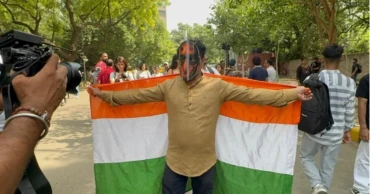
The Delhi Police on Saturday morning granted permission for a protest at Jantar Mantar organised by the social media platform “Cockroach Janta Party,” which is demanding the resignation of Education Minister Dharmendra Pradhan over the NEET examination paper leak controversy.
The demonstration was called by the online group to seek accountability in the alleged leak case. Its founder, Abhijeet Dipke, arrived in Delhi from the United States on Friday to lead the protest.
Police officials reportedly met Dipke at the airport and allowed him to proceed directly to the protest site. Earlier, he had asked supporters to gather at the Parliament Street Police Station to obtain permission, but later redirected them to Jantar Mantar after clearance was granted.
Dipke was seen arriving at the airport carrying a copy of BR Ambedkar’s autobiography.
Authorities have deployed tight security arrangements in central Delhi, with around 2,000 police personnel stationed at and around the protest venue.
A pamphlet distributed by the group at the site said the protest aims to demand accountability, justice, and the resignation of the education minister. It also claimed that an online petition supporting the demand had gathered more than 8 lakh signatures.
The “Cockroach Janta Party,” a satirical digital movement launched by Dipke on May 16 following controversy linked to remarks attributed to Chief Justice of India Surya Kant, quickly gained widespread attention and amassed a large following on social media platforms.
Source:NDTV
1 month ago
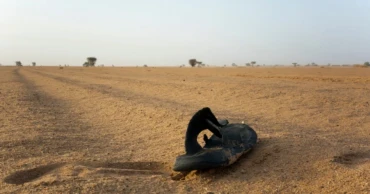
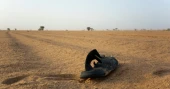
49 die of thirst after truck breaks down in Niger desert
At least 49 people have died from dehydration after a truck carrying passengers broke down in the Sahara Desert in northern Niger, leaving them stranded for several days, authorities said.
According to officials in Niger’s Agadez region, all of the victims were Nigerien citizens returning home from a religious festival in neighboring Mali when their vehicle stalled more than 80 kilometers west of Assamaka, near the borders with Mali and Algeria.
Two survivors managed to walk over 50 kilometers to reach a water source before continuing on to Assamaka, where they alerted local authorities about the incident.
A team dispatched by Agadez Regional Governor Gen. Ibra Boulama Issa later confirmed that the truck had been traveling for several days from Talhandek, a town in Mali located about 300 kilometers from the Niger border.
Authorities have not yet determined what caused the breakdown or how long the passengers remained stranded.
Officials described a grim scene upon arrival, saying dozens of bodies were found beneath and around the immobilized truck.
Reports said the passengers, including the driver and assistant, were unable to repair the vehicle and were left without water in extreme desert conditions, where high temperatures and the absence of supply points made survival nearly impossible.
Photos released by regional authorities showed scattered belongings and bodies across the desert landscape.
The victims were later buried in mass graves at the site in what officials described as a difficult and emotionally exhausting operation.
1 month ago
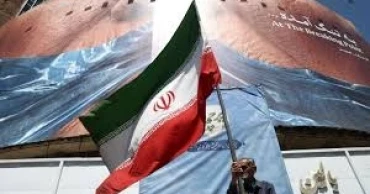
Iran fires missiles toward Kuwait and Bahrain after clash with US
Iran launched seven ballistic missiles toward Kuwait and Bahrain, according to the U.S. Central Command (CENTCOM), in a further escalation of tensions following a confrontation between U.S. and Iranian forces.
The missile launches came only hours after the U.S. military intercepted Iranian attack drones heading toward the Strait of Hormuz and carried out strikes on Iranian radar installations, reports Al Jazeera.
CENTCOM said preliminary assessments showed that six of the seven missiles were successfully intercepted, while the seventh failed to reach its intended destination.
The command also stated that there were no reports of injuries or casualties among U.S. personnel. Additionally, it rejected Iranian claims that the missile attack had damaged the headquarters of the U.S. Fifth Fleet in Bahrain, describing those assertions as false.
1 month ago