others
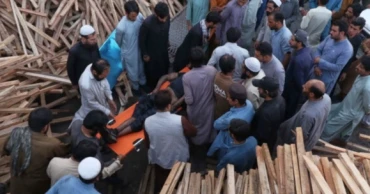
Coal mine blast in Pakistan kills 32, traps 10 miners
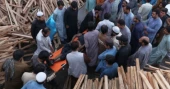
At least 32 miners were killed and 10 others remained trapped underground after a methane gas explosion at a coal mine in southwest Pakistan on Thursday.
The blast occurred at a mine on the outskirts of Quetta, the capital of Baluchistan province, government mine inspector Ghani Baloch said.
Seven bodies were recovered several hours after the explosion, while rescue teams later found 25 more, officials and the provincial disaster management agency said.
Rescue operations were continuing to locate and bring out the remaining trapped miners.
Baloch said rescuers would continue their efforts until all the trapped workers were found, but warned that the death toll could rise.
He said the chances of finding survivors decrease after methane explosions because oxygen levels inside the mine can fall sharply. Rescuers were also moving cautiously because of the dangerous conditions.
Authorities were handing over the recovered bodies to their families for burial, while relatives of the trapped miners waited anxiously for updates, Baloch said.
Baluchistan Mines and Minerals Minister Shoaib Nosherwani said rescue teams were working in extremely difficult conditions. He expressed condolences to the families of the victims and announced compensation of 500,000 Pakistani rupees (around $1,800) for each miner who died.
He also said authorities would investigate the cause of the explosion and review safety measures at coal mines.
A coal miners' union, meanwhile, blamed possible negligence for the accident and called for action against those responsible.
The Pakistan Central Mines Labour Federation urged the government to strictly enforce mine safety rules and take strong action against companies that fail to comply with safety regulations.
Deadly accidents are frequent in Pakistan's coal mining sector, particularly in Baluchistan, where many mines lack proper ventilation, gas monitoring systems and other basic safety facilities.
Mine workers and labour groups have long accused mine owners of failing to enforce safety rules and provide adequate protective equipment.
Despite the dangerous working conditions and low wages, thousands of people depend on coal mining for their livelihoods in Baluchistan, Pakistan's largest and least developed province, where poverty and unemployment remain widespread.
3 days ago
World Cup banner fuels Malvinas identity among young Argentines
It took a World Cup to transform a remote cluster of islands that’s home to more sheep than people into a cultural juggernaut.
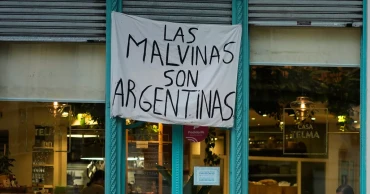
A decision by Argentina’s players to unfurl a banner about the disputed Falkland Islands after defeating England in the World Cup semifinals carried a historical cause onto the T-shirts, bedroom walls and Instagram feeds of a new generation. In the weeks since, the image that has endured from the tournament in soccer-crazed Argentina hasn't been of Lionel Messi. It’s been the crudely painted sign reading: “The Malvinas are Argentine.”
The South Atlantic archipelago, known in Argentina as the Malvinas, is claimed by both Argentina and Britain, which fought a 10-week war over the territory in 1982.
The banner spawned a marketing bonanza in Argentina, appearing on stickers, tote bags, sneakers, artwork and soccer jerseys. It was draped over bars, painted onto subway walls and tattooed onto calves and forearms. Thousands of Argentines downloaded “Malvinas Sans,” a typeface modeled on the banner’s hand-painted lettering. Colorful murals of the islands and of war veterans popped up across the country.
“The World Cup is now over, and yet people are still talking about the Malvinas because the Malvinas somehow became part of the World Cup,” said Edgardo Esteban, an author and veteran of the war. “Kids in schools are asking me, ‘What’s this Malvinas thing?’ Now there’s a passing of the torch.”
From repressed trauma to state symbol
None of Argentina’s players had been born when the country’s military dictatorship invaded the Malvinas in 1982, holding the islands for 73 days before British forces recaptured them in a war that killed 649 Argentine and 255 British troops.
But they grew up in a country haunted by the humiliation of that ill-fated invasion, widely seen as a desperate bid for popularity by the weakened junta that fell a year later. As Argentina emerged from the trauma of the brutal dictatorship, many veterans and families of conscripts killed in the war felt their sacrifices had been sidelined by a nascent democracy that sought to distance itself from the disaster.
“As veterans, we spent a long time feeling silenced, forgotten, pushed aside,” Esteban said.
It took a different World Cup to break that silence. When Argentina played England in the quarterfinals in Mexico City in 1986, Argentine soccer great Diego Maradona scored two goals — including his notorious handball known as the “Hand of God,” which he dedicated to those killed in the war and said was revenge for the Malvinas.
Over the decades, Argentina’s claim on the islands became enshrined in its constitution. The Malvinas appeared on road signs. Each year, the country's leaders honor the war dead with wreath-laying ceremonies.
The islands, which lie 480 kilometers (300 miles) off Argentina’s coast, are home to some 3,600 people, roughly 450,000 sheep and over 1 million penguins, according to government figures.
A daring display sparks backlash
Ahead of this year's semifinal against England, Argentine Security Minister Alejandra Monteoliva warned fans that Malvinas-themed signs would not be allowed inside the stadium due to FIFA’s ban on political messages.
As Argentine players ran onto the field to celebrate their victory, supporters tossed what appeared to be a white bed sheet onto the pitch. Midfielder Giovani Lo Celso pulled it open to reveal the message hand-painted in bold black letters: “Las Malvinas son Argentinas,” or “The Malvinas are Argentine.” Teammates Cristian Romero and Lisandro Martínez helped spread the banner wide before TV cameras and cheering fans.
After the match, British politicians and fans took to social media to vent their anger, helping amplify a wave of online posts criticizing both Argentina and its national team, digital researchers said.
On Wednesday, FIFA charged Argentina’s soccer federation for players parading the banner.
‘Malvinas mania’ grips Argentina
In Argentina, the banner became a sensation, eclipsing for many both the disappointment of the team's defeat to Spain in the final and the flood of hostile commentary.
“Despite not having won the tournament or brought home the trophy, every single player was welcomed back as a popular hero,” said Juan Rattenbach, an Argentine political expert on the Malvinas.
Iván Marcasiano, 36, owns a Buenos Aires print shop that has struggled to keep up with explosive demand for T-shirts printed with players holding the banner.
“The players had the courage to display a flag on the field that fans had been banned from bringing into the stadium. That gesture, showing that it’s up to ordinary Argentines to carry our demands forward, really resonated with young people,” Marcasiano said.
“They reached an audience that might never have participated in this kind of activism or historical remembrance before.”
When Marcasiano offered on Instagram to screen-print the image onto fans’ Argentina jerseys free of charge, 3,500 people — from teenagers to war veterans — showed up at his shop in a single day, he said.
When pop culture meets politics
It remains unclear if the Malvinas frenzy is a flash-in-the-pan obsession or evidence of a lasting resurgence of the political cause.
Activists have scrambled to harness the momentum. They are invoking national sovereignty to rally opposition to libertarian President Javier Milei's free-market agenda, including legislation that would loosen restrictions on foreign land ownership in Argentina.
But experts said the real political impact may lie beyond Argentina: introducing tens of millions of viewers worldwide to a dispute over a chain of islands few could have found on a map. Global Google searches for the Malvinas jumped 2,400% after Argentina’s semifinal against England, according to Google Trends, the largest increase in search interest since the platform began tracking data.
“Britain’s strategy since 1982 has been to keep the issue of the Malvinas out of the spotlight,” Rattenbach said. “Now, no one can deny its visibility.”
3 days ago
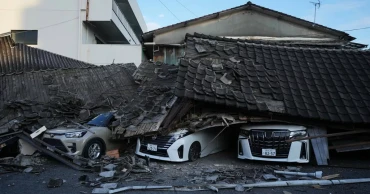
Death toll from Japan quake climbs to 34
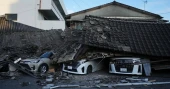
The death toll climbed to 34 from a powerful earthquake in southwestern Japan that set off an explosion at a mall, toppled a factory chimney and flattened homes, the Kumamoto prefectural government said Friday.
The magnitude 7.1 earthquake hit Japan’s southern main island of Kyushu on Tuesday.
Officials said 34 deaths had been confirmed as related to the disaster, with one more death still under investigation. Dozens of people were injured.
More than 3,500 homes were still without electricity, according to Kyushu Electric Power Co. Authorities said more than 9,000 people were staying in shelters, where power sources were being added to provide air conditioning.
In the days since the quake, concerns have grown about illness, including from the sweltering heat. Temperatures Friday were due to rise to 36 C (97 F) in Kumamoto city, according to the Japan Meteorological Agency, after stifling 35 C (95 F) heat on Thursday.
Searchers continued to work in the Kumamoto area on Friday, including at the site of the collapsed Aeon Mall shopping center in the town of Kashima, where some of the most serious damage was recorded. The complex was bustling with thousands of people when the quake happened.
The company said about 3,000 shoppers were evacuated to a parking lot before an explosion happened in another part of the mall, where some staff remained working. The mall’s second floor collapsed, trapping people.
At the site, seven people were confirmed dead and 11 had been rescued, Japanese Chief Cabinet Sec Minoru Kihara told reporters in Tokyo on Friday. Authorities didn't say how many were still missing.
Meanwhile, a search operation had ended at a Nippon Paper Industries factory in the Yatsushiro area where a chimney collapsed in the quake, Kihara said. Searchers rescued 11 people there, while nine others were confirmed dead.
3 days ago
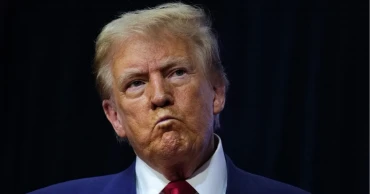
Trump unveils Gaza disarmament deal, but burdles and uncertainty remain
US President Donald Trump said Thursday that a deal has been reached for Hamas to disarm and Israel to withdraw its forces from Gaza, but many hurdles, conditions and long timelines remained to wind down the war in the Palestinian territory. Neither Hamas nor Israel gave immediate indication that they had agreed.
The White House announcement comes nine months after a U.S.-brokered ceasefire was signed. Negotiations between Israel and Hamas had largely deadlocked over the implementation of its second phase, including the disarmament of Hamas and the reconstruction of Gaza.
“The agreement will be carried out in carefully structured phases,” Trump said on social media. “As disarmament is completed, Israeli forces will withdraw, and the International Stabilization Force will work with a new Palestinian police force to take responsibility for Gaza being safe for its residents and its neighbors.”
Trump’s 20-point ceasefire plan calls on the militant group to surrender its weapons and destroy its vast network of tunnels. It also envisions Israeli forces withdrawing from Gaza, the arrival of a new technocratic Palestinian government, deployment of an international security force and the rebuilding of the battered Palestinian enclave.
Trump announced what he said was an agreement to realize one of the most difficult portions of the Gaza ceasefire while negotiations have stalled and military attacks have escalated in the war that the U.S. and Israel in February launched against Iran, a key sponsor of Hamas.
Officials offer long or unspecific timelines for Hamas to disarmU.S. and Board of Peace officials, describing the deal to reporters on condition of anonymity under guidelines set by the White House, gave an extremely optimistic assessment of the agreement that laid out a scenario very similar to the one described by Trump and his top aides when the Board of Peace, an international body established by Trump to oversee the ceasefire in Gaza, was first formed.
The officials were unable to offer specific timelines for the disarmament of Hamas or other groups that operate in Gaza, such as Palestinian Islamic Jihad, but said the Gaza police force would turn over weapons to the technocratic Board of Peace-backed Gaza administration in the next two weeks.
The Gaza police force, however, does not include the vast majority of Hamas militants and heavy weaponry is not included in that part of the agreement, according to the officials.
Instead, the surrender of heavy weapons and the decommissioning of Hamas tunnels and other infrastructure are to come later in a process that could take between 200 and 350 days, a Board of Peace official said.
Israel has not responded but has been deeply skepticalA U.S. official said Israel, which has been deeply skeptical about Hamas’ willingness to give up its guns or relinquish at least behind-the-scenes control of Gaza, had been consulted at every step of the negotiation.
However, the official said Israel was not being asked to do anything more than what it had initially committed to when it agreed to Trump’s 20-point plan, which essentially involves withdrawing its forces from Gaza and committing to ending airstrikes on the territory.
The official said Trump would be “very, very disappointed” if Israel didn't adhere to the agreement. Trump and Israeli Prime Minister Benjamin Netanyahu met at the White House on Tuesday, but neither said much about what was discussed in their first face-to-face meeting since launching the war against Iran.
Israel’s U.N. Mission said it had no immediate comment.
The official added that Iran remains a wildcard in the equation because although it counseled Hamas members not to accept a deal, it is also not in a position to offer the group much support because it is preoccupied with the conflict with the United States.
Hamas previously had insisted on implementing the first phase of the ceasefire before moving to discuss its weapons. The group’s founding charter calls for armed resistance against Israel, and it has been reluctant to give up an arsenal, including rockets, anti-tank missiles and explosives, that lies at the heart of its identity.
Hamas announced earlier this month, however, that it had dissolved its government in Gaza and was preparing to transfer power to a technical committee backed by the United Nations as part of the ceasefire deal.
The war in Gaza began after the Hamas-led attack on southern Israel on Oct. 7, 2023, killed around 1,200 people and saw 251 taken hostage. Israel’s retaliatory offensive in Gaza has killed more than 73,000 Palestinians, including those killed since the ceasefire, Gaza’s Health Ministry said.
Israel’s military now controls more than half of Gaza, leaving Palestinians confined to squalid tent camps and heavily damaged urban neighborhoods.
3 days ago
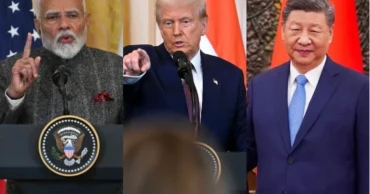
US Senate advances Russia sanctions bill with 100 % tariff threat against India, China
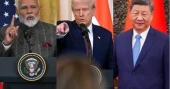
The US Senate has advanced a bipartisan bill that would impose tougher sanctions on Russia and allow President Donald Trump to levy tariffs of up to 100 percent on goods from major buyers of Russian oil and gas, including China and India.
The measure, which also includes new penalties against Iran, passed a key Senate vote 86-12, comfortably crossing the 60-vote threshold needed to move forward. Nearly all Republicans and a majority of Democrats backed the bill.
The Senate action came hours after lawmakers paid tribute to the late Senator Lindsey Graham, who had spent more than a year building bipartisan support for the legislation. It also followed a meeting between senators and Ukrainian President Volodymyr Zelensky, who was in Washington to honor Graham, a strong critic of Russian aggression.
What the bill says
The legislation would impose sanctions on Russian officials, oligarchs, financial institutions and vessels in the so-called “shadow fleet” that Moscow uses to bypass restrictions on its oil exports.
It would also give Trump the authority to impose tariffs of up to 100 percent on goods from the world's five biggest buyers of Russian oil or natural gas, including China and India.
However, the bill includes exemptions for countries that get less than 15 percent of their natural gas from Russia and are taking steps to reduce their dependence on Russian energy.
At Trump's request, the revised legislation also extends sanctions targeting Iran's energy and weapons sectors.
The bill is named after Graham, who played a key role in securing support for the measure and reached an agreement with the White House on a revised version shortly before his death earlier this month.
Supporters say the legislation would cut Russia's energy revenues and limit President Vladimir Putin's ability to finance the war in Ukraine, which has entered its fifth year.
“There is no greater way to honor Senator Graham's legacy than to move forward with this bipartisan agreement,” six Republican and Democratic senators said in a joint statement.
While there is broad support in Congress for imposing tougher penalties on Russia, some Democrats have expressed concerns that the tariff provisions could give Trump too much power.
They also warned that the tariffs could increase import costs for US consumers and potentially hurt European allies.
The legislation must still clear the House of Representatives before it can be sent to Trump for his signature. The House has already left Washington for its summer recess and is unlikely to take up the bill before September.
Source: NDTV
4 days ago
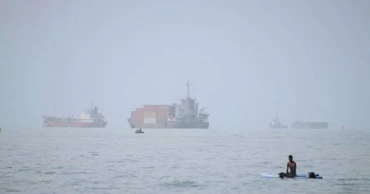
Jordan says air defenses intercept five missiles launched from Iran
Jordanian air defenses intercepted five missiles launched from Iran early Thursday, the state-run Petra news agency reported, hours after the US military said it had carried out a major new wave of strikes against Iran.
No casualties were reported in Jordan following the missile interceptions, Petra quoted a spokesman for the Jordanian armed forces as saying.
The US Central Command said in a social media post that American forces had spent more than two hours striking “dozens” of targets linked to Iran’s Islamic Revolutionary Guard Corps.
The targets included military command centers, missile and drone facilities, and coastal surveillance and defense sites, according to the command.
The strikes came hours after US President Donald Trump vowed to hit Iran “very hard” after Iranian forces targeted a US military base in Jordan.
Iranian state media reported that two people were injured in attacks on Qeshm Island in the Strait of Hormuz. Explosions were also reported in Khuzestan province in southwestern Iran.
The latest escalation followed US and Saudi strikes on Iran-backed militias in neighboring Iraq on Wednesday. At least 20 fighters and six Iranian advisers were reportedly killed in those attacks.
In another development, drone strikes set fire to two natural gas vessels at Egypt’s port of Damietta, British maritime security company Ambrey said.
It was not immediately known who carried out the attacks on a US-owned floating storage facility and a Greek-owned tanker. No injuries were reported.
The renewed violence on several fronts after days of relative calm raised fears that the conflict could again escalate into a full-scale war.
The developments also highlighted the challenges of ending a five-month conflict that has disrupted the global economy and become increasingly unpopular among Americans.
The continued fighting could also increase concerns that the US is using up its already limited stocks of advanced weapons needed to protect its military bases and allies.
4 days ago
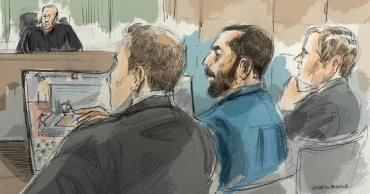
Salman Rushdie attacker declines to testify as terrorism trial nears jury stage
The man accused of stabbing author Salman Rushdie has decided not to testify or present any defence witnesses in his federal terrorism trial, with the case expected to go to the jury as early as Wednesday.
Hadi Matar’s lawyer Nathaniel Barone informed the court on Tuesday that the 28-year-old would not take the witness stand. “At this time, the defense rests,” Barone told the court. Matar has pleaded not guilty to charges, including carrying out an act of transnational terrorism.
Federal prosecutors also concluded presenting their case on Tuesday, and closing arguments are scheduled for Wednesday morning.
Rushdie, the award-winning author of books including Midnight’s Children and The Satanic Verses, testified last week about the 2022 attack that nearly killed him and permanently damaged his eyesight.
The attack occurred while Rushdie was preparing to deliver a lecture on protecting writers at the Chautauqua Institution, an arts and intellectual retreat in New York. Prosecutors said Matar rushed onto the stage and stabbed Rushdie 15 times in front of the audience.
Witnesses and another speaker, Henry Reese, helped restrain the attacker until police officers assigned to the event arrested him.
Prosecutors allege that Matar was motivated by a 1989 death order, or fatwa, issued by Iran’s then-Supreme Leader Ayatollah Ruhollah Khomeini against Rushdie following the publication of The Satanic Verses, which sparked protests in several Muslim-majority countries.
Rushdie, who was born in India to a Muslim family and later became a US citizen, spent years in hiding after the fatwa was issued. He gradually returned to public life after Iran’s government distanced itself from Khomeini’s order in 1998.
US prosecutors claim Matar, a US-born citizen of Lebanese descent, acted in support of Iran and the Lebanon-based Hezbollah militant group. They have presented evidence that Matar began researching Rushdie’s location in 2020 and later wrote private notes expressing intentions to kill him.
Iran has denied involvement in the attack, although Iranian officials at the time said Rushdie had brought the situation upon himself by insulting Islam.
Matar also chose not to testify during his 2025 state court trial, where he was convicted of attempted murder and is currently serving a 25-year prison sentence.
His defence lawyer has argued that prosecutors have failed to prove Matar’s motives, saying there was no direct evidence showing his intentions.
Barone on Tuesday unsuccessfully sought dismissal of the federal case, arguing that prosecutors had not presented sufficient evidence. The judge rejected the request.
If convicted in the federal terrorism case, Matar could face a maximum sentence of life in prison.
6 days ago
Berlin Pride attack suspect killed
The suspect in the deadly Berlin Pride attack that left one person dead and 29 injured was shot and killed by police during a confrontation on Sunday in a suburb of the city, authorities said.
Abdul Ballout, a German citizen with Lebanese roots, was killed following a search that lasted nearly 24 hours after the attack in downtown Berlin. Prosecutors said he had previously sought to join the militant Islamic State group.
Ballout was suspected of driving a van into a crowd near Berlin’s Pride festival Saturday night before apparently stabbing others with a machete in what authorities believe was an Islamic extremist terror attack.
Interior Minister Alexander Dobrindt said the attack occurred a few hundred meters (yards) from a party near the Brandenburg Gate that was supposed to close out the city's Pride festival.
Ballout was tracked down around 6 p.m. Sunday at a garden in Spandau, a Berlin suburb, the city's police department wrote on X. They said he apparently ran toward officers with a sharp instrument, and police fired at least one shot. He died at the scene.
Ballout was born in Germany, the minister said. His mother was naturalized in 2002, three years before he was born.
Ashley Jump, a 26-year-old U.K. resident, had traveled to Berlin for Saturday’s Pride parade but had left the celebrations before the attack. They returned Sunday to leave flowers at a memorial near the crime scene in support of the LGBTQ+ community.
“They’ll never erase us, we’ll never be gone,” they said. “As long as humanity has existed, we’ve existed. And as long as humanity exists, we will exist. We will not be removed.”
Suspect convicted of ties to Islamic extremism
Ballout traveled to Lebanon in 2025 with the goal of going to Syria to join the Islamic State group, Berlin prosecutors said Sunday.
There, he made contact with several people who were presumed members of the militant group — or at least he believed them to be, prosecutors said. He was arrested in Lebanon last year and sentenced by a military court to three months’ imprisonment for offenses including incitement to religious and sectarian conflict.
He returned to Germany after completing his sentence, where he was arrested at the Berlin airport.
In May, a juvenile court in Berlin convicted Ballout of preparing a serious act of violence endangering the state, as well as publishing Islamic State propaganda on his Instagram account and other charges, prosecutors said.
The court handed down a suspended sentence of 1 year and 10 months in youth custody, which Berlin prosecutors had appealed.
The court said it took Ballout’s months of pre-trial detention in Germany and Lebanon into account. It also said it considered that Ballout had confessed to the crimes, appeared to distance himself from the militant group and no actual threat had ever materialized.
He was released from detention pending the appeal.
Berlin's Pride festival is one of Europe's largest LGBTQ+ celebrations
According to police, a white van drove into the Tiergarten park around 10 p.m. and hit several people before colliding with a tree. The closing party at the Pride festival, known as Christopher Street Day, was ongoing at the time next to the Brandenburg Gate, a short distance away. The party followed a parade with some 80 trucks that had made its way through downtown Berlin earlier in the day.
The attack did not occur at the festival, along its route or at the closing party. Rather, the violence took place a few hundred meters (yards) away on a track in the Tiergarten park. The van drove into a crowd that was likely a mix of festivalgoers and other locals or visitors.
Police said a woman was killed.
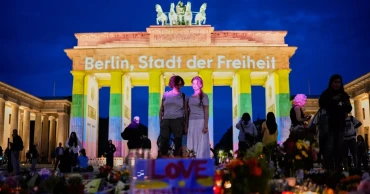
On Sunday afternoon, hundreds of mourners gathered at a memorial at the iconic gate. They hugged each other and laid down flowers, candles, rainbow flags and homemade signs, including a cardboard one that said: “the only thing more powerful than hate is love.”
Hundreds of thousands had come to Berlin to celebrate on Saturday, though it’s unclear how many were still at the festival by late evening. It’s one of Europe’s largest LGBTQ+ celebrations.
“We are simply stunned by what happened,” said Andre Lehmann, a top official with the main national LGBTQ+ association, LSVD+. “This suspected attack hits the heart of the queer community.”
Amsterdam says it will celebrate freedom in the wake of Berlin attack
Chancellor Friedrich Merz urged the nation to remain united in the aftermath of the attack.
“I would like to say this to Christopher Street Day participants here in Berlin but also across Germany: Don’t let yourselves, let us not let ourselves, be intimidated," he said. "These acts have only one purpose: They aim to divide our society. They want to take away from us the most important thing we have: Namely our openness and our freedom.”
Dobrindt said he expected security measures at other major events in Germany, including Pride events elsewhere, to be reviewed and if necessary significantly boosted.
Berlin has seen Islamic extremist attacks before. In December, 2016, a rejected asylum seeker from Tunisia plowed a hijacked truck into a Christmas market, killing 13 people and injuring dozens. He was killed days later in a shootout in Italy.
In February last year, a Spanish tourist was stabbed and seriously wounded at Berlin’s Holocaust Memorial, an attack that saw a Syrian man convicted in March and sentenced to 13 years.
This week, Amsterdam will be hosting World Pride alongside its own annual Pride celebrations. Mayor Femke Halsema said authorities and organizers “are closely monitoring the security situation” after the Berlin attack but aim to prevent any extra measures getting in the way of celebrating freedom and love.
7 days ago

Oil prices ease after US and Iran pause their attacks
Oil prices eased in early trading Sunday, falling further from a two-month high set last week, after the United States and Iran refrained from launching military strikes in the Persian Gulf for a second straight day.
The price for a barrel of Brent crude oil to be delivered in September dropped 4.9% to $92.02 shortly after trading resumed. The decline followed a 3.9% drop on Friday.
Brent crude, the international standard, briefly hit $102 a barrel last week. That was $30 more than the most actively traded contract in the Brent market was going for early in the month, and the highest it had been since May.
Oil prices surged this month because of increased fighting in the Middle East and worries a return to all-out war would further slow the global flow of crude.
The ability of tankers to pass safely through the Strait of Hormuz has been the central concern for the oil market since the U.S. and Israel attacked Iran in late February. The narrow strip of water off Iran’s coast is the route through which a fifth of the world’s oil typically leaves the Persian Gulf and heads to customers worldwide, and the conflict has largely halted shipping traffic.
Oil producers have since searched for alternative routes, but those are under pressure too. Last week, attacks hit Saudi oil tankers that were using the Red Sea to leave the region. When less oil is available for customers to buy, the price goes up and fuel prices do as well.
In the United States, the average price for a gallon of regular gasoline on Sunday was $4.11, up from $3.90 a month ago and just $3.15 a year ago, according to motor club AAA.
If oil prices stay elevated, it could lead to higher prices for every product that gets shipped, trucked or flown around the world, including groceries. Although the U.S. economy continues to grow, the ongoing conflict with Iran has dragged consumer confidence in it lower.
The reacceleration of oil prices this month took place just as inflation had begun to slow more than economists expected. Now, traders believe inflation pressures have grown enough that they’re betting on a 36% chance the Federal Reserve will hike its main interest rate at an upcoming meeting, according to data from CME Group.
Higher interest rates would help keep a lid on inflation, but they could also slow the economy by making it more expensive for all kinds of Americans and businesses to borrow.
Long-term U.S. mortgage rates have already hit their highest levels in nearly a year, for example, chilling the housing industry. And more expensive borrowing could slow the boom in building artificial-intelligence data centers, which have become a big engine for the U.S. economy's growth.
While oil prices have given back some of their big July gains, much uncertainty still remains.
The price for a barrel of benchmark U.S. oil to be delivered in September fell 5.6% to $84.34 on Sunday. It dropped 3.1% on Friday.
In the oil market, traders are buying and selling contracts for barrels of oil to be delivered many months in the future. The price for a barrel of Brent crude to be delivered in October, which is now the most actively traded part of the market, fell 4.6% to $87.48.
8 days ago
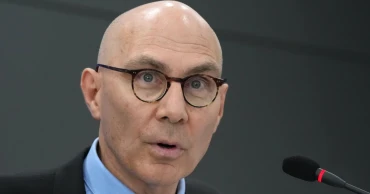
Volker Türk wins second term as UN human rights chief despite opposition from US, Israel and Russia
U.N. human rights chief Volker Türk won a second term Friday despite opposition from the United States, Russia and Israel to keep him in one of the most controversial United Nations posts for four more years.
U.N. member nations rejected a U.S. proposal to delay the vote until the end of next week as well as a Russian proposal to extend Türk’s term just until the end of the year. The vote in the 193-member General Assembly to reappoint Türk was 144-10, with 13 abstentions.
While he got strong support, the votes and speeches also reflected concern that Secretary-General António Guterres quietly nominated the Austrian lawyer this month after private consultations, with no public discussion, as the U.N. chief nears the end of his own 10-year tenure.
Türk’s job as the U.N. rights chief, by its nature, is tricky: It requires speaking out against rights violations by the governments of the countries that make up the membership of the world body. For instance, Türk has sharply criticized Russia’s 2022 invasion of Ukraine.
Türk got wide support but loud pushback from the U.S. and Israel
Türk, whose term was supposed to expire on Oct. 11, has faced opposition from critics and some countries for his criticism of Israel’s attacks in Gaza and his approach to China’s crackdown on its Uyghur minority. None of Türk’s predecessors have served two full terms since the job was created in 1993.
U.S. deputy ambassador Jeff Bartos warned before the vote that reappointing Türk would prove that the General Assembly “is dysfunctional” and that the vote “was quietly shoved onto the agenda at the last minute to bypass meaningful review.”
“Make no mistake, if this assembly tolerates procedural overreach, backroom deals and the misuse of U.N. posts, there will be consequences,” he warned. “The United States will immediately reassess our engagement, participation and funding.”
The Trump administration already owes nearly $4 billion to the U.N. for its regular dues and for the separate budget for U.N. peacekeeping operations.
Russia’s deputy ambassador, Dmitry Chumakov, said Guterres had sown discord among U.N. members and accused Türk of “political bias” and promoting “Western geopolitical interests under the pretext of concern for human rights.”
Speaking for the European Union, Ireland’s U.N. Ambassador Fergal Mythen reaffirmed the 27-nation bloc’s “wholehearted support” for Türk.
“The European Union believes that Mr. Türk has demonstrably fulfilled responsibilities entrusted to him effectively and with integrity in an objective and non-selective manner over the past four years,” Mythen said. He takes on another term when “the multiplication of obstacles and challenges and rights violations is relentless, and the promotion and protection of all human rights becomes ever more contested.”
Guterres, whose own second five-year term ends Dec. 31, sent letters to regional groups at the United Nations this month informing them of his intention to reappoint Türk. The African group had no objection, but the Latin American countries had several, including Nicaragua, Argentina and Paraguay.
Before the vote, Israel’s Foreign Ministry called Guterres’ action to get a second term for Türk the U.N. secretary-general’s “latest moral failure,” saying on social media that the choice should be left to his successor.
“After years of bias against Israel, the answer is accountability — not rewriting the rules,” the ministry said.
Guterres is ‘following the rules’ on the reappointment, UN says
U.N. spokesman Stephane Dujarric says Guterres was following the 1993 resolution that established a U.N. high commissioner for human rights and allows for a second term.
“The secretary-general is doing things in a very transparent manner, following the rules and his authority,” Dujarric told reporters Friday. “Consultations were had with member states prior to this and with regional groups.”
As human rights chief, the longtime U.N. functionary who worked for Guterres at United Nations headquarters in New York, Türk has expressed concerns on issues in China as diverse as the fate of detained individuals — like artist Gao Zhen, lawyer Yu Wensheng and media mogul Jimmy Lai — and counterterrorism and assimilation practices that affect ethnic minorities including the Uyghurs in the regions of Xinjiang, Inner Mongolia and Tibet.
Critics insist he could have done more to publicly follow up on a report issued by his predecessor, former Chilean President Michelle Bachelet, that said China’s discriminatory detention of Uyghurs and other mostly Muslim ethnic groups in Xinjiang may amount to crimes against humanity.
Türk also has stopped short of joining independent U.N. rights experts who have accused Israel of genocide against Palestinians during its war against Hamas in Gaza. Israel vehemently denies those claims.
Former head of Human Rights Watch Ken Roth said: “The biggest stain on Türk’s reputation is his utter abandonment of the Uyghurs.”
Türk has used both private engagement with Beijing and public advocacy to support human rights in China, his office said. Roth called that “an admission that he is doing nothing, that he’s putting the plight of the Uyghurs on the deep back burner, and is just pretending to care.”
The Chinese government denies the Uyghurs have been or are being persecuted. It maintains its policies in Xinjiang rooted out terrorism and religious extremism after sporadic bouts of violence rocked the region in previous decades.
9 days ago