
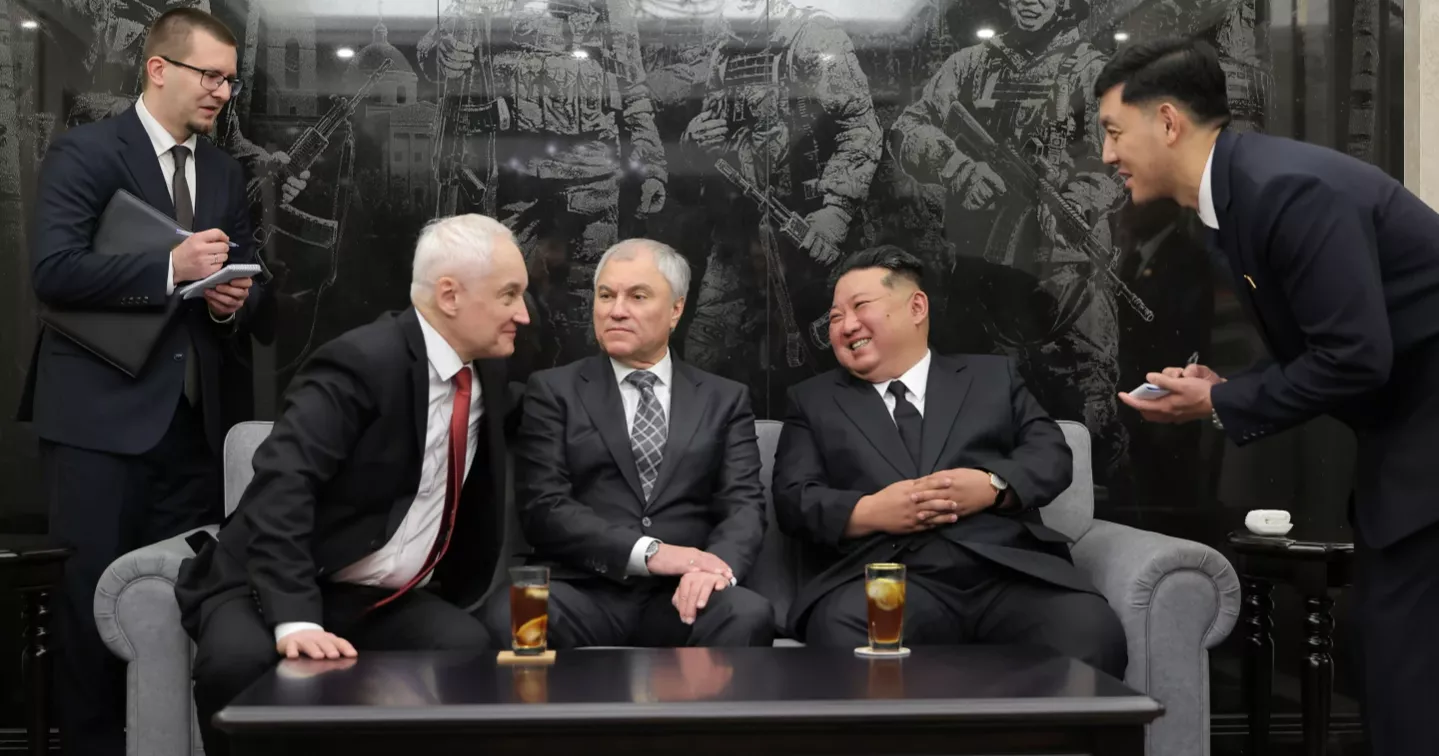
North Korea has opened a memorial museum in Pyongyang to honor its soldiers who died while fighting alongside Russia in the war against Ukraine, as both countries signal plans to deepen cooperation.
North Korea and Russia said in April 2025 that their forces had jointly pushed back a Ukrainian incursion into Russia’s Kursk border region. While neither side disclosed the exact number of North Korean troops involved, South Korea’s intelligence agency estimated that about 15,000 soldiers were deployed, with around 2,000 killed.
North Korea’s state news agency KCNA reported that the museum was officially opened on Sunday, marking one year since the end of the Kursk operation. Leader Kim Jong Un attended the ceremony along with senior Russian officials, including State Duma Speaker Vyacheslav Volodin and Defense Minister Andrei Beloussov.
During the event, Kim paid tribute by throwing soil over the remains of a fallen soldier and laying flowers for others whose bodies had already been placed in a mortuary. He later signed a guest book alongside the visiting Russian officials.
In his speech, Kim described the fallen troops as a lasting symbol of the Korean people’s bravery and said their sacrifice would support what he called a “victorious march” for both nations. He also praised joint efforts by North Korean and Russian forces in countering what he termed a US-led Western attempt to dominate the region through military action.
In a separate meeting with Beloussov, Kim reaffirmed North Korea’s full support for Russia’s efforts to protect its sovereignty and security. Russian state media reported that Moscow is prepared to sign a military cooperation plan with Pyongyang covering the period from 2027 to 2031.
Russian President Vladimir Putin, in a message read out during the ceremony, said the museum would stand as a symbol of friendship and solidarity between the two countries. He also expressed confidence that bilateral ties would continue to grow stronger.
Since the start of Russia’s invasion of Ukraine, Kim has strengthened ties with Moscow by supplying troops and conventional weapons. In return, North Korea is believed to have received economic aid and other support. However, South Korea, the United States and their allies remain concerned that Russia could provide advanced technologies that might boost North Korea’s nuclear and missile capabilities.
Experts say North Korean troops initially struggled on the battlefield due to limited combat experience and unfamiliar terrain, making them vulnerable to drone and artillery attacks. However, Ukrainian officials believe the troops have since gained valuable experience and played a key role in Russia’s strategy of deploying large numbers of soldiers in the Kursk region.