Foreign-Affairs
Cyclone-hit Sri Lanka thanks govt, people of Bangladesh for support
Sri Lanka on Wednesday thanked the government and people of Bangladesh for the generous relief support sent to the South Asian country while the Sri Lankan community in Bangladesh issued a heartfelt plea for emergency aid following the catastrophic floods and landslides.
“Our heartfelt appreciation to the Government and people of Bangladesh for the generous relief support sent to Sri Lanka today,” said the Sri Lankan High Commission in Dhaka.
“Your friendship and solidarity strengthen us in this challenging time,” it said as Bangladesh sent emergency humanitarian assistance to cyclone and flood-affected people in Sri Lanka.
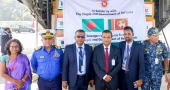
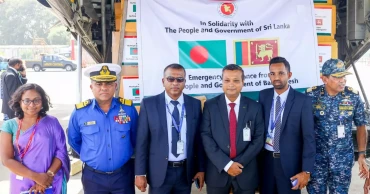
As instructed by Chief Adviser Prof Muhammad Yunus, under the coordination of the Ministry of Foreign Affairs, Dhaka and the supervision of the Armed Forces Division, a transport aircraft of the Bangladesh Air Force carrying emergency materials landed at Bandaranaike International Airport on Wednesday afternoon.
The consignment was formally handed over by Andalib Elias, the High Commissioner of Bangladesh to Sri Lanka, underscoring the continued solidarity of Bangladesh with Sri Lanka during this challenging period.
The relief consignment includes: tent, dry food, mosquito nets, torchlights, gumboots, vests, hand gloves, rescue helmets, and essential medicines.
“We can extend our compassion to the Sri Lankan families who have lost everything. Our immediate donation is a lifeline for them. Please donate today to the account name High Commission of Sri Lanka, account number 1804000073, Commercial Bank of Ceylon, Gulshan Branch, Dhaka. Our every contribution, large or small, will fuel the rescue, relief, and rehabilitation efforts, ensuring hope prevails over despair,” said the Sri Lankan community in Bangladesh in a media release.
Bangladesh sends emergency relief for cyclone, flood-affected people in Sri Lanka
Cyclone Ditwah and relentless monsoon rains have tragically claimed over 450 lives, over 100 people are missing, over 30,000 homes have been destroyed, and over 850,000 people have been affected, they said in a media release.
For decades, the bond between Sri Lanka and Bangladesh has been a testament to South Asian solidarity, as they share common values and stand together in times of need.
Now, it is time for the people and institutions of Bangladesh and the community to honor that friendship, said the community.
8 months ago
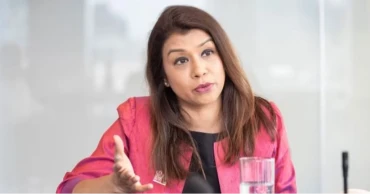
ACC calls for fact-based review of Tulip Siddiq's sentencing reports
Bangladesh’s Anti-Corruption Commission on Tuesday said that concerns raised in recent media reports about the trial and sentencing of British MP Tulip Siddiq, niece of Sheikh Hasina Wazed and daughter of Sheikh Rehana, require a clear, fact-based examination.
"Taken together, we believe these facts clearly and unequivocally demonstrate Siddiq’s continued involvement in aiding and abetting corruption under the laws of Bangladesh," said the ACC in its response to concerns raised over the trial and sentencing of Tulip Siddiq.
In light of these facts and circumstances, there is no basis to suggest that she was not involved in corruption or that she is innocent of the charges brought against her, said the graft watchdog body.
The ACC said they have conducted a thorough review of all prosecution materials filed against her by the Anti-Corruption Commission, an independent statutory body, according to the Chief Adviser's press wing.
ACC's Response
From the case records, it appears that each matter involves allegations of corruption relating to the allotment of plots of land in the names of Siddiq’s aunt (the deposed former Prime Minister Sheikh Hasina), her mother Sheikh Rehana, and her siblings and cousins.
In one of the pending cases, it further appears that Siddiq herself was allotted a plot during her aunt’s tenure as head of government.
Of the three cases, the trial of the first has concluded, and Siddiq has been found guilty of corruption for influencing her aunt to secure land for her mother and siblings.
In Special Case No. 18 of 2025 before Special Tribunal No. 5, the prosecution alleged, among other things, that Siddiq influenced, coaxed, and persuaded her aunt to abuse her position in order to obtain plots for Siddiq’s family.
The prosecution examined thirty-two witnesses. Several of these witnesses testified under oath that Siddiq, known to be very close to her aunt, used her influence to obtain the allotments in question.
Their testimony, together with circumstantial evidence of plot allotments in the names of Ms. Siddiq, her mother, and her siblings, indicates that she was deeply involved in the illegal process of securing plots—not only in the case already decided but also on other occasions.
Such conduct constitutes abetment of offences under Sections 161, 163, 164, 165(Ka), 201, 217, 218, 409, and 420 of the Penal Code, read with Section 5(2) of the Prevention of Corruption Act, 1947.
This circumstantial evidence is further strengthened by the fact that Siddique also obtained a plot (Plot No. CWN (A)-27, later changed to Plot No. 05, Block NE(A), Gulshan, Flat No. B/201, House Nos. 5A and 5B, now renumbered as 115 and 11B, Road No. 71, Gulshan-2) by abusing the influence she wielded over her aunt, the deposed former Prime Minister.
These are not remote parcels of farmland but extremely valuable plots located in one of the most expensive areas of Dhaka.
The plots are large enough to accommodate substantial homes or compact apartment buildings.
This government-owned land had been earmarked primarily for housing intended to ease population pressures in Dhaka, but instead was allocated to those closest to the Prime Minister, thereby continuing to contribute to the accumulation of familial wealth.
Moreover, Siddiq has been linked to five London properties purchased with the assistance of offshore companies. This raises a fundamental question: how do individuals in public service acquire the resources necessary to purchase multiple properties and parcels of land in two major world capitals?
"We were eager to hear answers to that question and others from Siddiq, but unfortunately she was tried in absentia," the ACC said.
As for Siddiq's assertion that she was unable to respond to the charges, that claim is simply untrue.
She was afforded the opportunity to attend the trial and present her case. She declined to attend or to be represented.
8 months ago
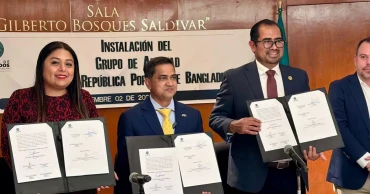
Mexican parliament eager to work with Bangladesh’s upcoming parliament
A Mexico-Bangladesh Parliamentary Friendship Group was formed on Tuesday at a ceremony held at the Mexican Parliament with the participation of Ambassador Mushfiqul Fazal Ansarey and officials from the Embassy of Bangladesh.
Ambassador Mushfiqul was welcomed in the Parliament during a plenary session, where acting President of the Parliament, Deputy Kenia López Rabadán, announced to lawmakers the establishment of the new Friendship Group.
Earlier, the delegation led by Ambassador Mushfiqul Fazal observed a live legislative voting session in the Parliament.
Ambassador Adli Qasem Alkhaledi of Jordan and Ambassador Robert Ly of Côte d’Ivoire, Dean of the Diplomatic Corps, also joined, said the Embassy of Bangladesh on Wednesday.
Deputy Francisco Javier Estrada Domínguez, President of the newly formed Group, opened the session, stressing that parliamentary diplomacy serves as a bridge for dialogue, cooperation, and mutual understanding.
He stressed Bangladesh’s economic trajectory and its key role in the global textile sector.
Mushfiqul highlighted Bangladesh’s current political transition and the country’s path toward restoring democratic governance.
“Bangladesh is preparing to hold national elections early next year under an interim government led by Nobel Laureate Prof Muhammad Yunus. His (Prof Yunus) moral authority and lifelong dedication to human dignity have restored public trust at a critical moment,” he said.
Addressing the democratic struggle that reshaped Bangladesh in 2024, the Ambassador said, “In August last year, our people—especially young students made extraordinary sacrifices to reclaim their democratic rights. Thousands gave their lives. Their courage has opened a new chapter in Bangladesh’s history.”
Ambassador Mushfiqul also acknowledged the historic contributions of Bangladesh’s key political leaders.
He noted that “the country’s first woman Prime Minister Begum Khaleda Zia restored the parliamentary form of government in 1991 and strengthened democratic institutions.
Late President Ziaur Rahman declared our independence in 1971 and later introduced multiparty democracy. Their vision continues to guide our political identity”.
The Ambassador added that Mexico’s robust parliamentary tradition offers valuable lessons for Bangladesh as it rebuilds democratic institutions.
In subsequent interventions, several legislators articulated their support for enhanced bilateral relations.
Deputy Irma Yordana Garay Loredo, Vice President of the Friendship Group, along with Deputy Pedro Vázquez González, Chairman of the Mexican Foreign Affairs Committee, and Deputy Jesús Valdés Peña, expressed their commitment to expanding political, economic, environmental, and investment cooperation with Bangladesh.
In a video message, Senator Emanuel Reyes Carmona congratulated both sides, emphasising that the formalization of the Friendship Group comes as the two countries mark the 50th anniversary of diplomatic relations.
The Ambassadors of Jordan and Côte d’Ivoire also conveyed the messages of support.
The ceremony concluded with the official signing of the foundational document establishing the Group.
Ambassador Mushfiqul also signed the Parliament´s visitors' book, followed by an exchange of commemorative gifts and an official photograph.
8 months ago
IRI poll reveals strong support among Bangladeshis for Yunus govt, optimism about future
A nationwide survey by the International Republican Institute (IRI) shows that Bangladeshis overwhelmingly approve of Chief Adviser Dr. Muhammad Yunus and the Interim Government’s job performance.
The survey found that 69 percent of respondents said Dr. Yunus is doing a good job, while 70 percent said the same about the Interim Government.
Johanna Kao, IRI’s Senior Director for Asia-Pacific, said, “It is clear Bangladeshis see progress under Dr. Yunus’s leadership. Their confidence in him and the Interim Government reflects a strong desire for stability, accountability, and reform.”
The survey also found high enthusiasm for the upcoming elections. About 66 percent of respondents said they are very likely to vote, and 23 percent said they are somewhat likely to vote. Eighty percent of respondents expressed optimism that the elections will be free and fair.
Kao added, “The excitement of Bangladeshis highlights the importance of sustaining reform efforts and ensuring the elections are credible and peaceful.”
IRI calls for sustained dialogue to build trust ahead of Bangladesh election
The IRI conducts regular nationwide surveys in Bangladesh to understand public opinion on politics, governance, and policy issues. Ahead of the February elections, IRI has deployed a pre-election assessment mission and will field a limited observation team.
The survey was conducted by a local research firm from September 1 to October 12, 2025. It included 4,985 respondents aged 18 and older from 63 districts across all eight divisions. The data was collected through in-home interviews and weighted by age and gender according to the 2022 census. The margin of error does not exceed plus or minus 1.4 percent, and the response rate was 46 percent.
8 months ago
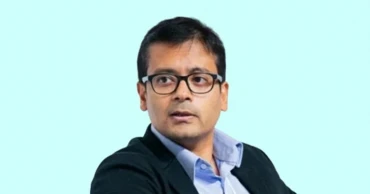
Speakers stress transparency, stronger reforms to improve Bangladesh’s business climate
Speakers at a dialogue on business climate have highlighted the need for stronger reforms across customs, logistics, standards, enforcement of compliance and regulations, and import procedures by presenting concrete case studies.
They stressed that greater regulatory predictability, transparency, and digitalisation are essential to attract quality European investment and support Bangladesh’s goal of becoming a competitive manufacturing hub.
The session, held on December 1, ended with a shared commitment to collaborate in strengthening Bangladesh’s investment climate.
Special Envoy on International Affairs to the Chief Advisor Lutfey Siddiqi called for a clear reform roadmap and early engagement with the EU ahead of LDC graduation.
Opening the dialogue, European Union (EU) Ambassador to Bangladesh Michael Miller emphasized that the European Union and Bangladesh are working towards an investment partnership designed to be mutually beneficial, noting that success will depend on teamwork, a level playing field, and impartial implementation.
Looking ahead, he announced plans to jointly organize with BIDA, the Ministry of Commerce, and EuroCham Bangladesh, the Bangladesh-EU Business Forum in 2026, positioning the current dialogue as the first step towards that landmark event.
The session on EU private-sector perspectives, moderated by Nuria Lopez, Chairperson of EuroCham Bangladesh, underscored the shared commitment of European businesses and diplomatic missions to deepen FDI flows and address Bangladesh’s trade deficit with the EU and the growing need to address it as the country moves beyond LDC status.
Envoys from across Europe highlighted complementary priorities for strengthening Bangladesh’s investment climate.
Ambassador of the Netherlands to Bangladesh Joris van Bommel underscored the need for predictability, transparency and consistent regulation, supported by a modern image that reflects the countries true potential to unlock opportunities in water, agriculture, and logistics.
Danish Ambassador Christian Brix Moller drew lessons from G2G Public-Private Partnership (PPP) projects, stressing governance safeguards, faster resolution of regulatory delays, and timely approvals.
Italian Ambassador Antonio Alessandro pointed to new sectors such as ceramics, leather, and design, emphasizing innovation, technology transfer and the role of SMEs.
Spanish Ambassador Gabriel Sistiaga Ochoa de Chinchetru emphasised that EU is a key and reliable partner of Bangladesh and called for stability, rule of law, and fair competition to deepen EU–Bangladesh ties.
Swedish Ambassador Nicolas Weeks highlighted Sweden’s strong garment sector links and commitment to sustainable fashion, urging clearer regulations and transparency.
US Trade Representative commends Bangladesh’s reforms in labour rights and business climate
French Jean‑Marc Séré‑Charlet insisted on the benefits of long‑term partnerships with Europe, highlighted untapped EU-Bangladesh trade and FDI potentials, urging stronger action on good governance and profit repatriation.
German acting Ambassador Anja Kersten, commended ongoing reforms but stressed consistent implementation, vocational training for skilled youth, updated agreement for the avoidance of double taxation, and building a positive image of Bangladesh.
Nahian Rahman, Head of Business Development at BIDA, outlined ongoing reforms shaped by investor feedback, including improved inter-agency coordination, transparent progress tracking,and consultations with political parties to ensure policy continuity.
Rear Admiral S. M. Moniruzzaman, Chairman of the Chittagong Port Authority, highlighted modernisation efforts such as digitalization, the Bay Terminal, and the Laldia project to enable larger vessels and round-the-clock operations.
BIDA Executive Chairman Ashik Chowdhury emphasized structural reforms, prioritised investor grievance resolution, and annual “result cards” to sustain momentum, stressing Bangladesh’s ambition to attract more European companies to establish local and regional operations.
The European Union and the Bangladesh Investment Development Authority (BIDA) convened the high‑level EU–BIDA Dialogue on Business Climate on December 1 at the BIDA conference room, with support from the Embassy of the Netherlands and facilitated by EuroCham Bangladesh.
The event brought together ambassadors from EU Member States, senior government officials including the National Board of Revenue, Ministry of Commerce, Bangladesh Bank, Ministry of Shipping, Chittagong and Mongla Port Authorities, Sustainable and Renewable Energy Development Authority (SREDA), Power Division, Ministry of Industries, BSTI, Bangladesh Food Safety Authority, and the Ministry of Agriculture, and leading European private‑sector stakeholders across manufacturing, energy, logistics, infrastructure, innovation, and services industries.
8 months ago

Sri Lanka Cyclone: 3 Bangladesh nationals rescued
India has rescued and assisted over 150 people, including three Bangladesh nationals, through its combined operations, which are continuing in Sri Lanka following Cyclone Ditwah.
In coordination with the Sri Lankan Air Force, Chetak helicopters from INS Vikrant and MI-17 helicopters of the Indian Air Force conducted extensive rescue operations, airlifting stranded people, including pregnant women, infants and those critically injured.
The rescued people included nationals of Bangladesh, Sri Lanka, India, Germany, Slovenia, the United Kingdom, South Africa, Poland, Belarus, Iran, Australia and Pakistan.
“Three of them are Bangladesh nationals,” a senior official told UNB on Tuesday.
In the wake of Cyclone Ditwah, which has caused severe flooding, loss of life and widespread disruption across Sri Lanka, India launched Operation Sagar Bandhu on November 28 to provide urgent Search & Rescue and Humanitarian Assistance & Disaster Relief (HADR) support to their closest maritime neighbour.
In coordination with the Sri Lankan authorities, the Government of India immediately handed 9.5 tons of emergency rations from two Indian Navy Ships in Colombo; deployed three Indian Air Force aircrafts for airlifting another 31.5 tons of relief materials including tents, tarpaulins, blankets, hygiene kits, ready-to-eat food items, medicines and surgical equipment, two BHISHM cubes along with 5 persons medical team for on-site training, and 80 persons special Urban Search and Rescue (USAR) teams of the National Disaster Response Force (NDRF) to assist in rescue efforts; and despatched another 12 tons of relief supplies on-board Indian Navy Ship Sukanya.
A total of 53 tonnes of relief material has been handed over, according to the Indian Ministry of External Affairs.
Evacuation of Indian nationals stranded due to Cyclone Ditwah was also undertaken via special Indian Air Force flights as well as commercial flights, with over 2000 stranded Indians already brought back.
Guided by India’s Neighbourhood First policy and Vision MAHASAGAR, India continues to be the First Responder, standing firmly in solidarity with the government and the people of Sri Lanka at this time of need, and remains committed to supporting the on-going rescue, relief, and early recovery efforts.
NDRF teams continue to carry out search-and-rescue operations in various severely affected and isolated regions of Sri Lanka, assisting flood-hit families and ensuring their immediate safety.
8 months ago
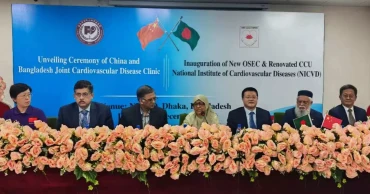
Beijing seeks deeper cooperation with Dhaka to advance ‘Health Silk Road’
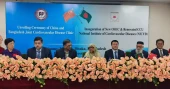
The first Bangladesh-China Joint Cardiovascular Disease Clinic was inaugurated at the National Institute of Cardiovascular Diseases (NICVD) on Tuesday (December 02) to have deeper cooperation in the health sector, contributing to the ‘Health Silk Road’.
Health and Family Welfare Adviser Nurjahan Begum, Chinese Ambassador to Bangladesh Yao Wen, Deputy Director General of the Yunnan Foreign Affairs Office Ma Zuoxin and Deputy Director of the Fuwai Yunnan Hospital, Chinese Academy of Medical Sciences Shi Jinyang, among others, attended the ceremony.
Read more: Have deep relations with US, extensive economic ties with China: Touhid Hossain
8 months ago

Bangladesh can attract much more European investment: French Ambassador
French Ambassador to Bangladesh Jean-Marc Séré-Charlet has said they strongly believe that Bangladesh can attract much more European investment and capital.
“We want to do more, and we strongly believe that Bangladesh can attract much more European investment and capital,” he said while speaking at a dialogue in Dhaka.
The European Union (EU) and the Bangladesh Investment Development Authority (BIDA) held the high-level dialogue on Business Climate on December 1.
The event brought together EU ambassadors, senior government officials and leading European businesses, said the French Embassy on Tuesday.
France hopeful of peaceful, credible election in Bangladesh
The French Ambassador underscored the value of long-term partnerships with Europe and the untapped potential for trade and FDI.
He welcomed BIDA’s recent reform initiatives aimed at improving the investment climate, stating that “the key now is to sustain this reform momentum, strengthen regulatory clarity and ensure policy continuity and stability.”
8 months ago
No specific information over Tarique’s return, says Foreign Adviser
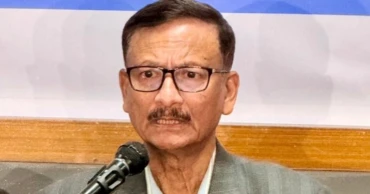
Foreign Affairs Adviser Md Touhid Hossain on Tuesday (December 02) said they do not have any specific information regarding BNP Acting Chairman Tarique Rahman’s return to home, mentioning that he has not yet sought any travel pass.
“Travel pass will be issued if he seeks. So far I know, he is yet to seek any travel pass,” he said when a journalist approached him while leaving his office – the Ministry of Foreign Affairs.
Asked whether Tarique holds any passport, Adviser Hossain said he does not know about the matter. “That I can’t tell you.”
Read more: No reason to contest national election: Adviser Touhid Hossain
He said there are preparations and arrangements for taking her abroad (for advanced treatment) but her family and party will take the decisions based on doctor’s advice.
Hossain on Sunday said the government can issue a ‘one-time’ travel pass within a day, facilitating BNP Acting Chairman Tarique Rahman’s return to home if he wishes to come back home.
“If he (Tarique) says today that he wants to return, we can provide the pass tomorrow and he can catch the plane the day after tomorrow. There is no problem,” Adviser Hossain said while responding to a question during ‘DCAB Talk’ at the Jatiya Press Club.
The Adviser said this is a kind of ‘one-time’ pass which is usually issued if anyone does not have the passport or the passport expires. “It’s for once. It takes only one day to issue such a pass.”
Adviser Hossain said there are no restrictions from the government side.
Read more: Tarique Rahman likely to return home soon: Salahuddin
Referring to BNP chairperson Begum Khaleda Zia’s health condition, he said she is not in a position at this moment that allows her travelling abroad for further treatment.
If her health improves to some extent, she will be taken abroad and the party is making arrangements to this end. “We are assisting.”
8 months ago

Prof Yunus, KOICA president discuss LDC transition support
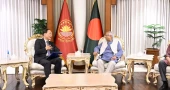
Chief Adviser Prof Muhammad Yunus and President of the Korea International Cooperation Agency (KOICA) Chang Won-sam on Monday discussed enhancing development cooperation, investment, skills training and support for Bangladesh’s smooth graduation from LDC status.
“It’s truly great for me to visit this country again. I convey the warm greetings from the President,” said KOICA President Chang Won-sam during a meeting at the State Guest House Jamuna.
He reaffirmed KOICA’s political and developmental support for the Interim Government of Bangladesh and its ongoing reform initiatives.
The Chief Adviser thanked Chang Won-sam for his visit and expressed the hope that Bangladesh and Korea would continue to advance together at an accelerated pace.
Presenting the government’s economic vision, the Chief Adviser encouraged Korean investors and institutions to view Bangladesh as a long-term strategic partner in production and trade.
“We want to become a production hub. We can produce your products here and sell them everywhere. We have the manpower and the capabilities, and our young population is eager to work hard," he said.
The Chief Adviser laid special emphasis on people-centric cooperation, particularly in language training, healthcare and skills development.
He urged KOICA to expand Korean language programmes in Bangladesh to widen opportunities for Bangladeshi youth in education, training, and employment in Korea.
He also called for deeper collaboration in healthcare training.
“It’s very crucial for our healthcare system and for global healthcare. We need to focus more on training nurses,” the Chief Adviser said, noting the growing global demand for skilled nurses and health workers.
In response, Chang Won-sam expressed willingness to explore expanded cooperation in skills development and education.
Chief Adviser’s Special Envoy for International Affairs Lutfey Siddiqi and SDGs Affairs Principal Coordinator and Senior Secretary Lamiya Morshed were also present at the meeting.
8 months ago