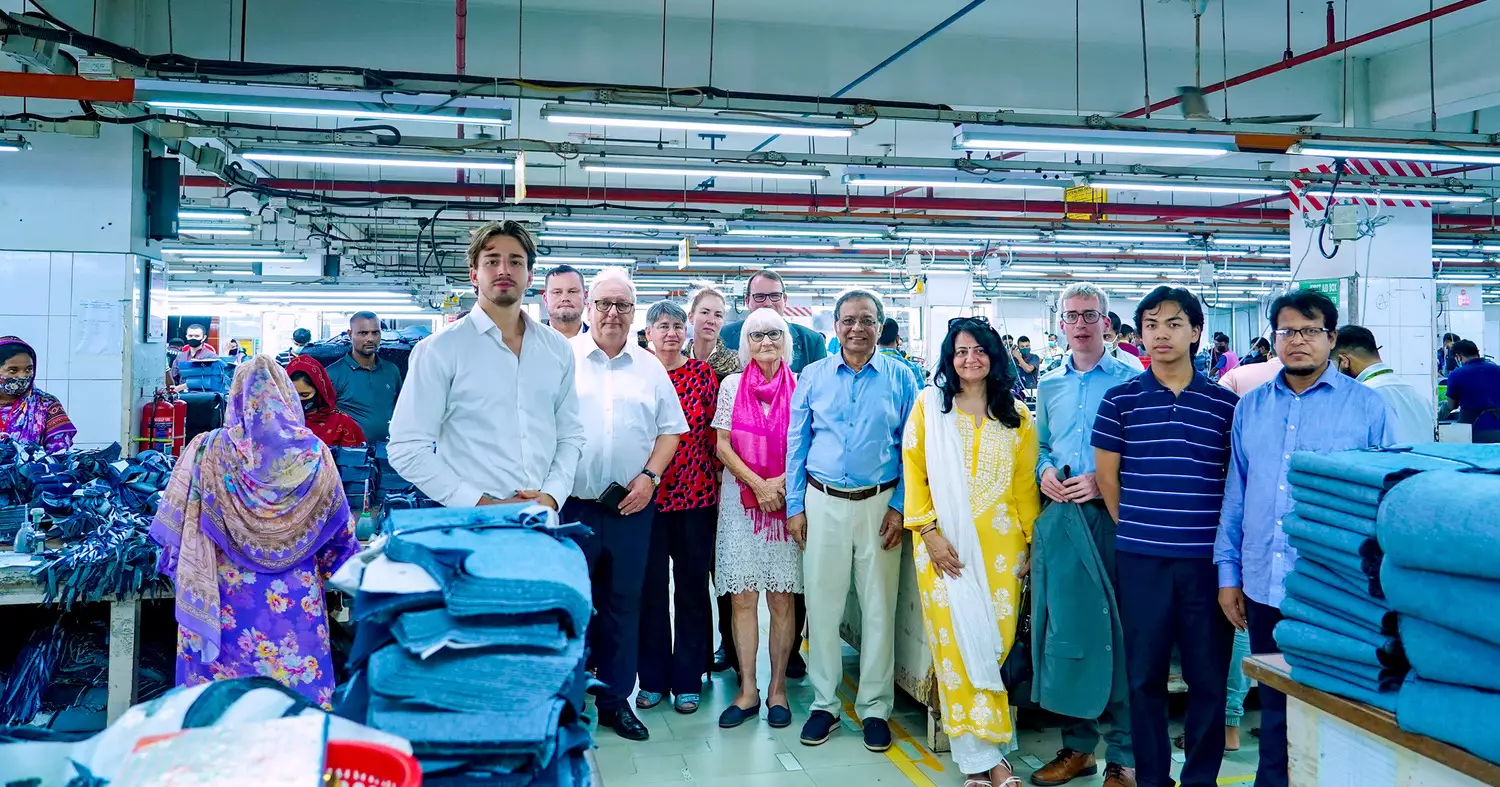
A high-level 15-member European delegation, primarily comprising parliamentarians and civil society members from Germany, has wrapped up a four-day study tour of Bangladesh underlining the importance of dialogue and greater understanding between Germany and Bangladesh.
The know-Bangladesh-better tour was facilitated by The Friedrich Naumann Foundation for Freedom (FNF) South Asia, a Germany-based organisation that promotes individual freedom and classical liberalism. The delegation arrived in Dhaka on August 12 as part of their four-nation tour of South Asia that also took them to the Maldives, Bhutan, and India.
According to the organisers the overall goal of the visits was to foster stronger networks between European political and economic institutions and their counterparts in these countries, including Bangladesh. The objectives of the Bangladesh visit included an understanding of the current political and economic situation – progress, challenges, and outcomes that the interim government has experienced and achieved. More specifically, how the reform process is expected to bring short-term and long term improvement in governance, accountability, transparency, and strengthening of the democratic and financial institutions.
European delegation arrives on a three-day visit to Bangladesh
The delegation held meetings with a wide range of high ranking and well-respected
individuals, several of whom represent key institutions of the country. This included bilateral meetings with Md. Asaduzzaman, attorney general of Bangladesh, Mr. Lutfey Siddiqi, chief adviser’s envoy for international affairs of Professor Muhammad Yunus, Dr. Rudiger Lotz, German ambassador to Bangladesh, Mr. Frank Werner, director of Goethe-Institute, Bangladesh; and Ambassador Indra Maney Pande, secretary general, Bay of Bengal Initiative for Multi-Sectoral Technical and Economic Cooperation (BIMSTEC) and Shahidul Islam, director at NETZ Bangladesh, a German-based NGO working for justice and development.
“The visit aims to intensify connections between Europe, particularly Germany, and one of the world’s dynamic growth regions of South Asia, and to highlight the potential for mutual learning,” said Dr. Carsten Klein, regional director of the FNF South Asia.
The delegation was led by Dr. Carsten Klein, regional director of FNF South Asia. “The visit aims to intensify connections between Europe, particularly Germany, and one of the world’s dynamic growth regions of South Asia, and to highlight the potential for mutual learning,” said Klein.
The delegation members held interactive discussions with eminent civil society and business representatives. Major General Kazi Ashfaq Ahmed (retired) presented a paper entitled “The Bay of Bengal: A Strategic Space in the Indo-Pacific.”
At another event Dr. Fahmida Khatun, an eminent economist and executive director at Centre for Policy Dialogjue and senior journalist Farid Hossain provided an analytical historical synthesis of causes or factors that led to the student-led July uprising and dramatic change of government in August last year. The delegation heard from them a balanced view of the opportunities and challenges that lie ahead for future governments in moving the country forward. During question-answer session some delegation members wanted to know more about the interim government’s reform initiatives, the state of the economy, the freedom of press and the national elections scheduled in February next year.
The team also met with Shahidul Islam, director of NETZ Bangladesh, a German-based NGO and witnessed a presentation on an overview of their programming activities aimed at poverty alleviation, skill development, women empowerment, and employment generation. Mr. Maksud, president of the Bangladesh German Chamber of Commerce and Industry (BGCCI) and his colleagues during a meeting with the team discussed prevailing trade and investment opportunities between Bangladesh and Germany.
HKH Parliamentarians’ Meet: Ambassador hosts dinner for Bangladesh delegation