foreign-affairs
Jakarta looks forward to working with Dhaka at UNESCO
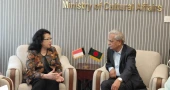
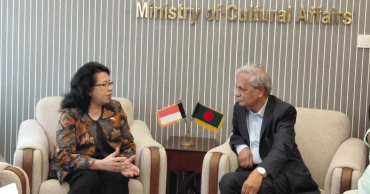
Ambassador of the Republic of Indonesia to Bangladesh Listyowati has said she looks forward to having cooperation with Bangladesh as has been Indonesia elected to the UNESCO Intergovernmental Committee for the Safeguard of the Intangible Cultural Heritage (ICSICH) for the period of 2026-2030.
The Ambassador met Cultural Affairs Minister Nitai Roy Chowdhury on July 29 and discussed the issues of mutual interest.
4 days ago
Bangladesh-US ties on very positive trajectory; committed to building on achievements: FM
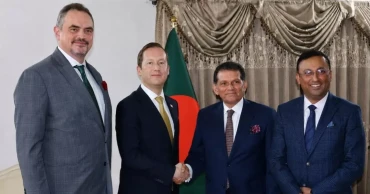
Foreign Minister Dr Khalilur Rahman on Thursday said the bilateral relations between Bangladesh and the United States are moving in a very positive direction, noting that they will build on the achievements they have made so far.
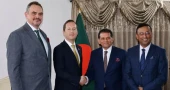
"Our engagement with the US is not limited to one meeting. We remain engaged on all aspects and at all levels, and the relationship is moving forward," he told reporters at the Ministry of Foreign Affairs after his meeting with US Special Envoy to South and Central Asia Sergio Gor, held at the State Guest House Padma.
Prime Minister's Foreign Affairs Adviser Humaiun Kobir and US Ambassador to Bangladesh Brent T. Christensen were also present at the meeting.
"It was great to meet Foreign Minister Khalilur Rahman during my first visit to Bangladesh and discuss working together to strengthen the US-Bangladesh relationship. Lots of positive developments," Gor said.
4 days ago
No discussion between Bangladesh and Myanmar on taking back 3 lakh Rohingyas: Shama Obaed
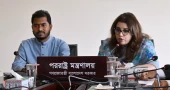
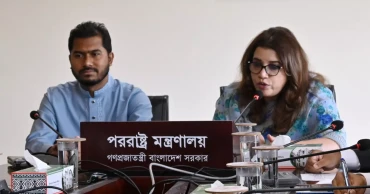
As media reports claimed that Myanmar has agreed to take back 300,000 Rohingyas from Bangladesh, State Minister for Foreign Affairs Shama Obaed Islam said on Thursday that there has been no discussion between the governments of Bangladesh and Myanmar so far.
Speaking to reporters at the Ministry of Foreign Affairs, she said that if such a development takes place, Bangladesh would certainly welcome it.
“It will be very good news. I do not know anything specific yet,” she said, noting that they remain in contact with Myanmar.
Myanmar has agreed to take back 300,000 Rohingya refugees from Bangladesh as part of ongoing repatriation efforts, Malaysian media outlets reported, quoting Malaysian Prime Minister Anwar Ibrahim.
Anwar said Myanmar had also agreed to repatriate 5,000 Rohingya refugees from Malaysia.
"That is why it is important to maintain good relations with Myanmar. They have now agreed to take back 5,000 Rohingya from Malaysia and 300,000 Rohingya from Bangladesh to Myanmar," The Star quoted him as saying.
"Why? Because we negotiated. These matters require careful diplomacy," the Malaysian Prime Minister added.
He made the remarks while meeting local voters in Chennah on Wednesday.
Bangladesh is hosting over 1.3 million Rohingyas in Cox’s Bazar and Bhasan Char Island.
4 days ago
626 Bangladeshis experience "auto-cancellation" of UAE visas; renewal process underway
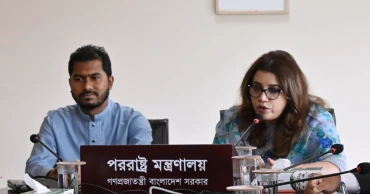
State Minister for Foreign Affairs Shama Obaed Islam on Thursday said exactly 626 Bangladeshis, not 5,000, have experienced "auto-cancellation" of their visas so far, and the government is closely working with the government of the United Arab Emirates (UAE) for their visa renewals.
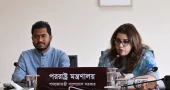
“Recent news reports claiming that 5,000 Bangladeshis have had their visas cancelled in the UAE are inaccurate. According to official data, exactly 626 Bangladeshis have experienced "auto-cancellation" of their visas so far,” she told reporters at a joint briefing with State Minister for Expatriates' Welfare and Overseas Employment Md. Nurul Haque at the Ministry of Foreign Affairs.
Earlier, they had an inter-ministerial meeting at the Ministry of Foreign Affairs.
Shama Obaed said the situation is not specific to Bangladesh and citizens of other countries including Nepal, Pakistan, Egypt, and the Philippines have also faced visa cancellations for various reasons.
“Out of the 626 affected Bangladeshis, details of 417 individuals have already been submitted to the UAE government for visa renewals. Information for the remaining individuals is being processed and forwarded systematically,” she said.
If visas were cancelled due to job termination, the respective employers bear certain responsibilities, said the state minister.
The Bangladeshi Embassy in the UAE is directly coordinating with these companies to find viable solutions, she added.
“We hope we will get a positive result,” said the State Minister, encouraging the media to report based on verified facts.
Shama Obaed said expatriates must strictly respect and follow the laws of their host country and refrain from engaging in unlawful activities or posting sensitive or political content on social media platforms. “We want to send out a message - please refrain from engaging in unlawful activities.”
Many migrant workers go abroad after making immense financial sacrifices, and when individuals submit fraudulent or forged documents, it harms the country's reputation and creates hurdles for those attempting to travel legally, she said.
Shama Obaed said the government will consider amendments, if required, to the relevant law to enforce stricter measures against document forgery.
Migration costs from Bangladesh remain significantly higher than those from neighboring countries like Nepal.
The government has initiated active measures to reduce migration expenses and protect workers from fraudulent middlemen networks.
For the first time in history, Shama Obaed said, a dedicated 'Migration and NRB Affairs Wing' has been established within the Ministry of Foreign Affairs to curb illegal migration and human trafficking.
4 days ago
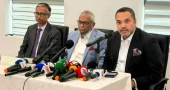
Malaysia to resume hiring Bangladeshi workers from late August: Mahdi
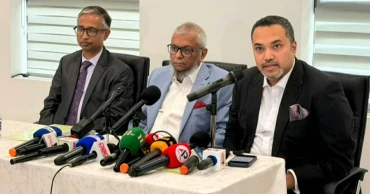
Malaysia will resume recruitment of Bangladeshi workers from the last week of August, Prime Minister’s Adviser and spokesperson Mahdi Amin said on Thursday.
“We have set a realistic target so that Bangladeshi workers can start travelling to Malaysia from the last week of August,” he said at a press conference at the Bangladesh High Commission in Kuala Lumpur.
Labour and Employment and Expatriates’ Welfare and Overseas Employment Minister Ariful Haque Chowdhury was also present at the press conference.
Mahdi thanked the Malaysian government for taking steps to reopen the labour market after a prolonged suspension, expressing gratitude to Malaysian Prime Minister Anwar Ibrahim, Human Resources Minister Datuk Seri R. Ramanan and other relevant authorities for their cooperation.
He said the government’s efforts have been guided by the principle of “Bangladesh First” to protect the interests of the country’s large workforce, expressing hope that the resumption of worker migration would make a significant contribution to Bangladesh’s economy in the long run.
Mahdi urged aspiring migrant workers to remain patient and follow official procedures, warning them against middlemen and fraudulent syndicates.
He said the government would take strict action against brokers and dishonest recruitment networks to ensure that workers are not subjected to harassment or exploitation.
The adviser said technical-level work between the two countries would begin shortly, with the Bangladesh High Commission in Kuala Lumpur and the Malaysian High Commission in Dhaka working jointly to facilitate the process.
He added that the Malaysian Human Resources Ministry and Bangladesh’s Ministry of Expatriates’ Welfare and Overseas Employment are also working to make the recruitment process more transparent and efficient.
Mahdi said Malaysia would soon announce the detailed procedures for workers’ recruitment, while the Bangladesh High Commission has been instructed to become more service-oriented and accessible to migrant workers.
He said the government requested Malaysia to give priority to state-owned Bangladesh Overseas Employment and Services Limited (BOESL) in the first phase of recruitment in a bid to reduce migration costs and ensure transparency.
Referring to the list of 423 recruiting agencies submitted to Malaysia during the tenure of the interim government, Mahdi said the Malaysian authorities would determine the final number of agencies based on their own verification process under the existing memorandum of understanding, which remains valid until December.
He said Bangladesh requested Malaysia to include the highest possible number of eligible recruiting agencies, given that Malaysia remains one of the largest overseas employment destinations for Bangladeshi workers.
Mahdi also said agencies and individuals involved in corruption, unethical practices or recruitment syndicates had already had their licences cancelled by Bangladesh, and such entities would not be included in the new recruitment framework.
He said the government’s priority was to resume manpower exports to Malaysia quickly while reducing migration costs, ensuring transparency and promoting skilled migration.
Highlighting broader bilateral cooperation, Mahdi said Bangladesh and Malaysia were also discussing trade and investment, technology transfer, education, healthcare and cultural exchanges, as well as expanding investments by Malaysian companies in Bangladesh.
He said the two countries were exploring cooperation in the energy sector, including discussions on how Malaysia’s state-owned energy company, Petronas, could help address Bangladesh’s gas shortage.
Mahdi noted that the reopening of the labour market followed a series of productive meetings over the past three months between officials of the two countries, culminating in recent talks with Malaysia’s Human Resources Ministry.
Mahdi and Minister Ariful are in Malaysia on a three-day official visit and are scheduled to return to Dhaka early Friday.
Bangladesh High Commissioner to Malaysia Manjurul Karim Khan Chowdhury and other officials of the High Commission also attended the press conference.
4 days ago
UAE President thanks Bangladesh for solidarity, seeks stronger bilateral ties
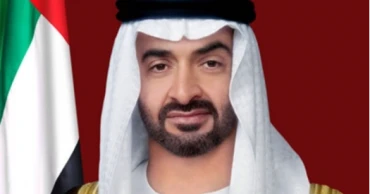
Sheikh Mohamed bin Zayed Al Nahyan, President of the United Arab Emirates, has conveyed his sincere appreciation for Bangladesh's solidarity with the UAE following the Iranian attacks on the country.
In a letter addressed to Prime Minister Tarique Rahman, he expressed gratitude for Bangladesh's support during this difficult time.
The UAE President also extended his heartfelt condolences over the tragic loss of two Bangladeshi nationals residing in the UAE who were among the victims of the attacks, said the UAE Embassy in Dhaka on Thursday.
He expressed his deepest sympathies to their families and the people of Bangladesh.
The letter reaffirmed the UAE's commitment to further strengthening its longstanding partnership with Bangladesh, with particular emphasis on expanding cooperation in the economic, developmental, and humanitarian sectors.
Sheikh Mohamed bin Zayed Al Nahyan also expressed his keen interest in undertaking an official visit to Bangladesh at the earliest opportunity.
He warmly acknowledged the Prime Minister's gracious invitation to visit Bangladesh and conveyed his hope to further deepen the enduring partnership between the two friendly nations.
The United Arab Emirates and Bangladesh enjoy strong and multifaceted bilateral relations founded on mutual respect, close friendship, and a shared commitment to regional peace, stability, and prosperity.
4 days ago
Bangladesh seeks stronger UNESCO cooperation on skills, youth empowerment
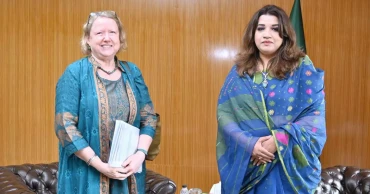
State Minister for Foreign Affairs Shama Obaed Islam has reaffirmed the government’s commitment and long-term objectives to strengthening quality education, skills development and youth empowerment.
She encouraged enhanced collaboration with UNESCO in Technical and Vocational Education and Training (TVET), including language training and internationally recognised certification to strengthen the skills of prospective migrant workers.
UNESCO, CRIHAP strengthen indigenous youth leadership to safeguard living heritage
The issues were discussed when Dr Susan Vize, UNESCO Representative to Bangladesh, paid a courtesy call on the State Minister for Foreign Affairs, at the latter’s office on Wednesday.
The State Minister also conveyed Bangladesh’s readiness to welcome the UNESCO Director-General to Bangladesh at a mutually convenient time.
During the meeting, the State Minister expressed her appreciation for UNESCO’s longstanding partnership with Bangladesh and its continued support in the areas of education, culture, science, climate resilience, youth empowerment and digital transformation.
She highlighted Bangladesh’s historic partnership with UNESCO, including the proclamation of International Mother Language Day and the recent inscription of the traditional weaving art of the Tangail Saree on UNESCO’s Representative List of the Intangible Cultural Heritage of Humanity.
Dr Susan Vize reaffirmed UNESCO’s commitment to supporting Bangladesh’s national development priorities and appreciated the country’s active cooperation to the organization’s work.
She reiterated UNESCO’s interest in further expanding cooperation in education, culture, youth engagement and sustainable development.
She particularly highlighted the potential of Bangladesh’s creative economy to harness the talent, innovation and creativity of its youth.
Welcoming this focus, the State Minister underscored the importance of mainstreaming the creative economy in the country’s development planning and fully integrating it into the national economy.
Both sides expressed their commitment to further strengthening the longstanding partnership between Bangladesh and UNESCO in support of inclusive, sustainable and knowledge-based development.
4 days ago

PM’s Defence adviser lauds PLA modernisation, China’s support to Bangladesh
Defence Adviser to the Prime Minister Brigadier General AKM Shamsul Islam has highly praised the achievements of the Chinese People's Liberation Army's (PLA's) modernisation and the traditional friendship between Bangladesh and China.
He expressed gratitude for China's support and assistance toward Bangladesh's defence development.
The Chinese Embassy in Bangladesh hosted the reception on Wednesday evening to celebrate the 99th anniversary of the founding of the Chinese People's Liberation Army (PLA).
Prime Minister's Adviser Md Ismail Zabiullah, Chief of Air Staff Air Chief Marshal Hasan Mahmood Khan, Chinese Ambassador to Bangladesh Yao Wen, Defence Attaché Senior Colonel Du Xinsheng along with nearly 300 dignitaries including military and government officials and friendly personages attended the event.
Defence Attaché Senior Colonel Du Xinsheng said under the leadership of the Communist Party of China, the PLA unswervingly pursues the path of building a strong military with Chinese characteristics, providing powerful support for safeguarding national sovereignty, security, and development interests, as well as maintaining regional and world peace.
He emphasised that China adheres to a good-neighborly and friendly policy oriented toward all the people of Bangladesh and is actively committed to building a China-Bangladesh community with a shared future in the new era.
He said China is willing to strengthen exchanges and cooperation with Bangladesh in defence and other fields.
The speakers spoke highly of the accomplishments in the building of the Chinese armed forces and wished for the construction of a Bangladesh-China community with a shared future in the new era to reach a higher level.
4 days ago
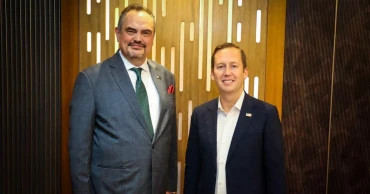
Trump’s South Asia envoy Sergio Gor begins first official visit to Bangladesh
US President Donald Trump’s Special Envoy on South and Central Asian Affairs Sergio Gor began his first official visit to Bangladesh on Thursday.
"I am delighted to welcome to Bangladesh my friend, the U.S. Special Envoy to South and Central Asia, Ambassador Sergio Gor," said US Ambassador to Bangladesh Brent T Christensen.
His visit will strengthen Bangladesh-US strategic ties and regional security and economic cooperation, said the Ambassador.
Referring to the visit, Foreign Minister Dr Khalilur Rahman on wednessday described it as "exploratory," saying the envoy would seek a broader understanding of Bangladesh.
“He will want to understand Bangladesh. He will speak not only with us but also with many other stakeholders,” he told reporters at the Ministry of Foreign Affairs on Wednesday.
Dr Khalilur said Gor is expected to visit the Rohingya camps and noted that the United States remains the largest international contributor to the Rohingya humanitarian response.
The Foreign Minister said Bangladesh-US relations are multidimensional and that both sides want to advance the partnership further.
Asked whether Bangladesh expected any pressure from Washington regarding the Agreement on Reciprocal Trade (ART), he said, “We do not feel any kind of pressure.”
“We will never strengthen relations with one country at the expense of another. We seek to strengthen our relations with all countries while protecting and advancing Bangladesh’s national interests,” Dr Khalilur added.
4 days ago

DCAB expresses shock at Ferdousi Shahriar's death
Diplomatic Correspondents Association, Bangladesh (DCAB) has expressed deep grief at the death of Additional Foreign Secretary Ferdousi Shahriar.
DCAB President AKM Moinuddin and General Secretary Emrul Kayesh, in a condolence message on Wednesday, recalled her contributions to Bangladesh's diplomacy and her dedicated role in promoting the country's interests abroad throughout her diplomatic career.
They prayed for the eternal peace of her departed soul and extended their heartfelt condolences to the bereaved family.
Ferdousi Shahriar died on Wednesday while undergoing treatment at a hospital in the capital at the age of 54.
Ferdousi Shahriar joined the Ministry of Foreign Affairs as an Assistant Secretary on January 25, 1999.
During her career, she served at several Bangladesh missions abroad, including in Bangkok, Rome, Manchester and Washington, D.C.
Ferdousi Shahriar last served as Bangladesh's High Commissioner to Singapore.
She is survived by her husband, three children and many well-wishers.
Foreign Minister Dr Khalilur Rahman, State Minister for Foreign Affairs Shama Obaed Islam, Prime Minister's Adviser on Foreign Affairs Humaiun Kobir, Foreign Secretary Asad Alam Siam and officials and employees of the Ministry of Foreign Affairs expressed deep sorrow at her death.
They prayed for the eternal peace of her departed soul and conveyed their condolences to the bereaved family.
5 days ago