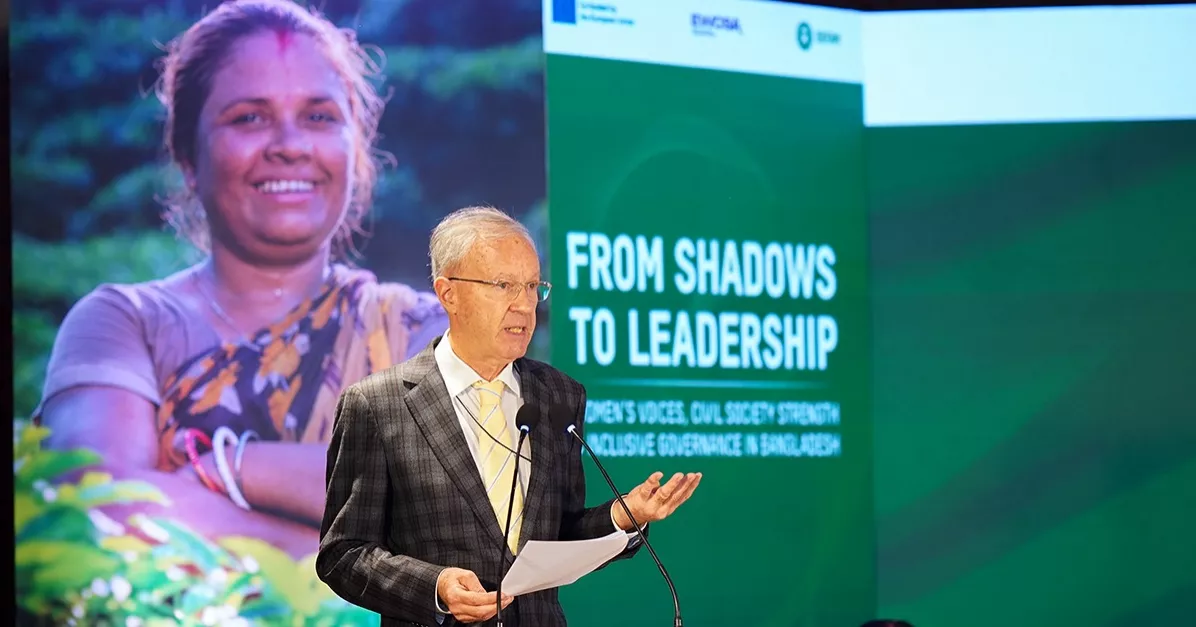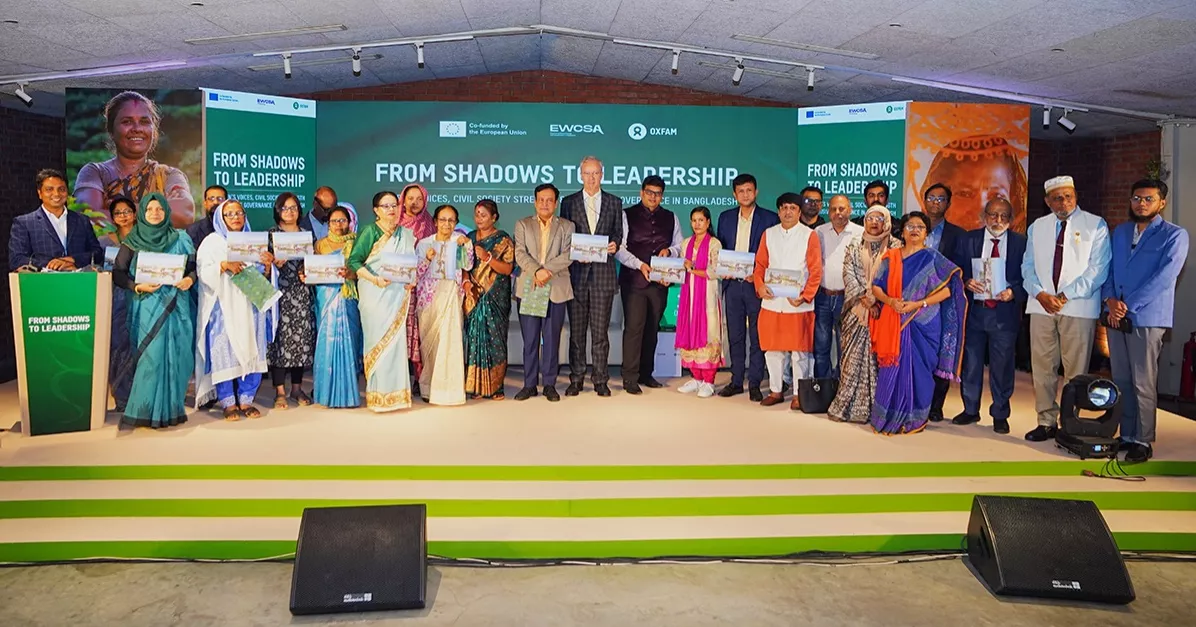
Women workers from Bangladesh’s informal and marginalised sectors stepped forward on Wednesday to demand legal protection, fair wages and formal recognition at an event in Dhaka that spotlighted long-standing inequalities in the country’s labour landscape.
The programme, titled “From Shadows to Leadership,” was organised by Oxfam in Bangladesh along with 33 civil society partners and co-funded by the EU under the Empowering Women Through Civil Society Actors in Bangladesh (EWCSA) project.
According to baseline findings shared at the event, only 0.73% of women workers had formal contracts, while 85% lacked awareness of their rights.
Most had also never interacted with a civil society organisation, underscoring deep-rooted policy gaps and systemic invisibility.
Organisers, however, said five years of EWCSA interventions have helped women organise, advocate and engage with institutions that previously overlooked them.
Domestic worker Putul Akhter from Barisal said she spent years feeling “unseen and humiliated” before gaining awareness about her rights.
“Now we demand legal recognition, proper contracts and dignity,” she added.
Tea worker Shila Kurmi from Sylhet echoed the call for change.
She said workers need a living wage, labour law enforcement, safe workplaces, healthcare and education, not as favours but as rights.
Speakers stressed that legal reform is essential to achieving structural change.
Syed Sultan Uddin Ahmed, Executive Director of BILS and former head of the Labour Reform Commission, said women in domestic work, tea gardens, fisheries and home-based garment production remain largely unprotected.
“True change requires organisation, movement and cooperation,” he added.
In a video message, Farida Akter, Adviser at the Ministry of Fisheries and Livestock, said contributions of these workers must be formally recognised and included in policy frameworks.
She called for stronger public awareness and greater media engagement so that rights “move from paper to practice.”
Michal Krejza, Head of Development Cooperation at the EU Delegation to Bangladesh, said women under the EWCSA project have made “outstanding impact” but noted that progress remains incomplete.