business

BKMEA urges PM to amend "Complex" provisions of labour ordinance 2025, to stabilize industry
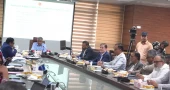
The Bangladesh Knitwear Manufacturers and Exporters Association (BKMEA) has called upon the Prime Minister and Members of Parliament to reconsider and amend several provisions of the Bangladesh Labor (Amendment) Ordinance, 2025.
In a press conference, BKMEA President Mohammad Hatem expressed deep concern that some of the amendments proposed by the previous interim government were "ambiguous" and appeared to be part of a "planned effort" to destabilize the industrial sector.
He alleged that "over-enthusiastic individuals" within the former administration may have designed these rules to undermine the export-oriented industry.
The press conference was held at BKMEA office in Bangla Motor in the capital on Sunday.
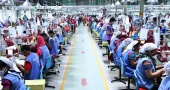
The trade body warned that certain sections of the new ordinance create administrative complexity, increase production costs, and threaten the global competitiveness of the country's readymade garment (RMG) sector.
The BKMEA highlighted several specific areas where the 2025 Ordinance deviates from the industry's practical needs and the recommendations of the Tripartite Consultative Council (TCC).
Redefining ‘Worker’: BKMEA argued that the amended definition of a "worker" is too broad and creates confusion between general employees and management/administrative officers. They are seeking a clearer distinction to prevent administrative overlap.
Compensation for Resignation: Under the new ordinance, a worker is entitled to 7 days of wages as compensation (for every service year) due to resignation after only three years of service. BKMEA recommends that this benefit should only kick in after a minimum of three to five years of continuous service, with a graded scale for longer tenures (e.g., 15 days for 5–10 years and 30 days for over 10 years).
Collective Bargaining Agent (CBA): BKMEA proposed that even if a facility has only one trade union, it must secure a majority (50% + 1) in an election to be recognized as the CBA.
Mandatory Provident Fund: The amended ordinance makes a Provident Fund (PF) mandatory for any factory with 100 permanent workers. BKMEA has recommended increasing this threshold to 500 workers to reduce the financial and administrative burden on smaller and medium-sized units.
Trade Union Registration: The ordinance allows for up to five trade union registrations in a single establishment or group of establishments. BKMEA expressed concern over the potential for industrial unrest and recommended strict oversight on these registrations.
Harassment Grievance Committees: While the ordinance mandates a 5-member committee to handle complaints of discrimination and violence, BKMEA is seeking further clarity on the operational guidelines of these committees to ensure they function fairly.
Impact on Sustainable Development
The association emphasized that while they support the welfare of workers, the law must be "investment-friendly" to ensure the industry's sustainability. They noted that the current version of the ordinance creates "intentional hurdles" that could lead to the destruction of factories and a decline in national exports.
"We believe some provisions were drafted with the intent to destroy our industrial infrastructure," said Mohammad Hatem.
"To ensure the continuous growth of the knitwear sector, it is essential to align the law with the realistic recommendations provided by the owners and the TCC," he
BKMEA concluded by urging the government to engage in further dialogue to ensure the Labor Act fosters a stable environment for both workers and employers, maintaining Bangladesh's position as a leading global apparel exporter.
Fazlee Shamim Ehsan, Executive President of BKMEA, Senior Vice President Amal Podder, CIP, and Vice President Mohammad Rashed, among others, were present in the press conference.
10 hours ago
BCCCI presents proposals to NBR ahead of budget
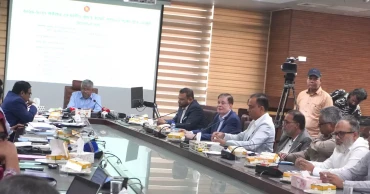
The National Board of Revenue (NBR) held a pre-budget consultation meeting with the Bangladesh China Chamber of Commerce & Industry (BCCCI) at its office in Dhaka’s Agargaon ahead of the national budget for FY 2026–2027.
The meeting was chaired by NBR Chairman Md. Abdur Rahman Khan, FCMA, and attended by senior officials of the revenue authority, according to a media statement on Sunday.
The BCCCI delegation, led by its President Mohd. Khorshed Alam, included Director Amanur Rahman, a representative from Xiaomi Technologies Bangladesh Private Limited, and Executive Director Md. Abu Taher.
During the meeting, BCCCI placed several proposals focusing on the textile sector, chemical industry, and a reduction of VAT at the trading stage of mobile phones, aiming to facilitate trade, attract investment, and support business growth.
The NBR Chairman appreciated the proposals and assured that the recommendations would be reviewed and could be considered in the formulation of the national budget for FY 2026–2027.
10 hours ago

Bangladesh inflation eases to 8.71% in March: BBS
Bangladesh’s point-to-point general inflation eased slightly to 8.71 per cent in March 2026, down from 9.13 per cent in February, according to the latest data from the Bangladesh Bureau of Statistics (BBS).
The BBS data showed that food inflation fell to 8.24 per cent in March from 9.30 per cent in the previous month while non-food inflation rose slightly to 9.09 per cent from 9.01 per cent.
Both rural and urban areas experienced a modest decline in overall inflation.
In rural areas, the general point-to-point inflation stood at 8.72 per cent in March down from 9.21per cent in February 2026 though it was higher at 9.41 per cent in March 2025.
Rural food inflation declined to 8.02 per cent from 9.07 per cent while non-food inflation increased to 9.38 per cent from 9.34 per cent.
In March, 2025, rural food and non-food inflation were 8.81 per cent and 9.97 per cent respectively.
In urban areas, general inflation declined to 8.68 per cent in March from 9.07 per cent in February.
Urban food inflation decreased to 8.78 per cent from 9.87 per cent whereas non-food inflation increased to 8.62 per cent from 8.57 per cent.
In January 2025, urban food and non-food inflation were 9.18 per cent and 9.95 per cent respectively.
14 hours ago

Dhaka, Ctg bourses open week on bearish note
Dhaka and Chittagong stock exchanges kicked off the week on a downbeat note on Sunday, with major indices declining and most stocks losing ground in the first hour of trading.
At the Dhaka Stock Exchange (DSE), the benchmark DSEX index shed 46 points in the opening hour, while the Shariah-based DSES fell 6 points and the blue-chip DS30 index dropped 14 points.
Market breadth remained heavily skewed to the downside, with 316 companies recording losses against gains in only 46, while 25 others held steady.
The turnover in the first hour crossed Tk 220 crore in shares and units.
The bearish sentiment spilled over to the Chittagong Stock Exchange (CSE), where the broad-based CASPI index tumbled more than 80 points.
Of the companies traded, 22 posted gains while 64 declined and 9 remained unchanged.
The first-hour turnover at the CSE surpassed Tk 7 crore.
20 hours ago
Apparel exports to US decline 8.53% in Jan-Feb amid regional competition
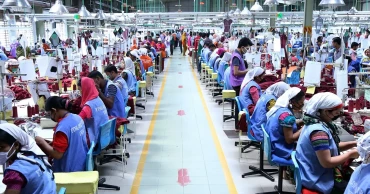
Bangladesh's readymade garment (RMG) exports to the United States – its single largest export destination – faced a setback in early 2026, recording an 8.53 percent decline in January and February, compared to the same period in 2025.
According to the latest data from the Office of Textiles and Apparel (OTEXA) of the US Department of Commerce, the downturn was marked by a "double blow" of falling prices and reduced shipment volumes. Unit prices for Bangladeshi apparel dropped by 2.47 percent, while the overall export volume (measured in square meter equivalents) fell by 6.21 percent.
The decline in Bangladesh's exports reflects a broader contraction in the US apparel import market, which saw a total decline of 13.47 percent in early 2026. Analysts suggest that high inflation, shifting consumer spending patterns, and inventory adjustments by major US retailers have contributed to this global slowdown.
Despite the overall market slump, Bangladesh’s regional rivals—Vietnam and Cambodia—managed to post positive growth, signaling intensifying competition for market share. During the same period, Vietnam’s exports to the US grew by 2.86 percent, while Cambodia recorded a significant surge of 18.43 percent.
While traditional competitors are gaining ground, China’s massive decline in the US market continues to create a strategic opening. US fashion companies are accelerating their "China Plus One" sourcing strategies due to geopolitical tensions and trade barriers.
Industry experts believe that if Bangladesh can improve its efficiency and diversify its product range, it can capture a larger portion of the vacuum left by China.
Mohiuddin Rubel, Former Director of the Bangladesh Garment Manufacturers and Exporters Association (BGMEA) and Additional Managing Director of Denim Expert Ltd, noted that the current trend highlights the vulnerability of relying solely on basic, low-margin products.
"The decline in both volume and unit price is a signal that we must pivot towards high-value-added products and improve our lead times," Rubel said.
"While the overall US market is shrinking, the growth of Cambodia and Vietnam shows that buyers are shifting orders to destinations that offer better logistical efficiency or tariff advantages,” he said.
1 day ago
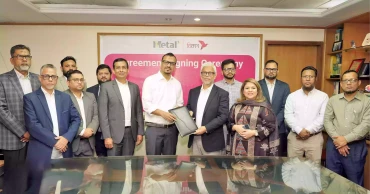
bKash agent points to enable instalment payments for Metal Motors’ farm machinery
Farmers can now pay instalments for mechanised agricultural vehicles purchased from Metal Motors through nearby bKash agent points, making payments easier and more secure at the field level.
Under a newly signed agreement, Metal Motors will use bKash’s Agent-to-Merchant (A2M) Cash Collection Solution to facilitate instalment collection across the country. Through this system, payments made at agent points will be directly credited to the company’s account as electronic money (e-money).
The initiative is expected to reduce financial risks for stakeholders while making the transaction process more efficient in terms of time and cost.
The agreement was signed recently at the head office of Metal Motors Limited, attended by senior officials from both organisations. Present from Metal Motors were Managing Director Sadid Jamil, Directors Sarah Jamil and Saad Jamil, and CEO Md. Mizanur Rahman. Representing bKash were Chief Commercial Officer Ali Ahmmed, Head of Business Sales Masrur Chowdhury, and General Manager Md. Somel Reza Khan.
bKash officials said their ‘Cash Collection Solution’ is already being used by leading companies across sectors such as telecom, cement, beverages, lifestyle, food, and pharmaceuticals to streamline field-level financial management.
They added that such digital services are contributing to a more transparent and secure transaction ecosystem in Bangladesh, helping improve overall economic efficiency and momentum.
1 day ago

DSE revises trading hours to support energy-saving move
The Dhaka Stock Exchange PLC has set new office hours and a revised trading schedule in line with the government’s energy-saving measures.
The new timings will come into effect from Sunday and remain in force until further notice, according to a press release issued on Saturday.
As per the revised schedule, office hours will run from 9:00am to 4:00pm.
Trading on the bourse will begin at 10:00am, with the continuous trading session continuing until 1:55pm.
The post-closing session will take place from 1:55pm to 2:00pm, while the market will officially close at 4:00pm.
The move comes as part of broader efforts to tackle the ongoing energy crisis, with banks and other financial institutions also adjusting their office hours in compliance with the government’s directive.
1 day ago

DSEX sheds 148 points in a week amid sustained selling pressure
The benchmark index of the Dhaka Stock Exchange (DSE) declined by 148 points over the week as persistent selling pressure dominated four out of five trading sessions, eroding market capitalisation.
According to the DSE’s weekly market pulse, most indices closed lower during the week. The broad index DSEX fell 148 points, while the Shariah-based DSES index dropped 19 points. The blue-chip DS30 index also lost 85 points.
However, the SME index advanced by 134 points, reflecting gains in small and medium-sized companies.
Market breadth remained negative, with prices falling for 206 issues, while 172 advanced and 12 remained unchanged.
Despite the downturn, average daily turnover increased due to heightened selling activity. The DSE recorded an average turnover of Tk 668 crore during the week, up from Tk 531 crore in the previous week, marking a 25.78% rise.
Continuous sell-offs led to a nearly 3% decline in market capitalisation over the five trading days.
Sector-wise, prices rose in 14 sectors while declined in seven sectors.
The banking sector saw a sharp drop of about 38%. Financial institutions declined by 26%, cement by nearly 6%, food and allied by 11%, telecom by 49%, and travel by 7%.
On the gaining side, mutual funds posted the highest increase, surging 271%. Engineering rose 145%, paper and printing 157%, and tannery 165%.
In terms of turnover, ACME Pesticides Limited topped the chart, followed by Orion Infusion, Summit Alliance Port Limited, Khan Brothers PP Woven Bag Industries Limited, and Brac Bank.
In block trading, Al-Arafah Islami Bank PLC led the board with shares worth Tk 18 crore changing hands during the week.
IFIC Bank First Mutual Fund emerged as the top performer, delivering a 52% return. In contrast, Far East Finance and Investment Limited was the worst performer, with its return plunging by over 30%.
1 day ago
Liquidity boost for Islamic banks as BB plans interbank market
Bangladesh Bank (BB) has initiated steps to launch an Islamic Interbank Money Market by June this year, aiming to improve liquidity management for Shariah-based banks.
At present, Islamic banks face difficulties during liquidity shortages as they are unable to participate in the conventional call money market used by traditional banks. The absence of a Shariah-compliant short-term funding mechanism often puts these institutions under financial strain.
The new marketplace is expected to provide an alternative financing avenue, making it easier for Islamic banks to trade short-term funds among themselves.
In designing the framework for this new market, the central bank has reportedly reviewed and analysed the successful models of Islamic interbank money markets in Indonesia, Malaysia, and Bahrain.
A senior BB official said there has been a lack of an effective interbank system for fund transfers specifically tailored for Islamic banks.
"Once the new market is operational, banks with surplus liquidity will be able to support those facing deficits. This will play a positive role in stabilising the liquidity situation within the Shariah-based banking sector," he said.
While the move has been welcomed, some industry experts emphasise that this is only a partial fix.
A former managing director of a private sector Islamic bank observed that while an interbank system is helpful for managing short-term liquidity gaps, it is not a solution for long-term structural issues.
He stressed that the central bank must maintain strict monitoring over the fund management of these banks to ensure lasting stability.
The introduction of this dedicated money market is seen as a crucial step in modernising Bangladesh’s Islamic banking sector, which currently holds a substantial share of the country's total banking assets.
1 day ago
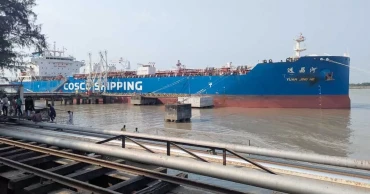
Vessel carrying 34,000 tonnes of diesel arrives at Ctg port
Malaysian ship Shan Gang Fa Jian carrying 34,000 tons of diesel has arrived at Chittagong Port.
Syed Refayet Hamim, secretary of Chittagong Port Authority, said the vessel reached the Kutubdia Channel in the Bay of Bengal on Friday night.
According to the ship’s local agent, Pride Shipping Lines, the tanker arrived at the outer anchorage of Chittagong Port on Saturday morning.
Earlier on Friday at 2 pm, another vessel from Singapore, Yan Jing He, carrying 27,300 tons of diesel, berthed at Dolphin Jetty-6 of Padma Oil.
The ship was scheduled to arrive at the port’s outer anchorage later that night.
Nazrul Islam, managing partner of Pride Shipping Lines, said, "Shan Gang Fa Jian has already reached Kutubdia. It is carrying just over 34,000 tons of diesel from Malaysia and is scheduled to berth at the port on Saturday."
1 day ago