opinion
The Iran war will cement China’s superpower status
As the world’s biggest oil importer, the Iran war poses a significant threat to China. But Beijing has been preparing for a crisis like this for years and is well positioned to turn the conflict into an advantage in the race for global economic supremacy.
Last year, China imported about half of its crude oil and almost one-third of its liquefied natural gas from the Middle East. But it has aggressively built up strategic stockpiles of fossil fuels. China is estimated to hold the world’s largest emergency reserves of petroleum, totalling 1.3bn barrels.
Even so, Iran has said vessels linked to “non-hostile” partners — which includes Beijing — can traverse the Strait of Hormuz. Almost half of China’s imported gas is piped from Russia and Turkmenistan on long-term contracts. Moreover, the Chinese Communist Party has already leveraged its centralised power to restrict exports from the country’s refineries, and could use it to hold down prices and pivot to alternative energy sources too.
Besides, China has made significant investments in electrification. Electricity accounts for 30 per cent of the country’s energy consumption, about 50 per cent higher than the US or Europe, making it more insulated from rising global oil prices. (With its rapid solar and wind build-out, it already accounts for roughly one-third of renewable energy generation capacity worldwide.)
A diverse energy mix, multiple suppliers and access to routes that bypass the Gulf mean only about 6 per cent of China’s total energy consumption is directly exposed to disruptions in the strait, estimates Goldman Sachs.
In sum, China could weather a conflict that lasts for several more months, while greater protection from global energy prices will make its exporters more competitive.
Beijing’s bet on cleantech and end-to-end industrial independence means it can make lasting economic and diplomatic gains from the war, too.
First, the conflict has underscored the importance of reducing reliance on hydrocarbon imports. Chinese firms account for at least 70 per cent of global manufacturing capacity for major green technologies, including solar, battery and electric vehicle components. The country also dominates the extraction and refining of the rare-earth elements that go into them.
Reflecting this, investors have rushed into the country’s green energy stocks in anticipation of rising global demand for renewables. China’s top battery makers have gained more than $70bn in market capitalisation since the US and Israel attacked Iran.
Next, with nations relying on resources via the Middle East, China can position itself as a supplier of last resort given its stockpile of fossil fuels and industry-critical materials. It is also a net exporter of refined petroleum. (Taiwan, for instance, has already rebuffed Beijing’s offer of energy support.)
China is the world’s second-largest exporter of fertiliser. Though it has restricted exports to bolster domestic security, it could act as a buffer to nations facing agricultural distress. It also has strategic reserves of sulphur, a key element in plant feed and metal processing, which is widely sourced via the strait.
Likewise, the country has made progress in reducing its dependence on helium imports, with the recent discovery of a large domestic reserve and reported breakthroughs in purification. As outlined in last week’s edition, supplies of the chemical from Qatar are vital in Asia’s chip industry. (I spoke to CNN and The Tech Report about this.)
A lengthy war could also give Beijing leverage ahead of a proposed meeting in May between Chinese President Xi Jinping and US President Donald Trump, notes Agathe Demarais, senior policy fellow at the European Council on Foreign Relations. “Many of the missiles, fighter jets and other weapons that America needs for its war effort run on Chinese-made rare earths. But the US has only about two months of stocks,” she said.
China’s strong relations with Gulf nations and its record in developing infrastructure mean its companies are in pole position to rebuild the region after the war, added Demarais. “They can provide finance and the materials to revive ports, energy facilities and desalination plants.”
Beijing’s efforts to raise the renminbi’s global standing might get a boost from the war as well. A shift away from dollar-denominated oil towards domestic energy and Chinese green tech will play a part. Iran is also reportedly negotiating with some nations to permit the passage of ships, provided payments are made in yuan.
“The conflict could be the catalyst for an erosion in petrodollar dominance and the beginnings of the ‘petroyuan’,” argues Deutsche Bank strategist Mallika Sachdeva. In other words, Trump’s war could normalise non-dollar energy sales.
Finally, the conflict boosts China’s image as a more stable partner relative to the US across the developed and developing world. Just last week Chinese premier Li Qiang convened more than 70 global chief executives at the China Development Forum to tout the country’s reliability and supply chains. China’s favourability compared to the US is indeed rising, exclusive survey data from Morning Consult shows.
China’s economy won’t emerge unscathed. As the war goes on, the country will face rising costs, tighter supplies and the risk of further rationing. In a prolonged conflict scenario, a deep global recession would hurt demand for its exports. Foreign partners will also remain wary of trade imbalances and becoming too dependent on the nation.
But those expecting the war to undermine China’s superpower status — a view common among Maga types — are badly mistaken. Beijing’s long-termism, diversification and nimbleness make the country uniquely resilient, and well positioned to exploit new openings.
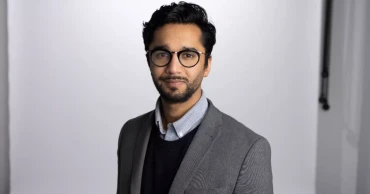
#By Tej Parikh
4 hours ago
Saving Lives, Safeguarding Tigers: WildTeam Expands Safety Training in the Sundarbans
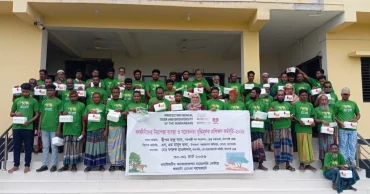
WildTeam has launched the Training Programme on Safety Measures and Awareness Building for Forest-Dependent People – 2026 in Joymoni under the Chandpai Range of Mongla and Kolbari under the Satkhira Range of the Sundarbans, reinforcing a vital message at the forest edge: protecting human life and conserving wildlife must go hand in hand. The initiative is being implemented under the five-year programme “Protecting Bengal Tiger and Biodiversity of the Sundarbans,” supported by Echotex and Echoknits, a Bangladesh–UK joint venture.
Designed for people whose lives and livelihoods depend on the forest, the training equips participants with practical knowledge on forest safety, human–tiger conflict mitigation, wildlife and forest laws, compensation provisions, basic first aid, and the sustainable harvesting and processing of forest resources. Safety kit boxes have also been distributed among participants to improve emergency preparedness and reduce risk while entering or working near the forest.
21 hours ago
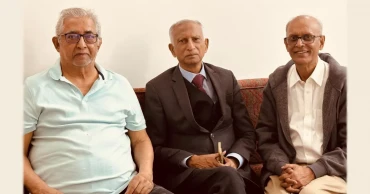
Remembering A. A. M. S. Arefin Siddique: Champion of education and inspiration
Today marks the first death anniversary of A. A. M. S. Arefin Siddique, the 27th vice-chancellor of University of Dhaka, whose transformative leadership and dedication to education left an indelible mark on Bangladesh’s academic landscape.
In his memory, Dr Md. Anwarul Islam, CEO of WildTeam and Former Professor of the Department of Zoology, University of Dhaka, reflects on Siddique’s visionary approach, his commitment to nurturing generations of scholars, and the enduring legacy of integrity, innovation and inspiration he instilled in the university and beyond.
I was then the Director of the Biotechnology Research Centre of Dhaka University. One afternoon, a board of members’ meeting was scheduled in the vice-chancellor’s meeting room. Everyone was waiting. I went to the vice-chancellor, Professor Arefin Siddique, to ensure everyone’s presence.As soon as he got up from his chair, a young student seeking admission entered and said that he had something to say. The student said to the calm vice-chancellor: “My father is very poor and lives in a village. I want to study at Dhaka University.”
Prof Siddique replied, “Yes, apply and take the admission test. If you pass, you will certainly be admitted.”
When the student asked, “What if I don’t pass?” Prof Siddique replied, “Then there is nothing to be done.”
The student again said, “Sir, in any case, please admit me.” Hearing this, there was no sign of annoyance in the vice-chancellor’s eyes, nor did he ignore or disdain the student.
Only after explaining the matter and politely dismissing him did he come to preside over the meeting.
It is worth noting that during his tenure as vice-chancellor, no one had to seek permission to enter his room.
“Stay good” were the last two sentences the vice-chancellor would often say. He used to end his discussions with these words: “Stay good” (valo theko or valo thakben). This was no exception.
After his death, a former student of his department said on a television channel, “Mass communication and journalism are not only taught in the classroom; even when Arefin Siddique Sir was simply standing, the language of mass communication could be learned from his physical expressions.” As his colleague, I witnessed this as well.
It is often said that the people of southern Bangladesh are more hospitable. But Professor Arefin Siddique from Narsingdi proved that hospitality knows no regional boundaries. After his tenure as vice-chancellor is over, he did not lack assistants, yet whenever I visited his house, he would personally bring snacks on a tray and serve it himself. He last entertained me on 30 December 2024.
My zoology teacher and former Dean, Faculty of Biological Sciences and Pro Vice Chancellor of Dhaka University, Professor Dr Md. Shahadat Ali, lost his wife on 18 December 2024. Professor Siddique, my teacher Professor Gulshan Ara Latifa and I attended the funeral on 20 December.On 29 December, Arefin Sir called and said, “Shahadat Shaheb must be very upset; let’s visit him.” The next day I went to his house in Dhanmondi for that reason.
I had taken off my shoes and was sitting in the drawing room in my socks. He asked why I had taken off my shoes. He brought a pair of sandals himself and, despite my objections, insisted that I wear those. Then he brought snacks with his own hands — I had to finish it all.
After the death of our respected Bhabi, Shahadat Sir was deeply broken. Towards the end of the conversation with Arefin Sir, he smiled and said, “Arefin Shaheb, today, after a long time, it feels like we are sitting at the Dhaka University Club, having tea and chatting.”
On our way back to the car, we spoke a lot. He highly praised the present vice-chancellor of Dhaka University, Professor Niaz Ahmed Khan. As far as I remember, he said: “When I was vice-chancellor, Professor Niaz was the chairman of his department. He always seemed like a positive person.”
Professor Niaz Ahmed Khan also showed the highest respect for him and the university after Arefin Sir’s death.
The nation witnessed the deep respect the vice-chancellor had for his colleagues. He proved that there is no shortage of values in the Dhaka University family — values that Arefin Sir expressed in almost all his speeches.
There was a time when the words “Arefin Siddique and Dhaka University” became almost synonymous.
I have never seen this selfless, ungreedy man upset. Once I heard that he might become the chairman of the University Grants Commission. Eventually, he was not given the position. Many years later, I asked him about it. He replied with a smile: “The head of the government has to consider many things while running the country. In that sense, the right decision was made.”
The vice-chancellor is the guardian of all teachers, students, officers and employees of Dhaka University. Professor Arefin Siddique spent many sleepless nights performing his duties.I was then the chairman of the Zoology Department when our first-year student Afia Jahan Chaity died on 18 May 2017 after being admitted to a private hospital. When I informed the vice-chancellor, he immediately said the university was ready to do everything for the student.
Later, the university authorities filed a case against the doctors concerned. Once case was filed, doctors from all over Bangladesh got united and went on a movement and formed a human chain in the capital’s Shahbag. My closest relatives, who were doctors, also became strangers to me instantly. The university proctor told me to request the vice-chancellor to withdraw the case.When pressure mounted to withdraw the case, the vice-chancellor said firmly: “Give my student back and I will withdraw the case.”
Eventually, after compensation was provided to the family, the case was withdrawn.Sometimes discussions arose about banning outsiders from entering the campus during holidays. One day I asked his opinion. He said, “Dhaka University is for everyone. If people cannot come here, where will they go? Children and young people will come, see the university and dream.” He often said that the feeling of adapting to us is decreasing day by day.
Just as he thought about society, he also cared deeply about nature. In 2012, on behalf of WildTeam, we organised a rally from Khulna City to Khulna University to raise awareness about the tigers and the Sundarbans conservation. Professor Arefin Siddique joined us to inaugurate the programme: Sundarban Mayer Moton (Motherly Sundarbans).
19 days ago

Give to gain: Resilience has a woman’s face
Growing up in rural Bhutan, I did not learn the meaning of resilience from textbooks. I learnt it from the women in my life.
I learnt it from my mother, who worked in our fields, understood the rhythms of the seasons better than any meteorologist, and still found time to manage home and ensure that her children received an education. I remember people from my village and surrounding villages visiting our home to seek counsel from her on complex issues like inheritance disputes. She did it all with quiet strength but never called it leadership. But that is exactly what it was.
I learnt it from the women farmers who could read the sky and the soil. They were the first to worry when crops failed. They were the ones who rationed food so everyone could eat. They walked longer distances when water sources dried up.
I learnt it from teachers who insisted that leadership was not defined by gender or a sense of entitlement but by character and service.
Long before climate change became a global agenda item, the women in our region were already adapting. They were climate leaders without ever being called so. Today, the world has the language to describe what they lived through. Climate change amplifies existing inequalities. It threatens livelihoods, health, and dignity, and it does so disproportionately for women and girls.
Women remain historically underrepresented in the design, implementation, and financing of climate action. Under a worst-case climate scenario, an estimated 158 million more women and girls could be pushed into poverty, which is 16 million more than the projected number of men and boys. (UN Women)
At recent global climate forums, the imbalance remains visible. At COP29, only 6 out of 78 leaders referenced the impacts of climate change on women, and four of those voices were women themselves (WEDO). This is not just a representation gap. It is a leadership gap in shaping solutions.
The climate finance landscape reflects a similar imbalance. Out of USD 33.1 billion per year in bilateral climate-related development assistance, only 57% integrates gender considerations, and only 2.4% has gender equality as a principal objective (OECD DAC, 2022). In mitigation finance, the figure drops to just 2% (OECD, 2022). For adaptation, it is 4% (OECD CRS, 2022). And when we look at projects that explicitly target both climate adaptation and gender equality, the number stands at a mere 0.1%. (OECD, 2022)
We are integrating gender. But we are not prioritising it.
This year’s International Women’s Day theme, ‘Give to Gain’, resonates deeply with me.
In our culture, we often say that generosity strengthens community. When you give land to build a school, you gain an educated generation. When you give trust, you gain loyalty. When you give opportunity, you gain transformation.
If we give women meaningful space in climate decision-making, we gain more inclusive and effective policies.
If we give funding directly to women-led and community-based institutions, we gain stronger adaptation outcomes. If we give visibility to women’s leadership, we gain accountability in climate governance.
If we give better data and evidence, we gain smarter and more equitable investments. If we give institutional commitment, not just policy language, we gain lasting change.
Across the Hindu Kush Himalaya, women are already on the front lines, leading sustainable agriculture, managing water resources, responding to disasters, preserving biodiversity, and holding communities together in times of crisis. But too often, they lack access to finance, technology, and platforms to scale their contributions.
At the International Centre for Integrated Mountain Development (ICIMOD), as we move forward into our next Medium-Term Action Plan, our commitment is clear: to make strategic investments in women and systematically include them across our science, policy, and finance platforms; to strengthen tracking of gender equality and social inclusion; and to ensure that climate finance in the Hindu Kush Himalaya reaches those who are already leading change on the ground.
But beyond institutional commitments, I carry something more personal.
Every time I meet women farmers in the mountains of our region, I see reflections of my mother. I see the same quiet determination. The same intelligence is rooted in lived experience. The same ability to hold families and ecosystems together under stress.
Living in the mountains has taught me that resilience is not abstract. It has a face. It has a voice. And very often, it is a woman’s voice.
On this International Women’s Day, let us celebrate women’s contributions and invest in them. Let us not only acknowledge inequality, but also correct it. Let us not only integrate gender, but also prioritise it.
Because when we truly give to women, we do not diminish ourselves.
We gain stronger communities. We gain a more resilient planet. And that’s something worth fighting for.
Happy International Women’s Day.
Pema Gyamtsho is the current Director General at International Centre for Integrated Mountain Development
24 days ago
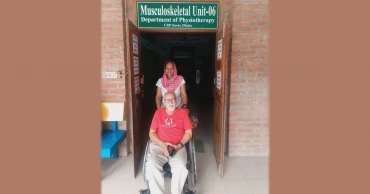
Good bye Saleem Samad our old friend
So, the ultimate noisy, brattish, flippant, hyper serious Saleem Samad is gone. To the world he was the fearless journalist and media activist but to us he was our old from Shaheen school, batch of 1969. He was the same person all his life, not serious it would seem except for matters that really mattered to him but always a friend, always acting as if life was a party of old friends where he could make the most noise.
The hot Ovaltine in the CHT story
School days were simpler for all of us where the world was so limited and safe but life changed after SSC exams as we all drifted to different institutions and destinations. Saleem was not the kind to climb educational ladders and he ended up as a journalist which truly suited him. If anything, it was tailor made for him and he chased stories, did interviews and wrote them in his slightly off grammar English that was soon gathering attention. He walked the ranks with various English dailies and was soon a name known to many.
He made his name in the late 70s with a report on the Shanti Bahini insurrection having found contacts to take him there in the CHT hills. It came out in the Bangla version of the Ittefaq group – Weekly Robbar- and that brought him great fame and familiarity.
I would tease him about his story content where he mentioned drinking hot Ovaltine offered by the SB and all that. It was a great story and Saleem even had to undergo interrogation by the authorities for his trip and all that but he survived and went on with his work merrily.
At Bangladesh Today and Dhaka Courier
We met as colleagues at Bangladesh Today in the early 80s, a superbly produced and written monthly that had many old and new friends involved. It was one of the best English mags in the country and caught everyone’s immediate attention. The guy-in-charge was Syed Mahmud Ali who later joined the BBC and a host of young and mid- level journos worked and chatted there. Subrata Dhar, Nadeem Quadir, Zahed Khan, Belal Chowdhury, Kalam Mahmud, Hasan Ferdous, Saleem and myself were some names in the crowd. Most were contributors but we all became part of a team that pushed a work of excellence.
What was most fun was of course the eternal adda we all had where Saleem would get his legs pulled really hard. It bred relationships that never died and after so many years many recalled those happy days…
I left in 1984 to join Dhaka Courier and soon Saleem also became a regular contributor there. However, I lead a bit of a peripatetic life and left in 1986 to join the UN though my links with the media remained. And with Saleem too,
The jailed journalist
Saleem did full time jobs, part time ones too but all were within the media world. His reputation grew as did his freelancing work. In 2002, while freelancing for an international media outfit, Saleem was arrested for ‘anti-state “activities and in jail for over 2 months. He was finally released after his arrest became an international cause for media freedom everywhere. Not only did many speak up about him but he himself became an activist and remained so for the rest of his life. It was truly a game changing episode of his life.
Saleem remained active in the media freedom sector and when we both met in Toronto in 2007, Saleem was running an online portal but also active as a media freedom pusher. That had become his profile and allowed Saleem to push his causes. By the time we both returned after declining to be Canadian citizens, Saleem had gained a global media activist profile.
Later life
His later years were full of many activisms, column writings and social activities. He was a keen Shaheen school alumni activist and made many new friends from new generations. That’s where I last met him. We talked as two ancient friends do. He had muscle and pain issues and even entered the CRP a couple of times. We last chatted on the phone a couple of months back about his aches and pains and that was that. And then this news. I am still struggling to process it..
So how does one say goodbye to a friend of 60+ years? Briefly, I hope. So farewell old friend till we meet again in the great newsroom up there where nothing including news making ever ends.
Best wishes
1 month ago
Bangladesh Must Urbanize Its Social Safety Nets
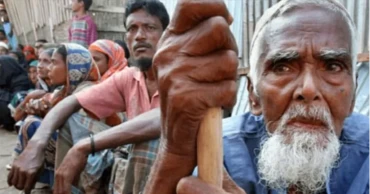
Dhaka, the planet’s second most populous city, is on track to become the world’s largest city by 2050, according to the UN World Urbanization Prospects 2025 report. This dramatic rise is largely due to the millions of rural-to-urban migrants seeking work, safety, and survival in the city. Urban Bangladesh is quite literally built by migrants, yet the state’s social safety nets are designed as if the urban poor, predominantly rural-to-urban migrants, do not exist.
When more inclusive social safety nets are imagined, they miss the spatial realities that structure migrants’ everyday lives in Bangladesh’s cities. More bluntly, Bangladesh’s social protection efforts continue to have a rural bias. Research by the Centre for Policy Dialogue (2023) emphasizes, for instance, that urban poor households remain systematically excluded from more than 115 safety net schemes nationwide. The government’s fears that urban safety nets might encourage migration are often cited to justify exclusion, even though allowance amounts are far too small to offset the cost of urban living. We, therefore, end up in a social safety net architecture that treats urban migrants as invisible people rather than legitimate city dwellers.
The Scale of Urban Exclusion
The scale of urban migrant exclusion from social safety net programmes (SSNPs) is well documented. A 2025 UNDP policy brief stated that while nearly one-third of Bangladesh’s population now lives in cities, only about 20 per cent of social protection beneficiaries are urban, and programmes exclusively targeting urban populations receive just 4 percent of total social protection spending. Nearly two-thirds of extremely poor urban households receive no social protection at all, a far higher exclusion rate than in rural areas. Even flagship programmes such as old-age, widow, and disability allowances show minimal urban reach, and in some cases such as the widow allowance they are not operational in city corporation areas. As a result, poor urban migrants are left to survive the city without any social buffer.
The Bangladesh state is cognizant of the urban gap in its SSNPs. In 2020, the government developed the Urban Social Protection Strategy and Action Plan, explicitly acknowledging that Bangladesh’s social protection system had failed to recognise the vulnerabilities of the urban poor, including migrants living in informal settlements. The strategy recognised that urban poverty is not only about income, but about insecure housing, lack of tenure, informal employment, weak social networks, exposure to violence, and exclusion from basic services, arguably making urban deprivation harsher than rural poverty. The action plan proposed a three-part framework: expanding rural programmes into cities, introducing urban labour-market interventions, and developing social insurance for urban workers.
Yet five years on, this agenda remains stalled. The action plan called for expanding allowances, food security programmes, urban workfare, and national social insurance; for creating a single registry; for ensuring portability for mobile populations; and for addressing land tenure insecurity in slums. None of this has come to pass. Perhaps, the action plan’s stalled status provides us an opportunity to imagine a more robust, security and resilience oriented, city-specific approach to social safety nets for urban migrants.
Missing Urban Social Safety Net is a Security and Climate Risk
Afterall, the absence of urban social safety nets is not only a poverty issue. It is a security and climate risk. In cities like Dhaka, migrants are concentrated in the most heat-exposed, flood-prone, and polluted neighbourhoods, while working in the most climate-sensitive and informal jobs. Without income protection, healthcare, housing, or legal recognition, climate shocks quickly translate into displacement, illness, conflict, and social unrest. Policing and disaster response cannot compensate for this structural vulnerability. Urban social protection is therefore the frontline for climate adaptation and preventive security rolled into one.
Need to Embed Social Safety Nets in Everyday Spaces
Existing policy recommendations still imagine social protection as a set of programmes delivered through eligibility lists and transfers. But migration is a spatial process, and protection must respond to that reality. Global comparative research on urban safety nets shows that income support alone is insufficient in cities; protection must be linked to housing, healthcare, childcare, employability, and violence prevention. In dense urban settings, social protection works only when it is spatiallyembedded.
If urbanizing Bangladesh is serious about protecting migrants, social protection must begin at the moment of arrival, in the places where migrants arrive over and over. We need welcome centres at bus terminals, truck stands, and transport hubs, places where migrants first enter the city. These centres can register inflows and outflows, provide first aid, drinking water, washing and ablution spaces, and connect people to jobs, housing, healthcare, schools, and legal support. They can also issue simple, non-punitive work licences or tokens that enable access to income without criminalising informality.
Beyond arrival, protection must secure the conditions of everyday life. This means safe dormitories and WASH facilities, pathways to family housing, health insurance and a strengthened urban primary healthcare system, and schools that welcome mobile populations rather than excluding children for lack of fixed addresses. Public health must be treated as a right: enforcing food safety standards, maintaining minimum air-quality thresholds, and guaranteeing water, sanitation, and waste services in migrant settlements. Social protection must also include security and care; stronger law-and-order protection in vulnerable neighbourhoods, and public spaces for sports and recreation that help rebuild social ties in harsh urban environments.
Vulnerable people often are not aware of programmes or schemes that may help them. This is why they should be able to access social safety nets precisely in the places where they experience vulnerability, meaning the city’s terminals, pavements, worksites, clinics, schools, streets, and so on. A migrant-centred safety net must be synced to the spatial and lived everyday realities of migrants. Bangladesh must, in other words, urbanize its social safety nets. As our cities continue to grow through migration and climate stress, they cannot function with security and resilience without protecting migrants. We are certainly grappling with a political failure to act on commitments, but perhaps more profoundly we are grappling with the failure to imagine an everyday lived social safety net approach for urban migrants.
By Mohammad Azaz and Efadul Huq.
Mohammad Azaz is the Administrator of Dhaka North City Corporation.
Efadul Huq, Phd, is Assistant Professor of Environmental Science & Policy and Urban Studies at Smith College.
Disclaimer: The views and opinions expressed in the article are those of the respective authors.
2 months ago

Walking at Night in Dhaka and Toronto
You would not believe it when I say that walking at night is the most relaxing thing in the world for me. As evening approaches and the yellow of the sky is replaced with black, the lights of different houses in neighborhoods flicker open exposing the streets-and people on the streets-to a pallid, shadowy hue.
Going back through memory lane, my evening walks in Dhaka as a child meant me being hoisted off the floor by either my uncle or some other relative and toured around the neighborhood block. The sky would change color according to its own will and choice.
In the long run it meant me often walking and looking up at the changing sky and watching its various shades spread all over the blue. Walking past a shop and being careful not to get hit by a car on the pedestrian sidewalk, I would ask my uncle, aunt etc to buy me something to eat. They would always oblige and I would revel at the opportunity to get something tasty to eat every time we went on a walk. Aside from that…..
Walking-or going out-by night meant watching traffic in Dhaka’s busiest streets, people getting off their cars in the middle of the road and/or buying a tiny packet of badam from a street side vendor and such other sights.
But I also remember that one would have to be careful while walking on the streets in the late evening so safety was a big thing. Everyone in Dhaka knows things could go out of control in a span of minutes.
The sights varied and in my memory’s mirror I can see my own para with its many real-life paintings in motion or in still. The elderly walk out at night to reach parks or visit a shop to buy groceries. These would be people in their 70s and 80s going out to catch a breadth of fresh air sometimes with family escorts or occasionally by themselves.
Safety was a major concern for them taking this evening walk bordering on the early dark. It’s not crime that the family is worried about but these elderly people falling down and hurting themselves. Thankfully, such scenes were rare but after all these years my memory of that anxiety still remains.
Maybe crime was an issue in some parts of the city but older residents are also stronger now, more self- reliant and taking care of themselves better. But it’s true I wish I saw a would-be snatcher getting whacked by an old man like a senior citizen version of superman. But it’s true, overall for Dhaka, precautions must be taken at night by those who want a taste of walking in Dhaka at night.
Toronto
Visiting cafes in Toronto at night time is different from Dhaka’s night time. With safety and security well taken care of, taking a walk to a neighborhood park is not an issue of concern for night strollers. When I was there, I would watch from my veranda the neighbourhood as night fell after the evening had gone to bed. The park was just a few blocks away where so many came around to taste the night descends amidst the trees. So much would happen there. It had swings and other playground toys for children. There was a large space for events and activities held in the park.
I would enjoy riding the swings at the park in the daytime but I would not go out at night alone as a stabbing had once occurred there a few days back and so for many children, night outs were off for a while. But then crime is so low in that city that family walks returned and the night was claimed back by the people living there.
For those living in downtown Toronto, the lights, busy streets and endless people walking through offer a visual and sensory stimulation of their own. Downtown Toronto offers many peaceful delights, like the cafe where some of them one can even pet a cat as an extra. Interestingly, such joints have now opened in Dhaka too. In terms of the cozy feel that one gets visiting a nearby convenience store, Toronto and Dhaka both offer that sense of pleasure including visiting vendors or joints for a midnight snack and tea.
Both cities are different and also the same in many ways. Both have their own tongues in which they speak to the residents but both are welcoming to all. Toronto is in the richer part of the world so many matters of safety and pleasure are taken for granted but Dhaka with all its limitations offers an experience all of its own.
So get up, open the door and take a walk as the lights come on.
3 months ago
Another feather added to the country's cap on Victory Day
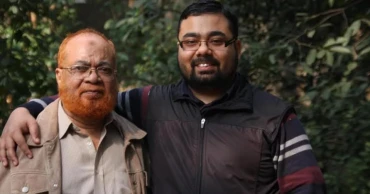
This morning my daughter, Shahrin, herself a civil engineer, excited, sent me a text from Cox’s Bazar, where she is on a holiday with her two sons, Tanzif and Tawfeeq, and her BUET faculty husband, Dr Asif Raihan: “Chhoto nanima (my wife Dr Zinat Mahrukh Banu’s youngest maternal aunt) invited all of us to a reception of Upal mama (maternal uncle) on the 27th.”
Upal is the nickname of Professor Osama SM Khan. The University of South Wales, in the UK, has announced the appointment of Professor Khan as its new Vice-Chancellor and Chief Executive, who will join the university in May 2026. It means Osama is going to be the first Bangladesh-born, as well as Bangladeshi-educated chief executive of a public university in the UK. To all of us this means the nation achieved something significant and honorable, a new success or accomplishment that brings pride, just like our heroes historically added feathers for victories on this 16th December – our historic Victory Day.
3 months ago
Mahbubullah bhai : Carrying the signature of an idealist generation
He is Prof. Mahbubullah to many and “bhai” to us, He was felicitated by many of his admirers at a recent event at the Press Club where his books were discussed by eminents like him. The occasion was meant not just to salute the person but also his books, the work that he will be leaving behind bearing his thoughts. It's an interesting journey that the once jailed revolutionary has slowly evolved in the public mind as an eminent scholar.
I realize that in many ways, he remains one of the last of his generation, who believed that there was such a place as a better world, where Marxist socialism held all the answers and the young ones like him were all ready to give their all for it all. That is no longer so anywhere and it’s in this departure that sharpens the profile of a generation who in so many ways personified politics as the path to hope , a path now lost to the weeds of time.
The Marxist’s manifesto of Independent Bangladesh
I am saying all this because Mahbubullah bhai is very much a part of that “independent state” making history of Bangladesh in 1971. How many people would know that he along with his party comrades had stood in front of a crowd and read out a manifesto of an independent Bangladesh?. As a consequence, others on the podium – Kazi Zafar and others + - had arrest warrants issued but they went into hiding but Mahbuullah bhai was arrested.
In the trial that followed. Mahbubullah bhai was found guilty and jailed. His 1971 was spent behind bars, a testimony to the integrity of his political thoughts. But it was not nationalism that had moved his mind, it was socialism that separated him and his politics from the mainstream and the two never met.
The post 1971 Bangladesh
The politics of pre-1971 Left was very ideological, uncompromising, commitment driven but also very dogmatic and intolerant. What held them together was also what divided them. The ideology of the Left was either pro-“Peking “as Beijing used to be called and pro- Moscow, two distant meccas. International politics ruled the waves of local politics going deep into the realms of Bengal’s distant villages even.
Between 1972 and 1975, despite all the bloodshed, the Left emerged as a ship of nobler souls than the average politicians of the mainstream. Whether it was Siraj Shikder of the Sharbohara Party who had taken to armed confrontations and was felled or Mahbubullah bhai’s political chariot that was more focused on the structure of political change making , they stood tall.
They were however never a serious contender for state power as 1975 and subsequent changes showed but they stood tall , respected for their integrity and who some hoped would perhaps succeed one day and set up a poor people’s paradise on earth. It was not to be as global history shows but to many including us, they were people of integrity who were committed to positive change.
But history has its own way of deciding its path. And one day the old regime died and if the AL was a casualty, on looking back can see that the independent Left of many kinds also faded away partly perhaps as the main foe was gone.
A political construction which had pushed away the old regime claimed the formal seat of power and many members of the old Left drew close to that. History’s equations once more decided the march of time and those who once wanted to capture the State now became more loyal to the same but as it wore different robes.
The academic and the critic
Mahbubullah bhai’s life too changed gears and had soon joined the academia at Chittagong University and both his status in scholarship and rose rapidly. And one day he had reached the top in both the academic ladder but ancillary ones as well. Meanwhile, he was closer to the BNP cluster which was far less regimental or orthodox than his earlier Marxist ones. Yet he didn’t exactly give up his belief structure but was less ideological class politics driven perhaps and emerged as an eminent senior intellectual.
I would remember meeting him once to discuss class politics in the home of the late Editor of Dainik Bangla Ahmed Humayun in the early 70s and occasionally later at events or socials. His world was more about words while earlier it was about action. There is a certain inevitability in this process but that affects us all.
New realities emerge as one ages, family time demands grow but he remains full of heat and passion that suited him. His four walls may have changed over time but his own role within that space remained the same- to be loyal to what his intellect considered was right. It’s not about agreement but commitment.
3 months ago
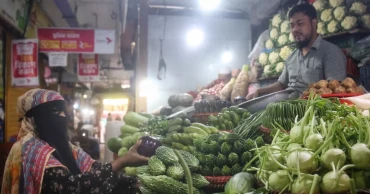
Soaring price of fresh produce and its effect on low-income families of Dhaka
As the scent of winter promises relief, the fresh produce markets of Dhaka are delivering a different kind of jolt: sudden and sharp price hikes on essential food items. For the city's ordinary citizens, this surge in the cost of living is a heartbreaking compromise between family needs and financial reality.
The recent spike in prices for both seasonal vegetables and proteins is placing an immediate and heavy burden on middle and low-income families, with a simple trip to the market becoming a source of anxiety.
The struggles reported by consumers and small traders across the capital show a widening gap between market reality and the goal of price stability pursued by bodies like the Directorate of National Consumer Rights Protection (DNCRP).
Read more: Winter fails to cool prices as Khulna kitchen markets see fresh hikes
Reality of the Market
The escalating prices are not abstract figures; they are deeply personal crises.
Md. Dulal, a security guard, shared his heartache over a family craving. "The duck meat is now selling for Tk 500 per kilogram. My children had their hearts set on it, but with the price going up, it's out of our reach now. It's simply a luxury we cannot afford."
The protein crisis extends to fish as well. Md. Mainuddin, a fish trader himself, noted the extreme costs for premium catches. "A one-kilogram Hilsa fish goes for Tk 2,800, and a large Rupchanda fish is Tk 1,200 per kg, which is far too high for the average buyer, even if other fishes are slightly lower in price."
4 months ago