
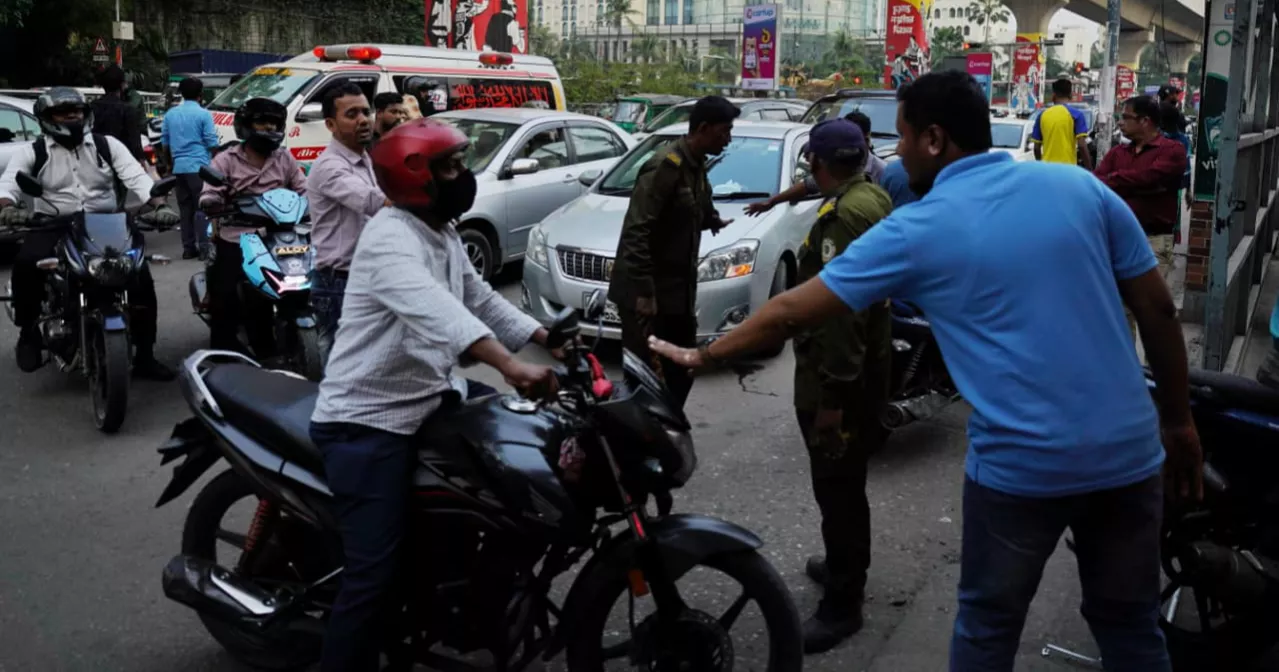
The government has started an experimental sale of fuel through the ‘Fuel Pass’ app at two petrol pumps in the capital, aiming to ensure more orderly and transparent distribution.
Monir Hossain Chowdhury, spokesperson and Joint Secretary (Operations Division) of the Energy and Mineral Resources Division, shared the information at a press briefing on the overall energy situation at Secretariat on Thursday.
“We have started the pilot at two filling stations—Sonar Bangla in Asad Gate and Trust Filling Station at Tejgaon,”he said.
He added that the initiative has already received strong public response with registrations rising rapidly and expected to exceed 10,000.
“This process is a bit time-consuming. For now, we are focusing on motorcycles at the two stations. We hope to gradually expand across Dhaka and later replicate it nationwide,” he said.
He said a total of 469,042 litres of illegally stored fuel have been recovered as of April 8, including 352,047 litres of diesel, 36,621 litres of octane, and 80,374 litres of petrol.
He said 7,342 drives have been conducted so far, resulting in 3,110 cases.
Fines totaling Tk 14,384,350 have been imposed and 36 people have been sentenced.
Regarding current reserves, he said the country has 143,143 tonnes of diesel, 4,569 tonnes of octane, and 16,812 tonnes of petrol in stock.
“As regular imports and supply continue, there will be no shortage of octane and petrol for at least the next two months,” he said.
Responding to a question on possible political involvement in illegal stockpiling, he said investigations are ongoing alongside enforcement drives and legal action will be taken against anyone found responsible.
He also noted that the government is providing subsidies due to global fuel price pressures.
Although diesel is being sold at Tk 100 per litre its actual cost is around Tk 155, requiring a monthly subsidy of Tk 2,500–3,000 crore.
However, he said it is difficult to estimate the total financial impact due to ongoing global uncertainties particularly conflicts in the Middle East.
“There is no fuel crisis in the country. So, there is no need for hoarding or panic,” he said.
“Supply will remain stable if fuel is purchased as needed. With greater awareness and continued supply, market stability will return and consumer suffering will ease,” he added.