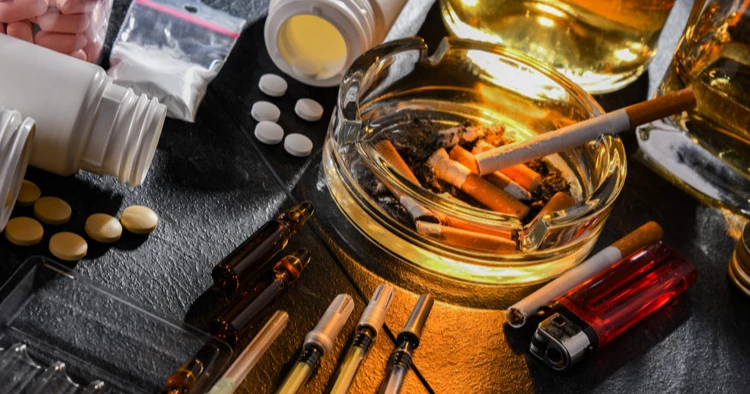
A total of 82 lakh people, almost 5% of the population in Bangladesh, use illegal drugs for recreational purposes, according to the findings of a nationwide survey.
Professor Md Shahinul Alam, vice-chancellor of Bangladesh Medical University (BMU), disclosed the survey at a dissemination meeting titled “Estimation of the Number and Category of Persons Abusing Drugs and Associated Factors: A Nationwide Study in Bangladesh” held at the Super Specialised Hospital conference hall of BMU, said a press release issued on Sunday.
The study was conducted under the supervision of the Department of Narcotics Control (DNC) and Bangladesh Medical University and Research and Management Consultants Limited (RMCL) jointly conducted the survey between February and June 2025.
Read More: FDA begins safety review of injectable RSV drugs for infants and toddlers
Cigarette smoking was not included in the 'drug use' category in the study.
The data were collected using the Network Scale-Up Method (NSUM) from 13 districts and 26 upazilas across all eight divisions, said the release.
According to the study, the highest prevalence rates were recorded in Mymensingh (6.02 percent), Rangpur (6.00 percent) and Chattogram (5.50 percent), while Rajshahi (2.72 percent) and Khulna (4.08 percent) reported comparatively lower rates.
In terms of numbers, the highest number of drug users live in Dhaka division, estimated at around 22.9 lakh, followed by Chattogram with about 18.8 lakh and Rangpur with around 10.8 lakh users, it said.
According to the division-based breakdown: 4,04,118 drug users found in Barishal, 18,79,503 in Chattogram, 22, 87, 970 in Dhaka, 7, 26, 210 in Khulna, 7, 60,812 in Mymensingh, 5, 66, 509 in Rajshahi, 10, 80, 588 in Rangpur, 4,88, 141 in Sylhet divisions.
The total number of drug users in the country stood (of any type drugs) 81,94,651.
Read More: Indian drugs seized in Satkhira
The study identified cannabis as the most commonly used drug, with nearly 61 lakh users nationwide. This was followed by methamphetamine or Yaba (about 23 lakh), alcohol (around 20 lakh), codeine-based cough syrup, sleeping pills and heroin.
Around 39,000 people were found to inject drugs, placing them at high risk of HIV, hepatitis and other infectious diseases.
Researchers found that drug users spend an average of Tk 6,000 per month on drugs.
The study also revealed that drug abuse largely begins at a young age, with about 33 percent of users first taking drugs between the ages of 8-17, while 59 percent started between 18- 25.
Unemployment, peer pressure, financial insecurity, family instability, mental stress and engagement in informal occupations were identified as major risk factors. Nearly 90 percent of users said drugs were easily accessible which is alarming, according to the survey.
The survey also highlighted severe gaps in treatment and rehabilitation services. Only 13 percent of drug users reported having access to treatment or rehabilitation, although more than half had attempted to quit.
Lack of counseling, healthcare, social support and employment opportunities were cited as major barriers to recovery.
Speaking as the chief guest, BMU Vice-Chancellor Prof Dr Shahinul stressed the need for strong political commitment and further research to prevent drug abuse, saying no one should assume that only a small group of people are affected.
“We or our children are all at risk. This threat must be addressed collectively through awareness and unity,” he said.
He also urged to work with unity to face the challenge.
Director General of DNC, Hasan Maruf said drug abuse has become a nationwide risk and must be tackled through a social movement.
The government has approved a project to establish seven drug addiction treatment and rehabilitation centers with 200 beds each in seven divisions other than Dhaka, aiming to expand medical services for drug addicts.
Experts at the event said the findings clearly show that drug abuse is not merely a law-and-order issue but a complex public health, social and economic challenge.
They called for an integrated public health-based approach focusing on prevention, treatment, rehabilitation, mental health care, employment support and social reintegration rather than relying solely on punitive measures.