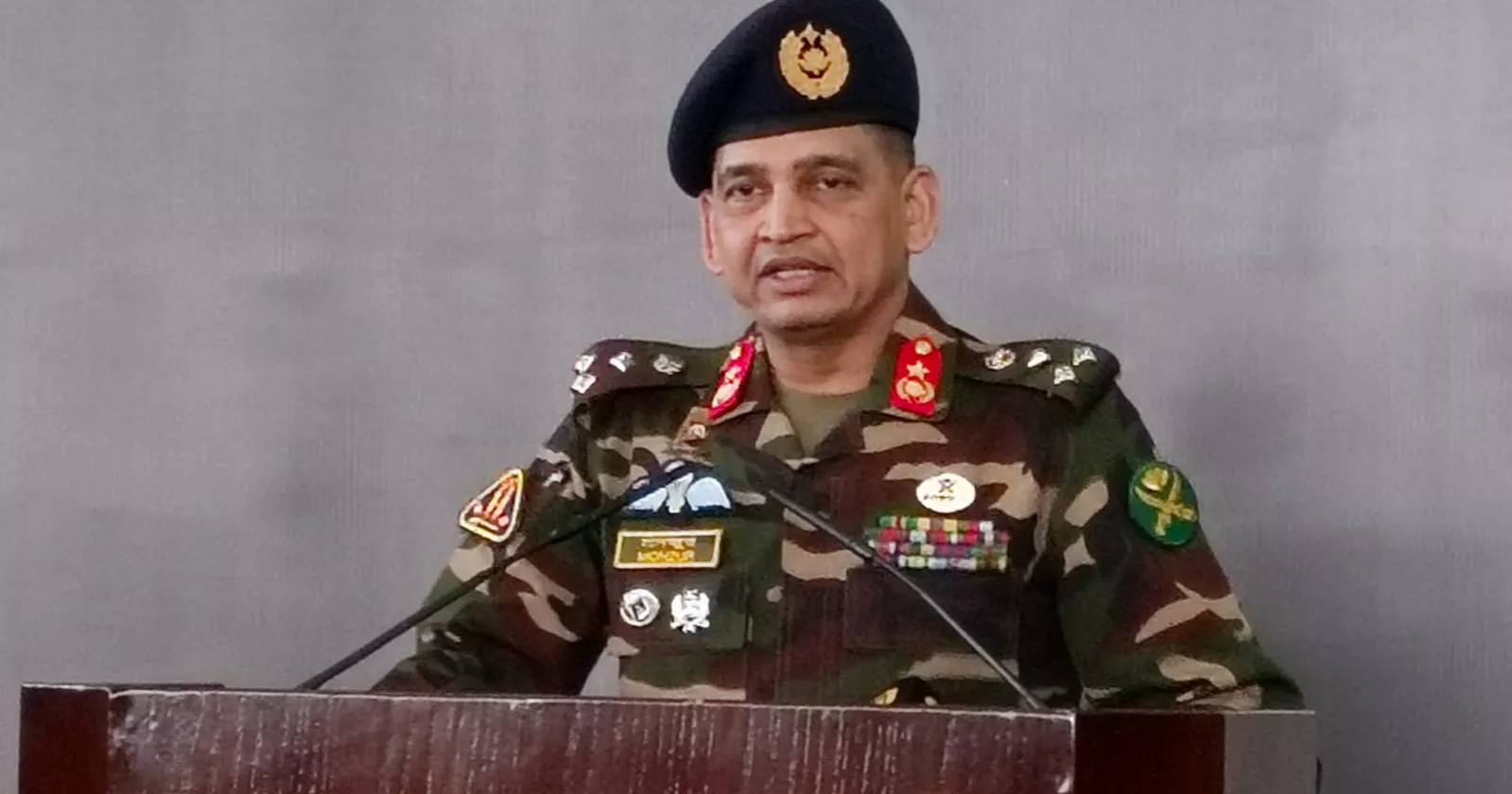
Army Headquarters on Thursday said around 100,000 army personnel have been deployed across the country to ensure a free, fair and uninterrupted environment for the national election, with the key objective of restoring voters’ confidence.
Director of the Military Operations Directorate at Army Headquarters Brig Gen Dewan Mohammad Monzur Hossain shared the information at a press briefing on Thursday at the Roller Skating Complex in the capital.
He focused on the activities of the Bangladesh Army deployed under In Aid to Civil Power.
He said that in previous elections, a maximum of 40,000 to 42,000 army personnel were deployed, mainly as striking forces stationed in far from pooling centres' areas.
This time, for the first time, army patrols have been allowed to operate up to the premises of the polling centres.
Army Chief urges officers to perform election duties impartially
Monzur Hossain said the expanded deployment aims to ensure voters can travel to polling centres safely and without hindrance.
Keeping the need for voter security in mind, the Army Chief has retained only the minimum necessary personnel at barracks and deployed the rest to support the conduct of a credible election.
Brig Gen Monzur said due to a shortage of required vehicles, the army has sought support from the civil administration.
Where requisitioned vehicles are unavailable, vehicles are being hired to ensure uninterrupted patrols.
He added that army personnel have been working tirelessly and conducting round-the-clock patrols to help rebuild public confidence.
He further said maintaining law and order well ahead of the election is crucial for holding a fair election.
Accordingly, army deployment was increased from 35,000 to 50,000 on January 10, 2026, and later expanded to 100,000 on January 20, 2026, he added.
Alongside the Army, the Navy has deployed 5,000 personnel while the Air Force has deployed 3,730 members.
The Bangladesh Army is operating in 62 of the country’s 64 districts and 411 upazilas and has set up a total of 544 temporary camps.
Through regular patrols, joint operations and the establishment of check posts, surveillance has been strengthened and weapons recovery operations are ongoing.