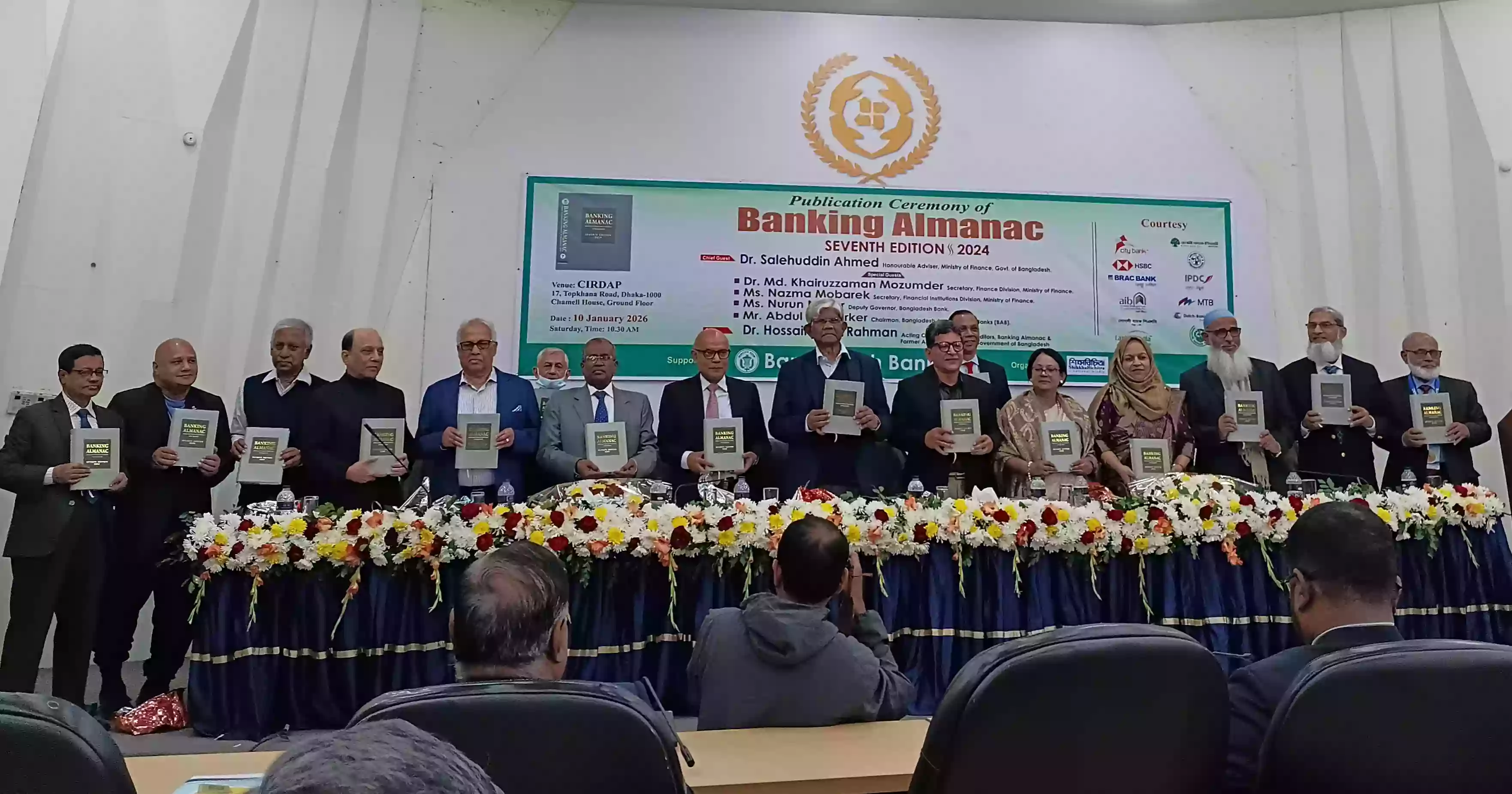
Bangladesh’s government aims to build a strong and sustainable economy through patience and collective effort, rather than attempting to replicate Singapore’s model, Finance Adviser Dr Salehuddin Ahmed said on Saturday.
Speaking at the launch of the 7th edition of the Banking Almanac at CIRDAP in Dhaka, Salehuddin described the country’s economy as stable and stressed that policy decisions should prioritise national interest over popularity.
“It is not always possible to satisfy everyone while formulating policies, and there is always a possibility of errors. Often there are populist demands to reduce interest or tax rates. Everyone says ‘I’, but no one says ‘we’. Policy is not for an individual; it is for the entire nation,” he said.
On current economic challenges, Salehuddin noted that they cannot be attributed to any single individual or government, but reflect a long-term development trajectory. “Bangladesh has not failed in 54 years. We have experienced ups and downs, but we continue to move forward.”
He also highlighted the importance of reliable data, citing the Banking Almanac as a critical resource for banking professionals.
The launch event featured several senior officials, including Finance Secretary Dr Md Khairuzzaman Majumder; Nazma Mobarek, Secretary of the Financial Institutions Division; Bangladesh Bank Deputy Governor Nurun Nahar; and Abdul Hai Sarkar, Chairman of the Bangladesh Association of Banks (BAB) and Dhaka Bank. HSBC Bank CEO Mahbubur Rahman also spoke.
The event was presided over by economist Dr Hossain Zillur Rahman, former caretaker government adviser and Acting Chairman of the Banking Almanac’s Board of Editors.
Finance Secretary Dr Khairuzzaman Majumder said economic stability has returned, with the Taka strengthening and Bangladesh Bank actively purchasing dollars to maintain balance.
Dr Hossain Zillur Rahman advocated for ‘Economic Democracy’ to ensure sustainable financing and equal opportunities, while BAB Chairman Abdul Hai Sarker noted that, despite government funding, the exact reasons behind the sector’s high interest rates remain unclear.
Published since 2016 with Bangladesh Bank’s support, the Banking Almanac provides comprehensive data on scheduled banks and financial institutions, offering researchers, investors, and professionals detailed insights into performance and corporate governance.
The 7th edition is available in both print and digital formats ([www.bankingalmanac.com](https://www.bankingalmanac.com) and can be purchased via Amazon and Rokomari.