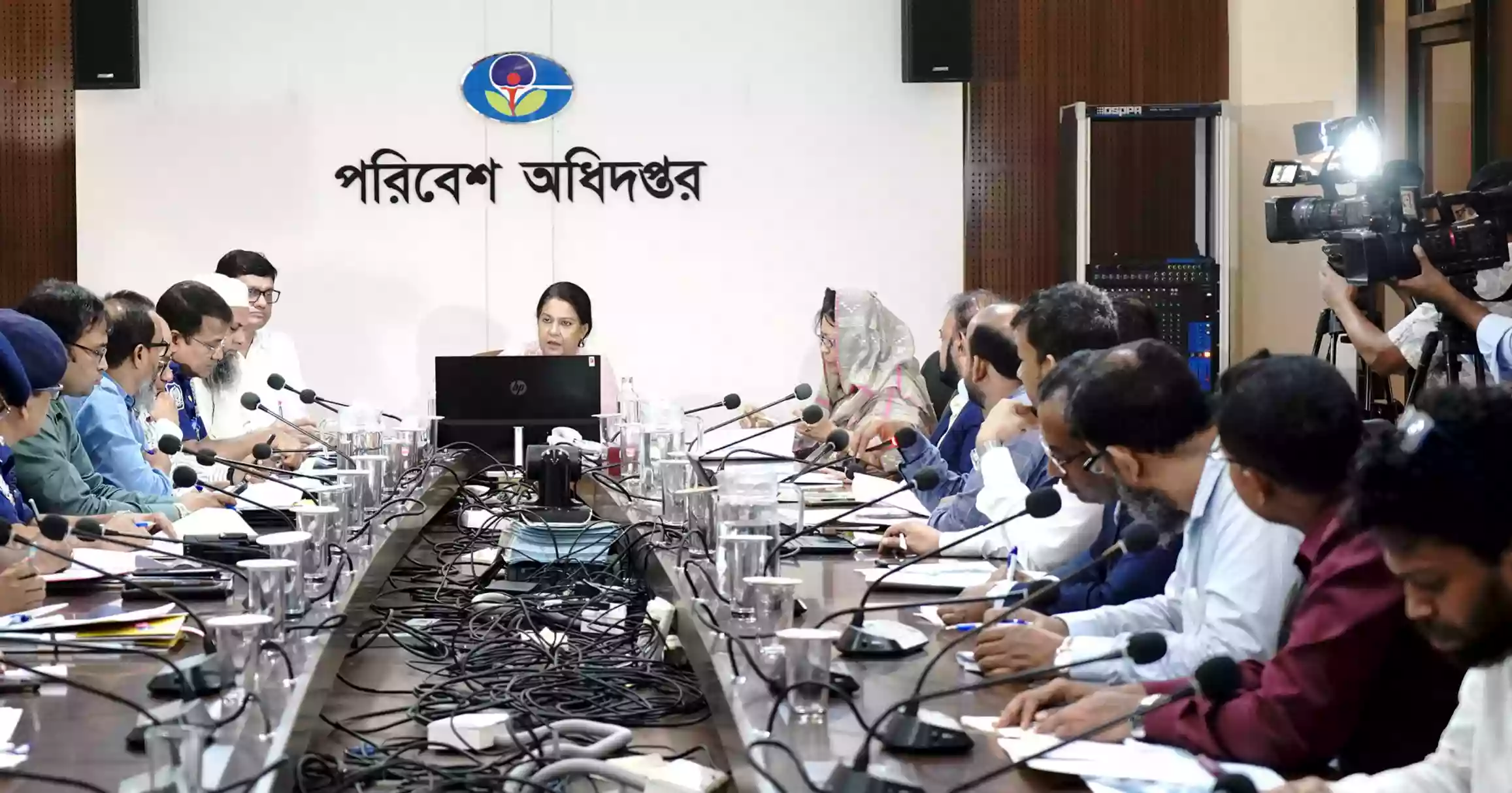
Bangladesh will require an estimated USD 116.8 billion to implement its newly prepared NDC 3.0 (Third Nationally Determined Contribution) plan aimed at reducing climate risks, Environment Adviser Syeda Rizwana Hasan said on Sunday.
Of the total, USD 25.95 billion has been estimated for unconditional investment, while USD 90.23 billion will be required under conditional investment scenarios, she said while addressing “Validation Workshop on the Third Nationally Determined Contribution (NDC 3.0)” at the Department of Environment in the capital’s Agargaon area.
As per the plan, Bangladesh has set a target of reducing 84.92 million tonnes of CO₂eq emissions by 2035 and this includes 26.7 million tonnes (6.39%) unconditionally and 58.2 million tonnes (13.91%) conditionally, she said.
NDC 3.0 is not only a plan for emission reduction, but also a pledge to build an inclusive and just future, Rizwana said stressing the participation of women, children, the elderly, persons with disabilities, ethnic minorities, and climate migrants.
She also called for rights-based climate actions to ensure that no one is left behind, said a press release.
She highlighted the importance of youth engagement, noting that young people can play a transformative role in building a climate-resilient Bangladesh through renewable energy projects, green entrepreneurship, research, and awareness programs.
The adviser said health, water and sanitation, education, food security, agriculture, and infrastructure must be made climate-resilient and environmentally friendly.
She also called for integrating climate education and green skills into the national curriculum to prepare the next generation for climate challenges.
On the transition to renewable energy, Rizwana underlined the need for a “just transition,” which involves retraining workers, supporting small entrepreneurs, and ensuring the participation of vulnerable communities.
“Without the collective efforts of the government, development partners, the private sector, researchers, and civil society, it will not be possible to build a sustainable, inclusive, and climate-resilient Bangladesh,” she said.
The workshop was also addressed by Environment Secretary Dr Farhina Ahmed and Additional Secretary (Climate Change) Mohammad Navid Shafiullah.