Bangladesh’s mangoes have been identified as a major opportunity for export growth, with experts urging urgent steps to overcome key challenges and strengthen the country’s global trade competitiveness.
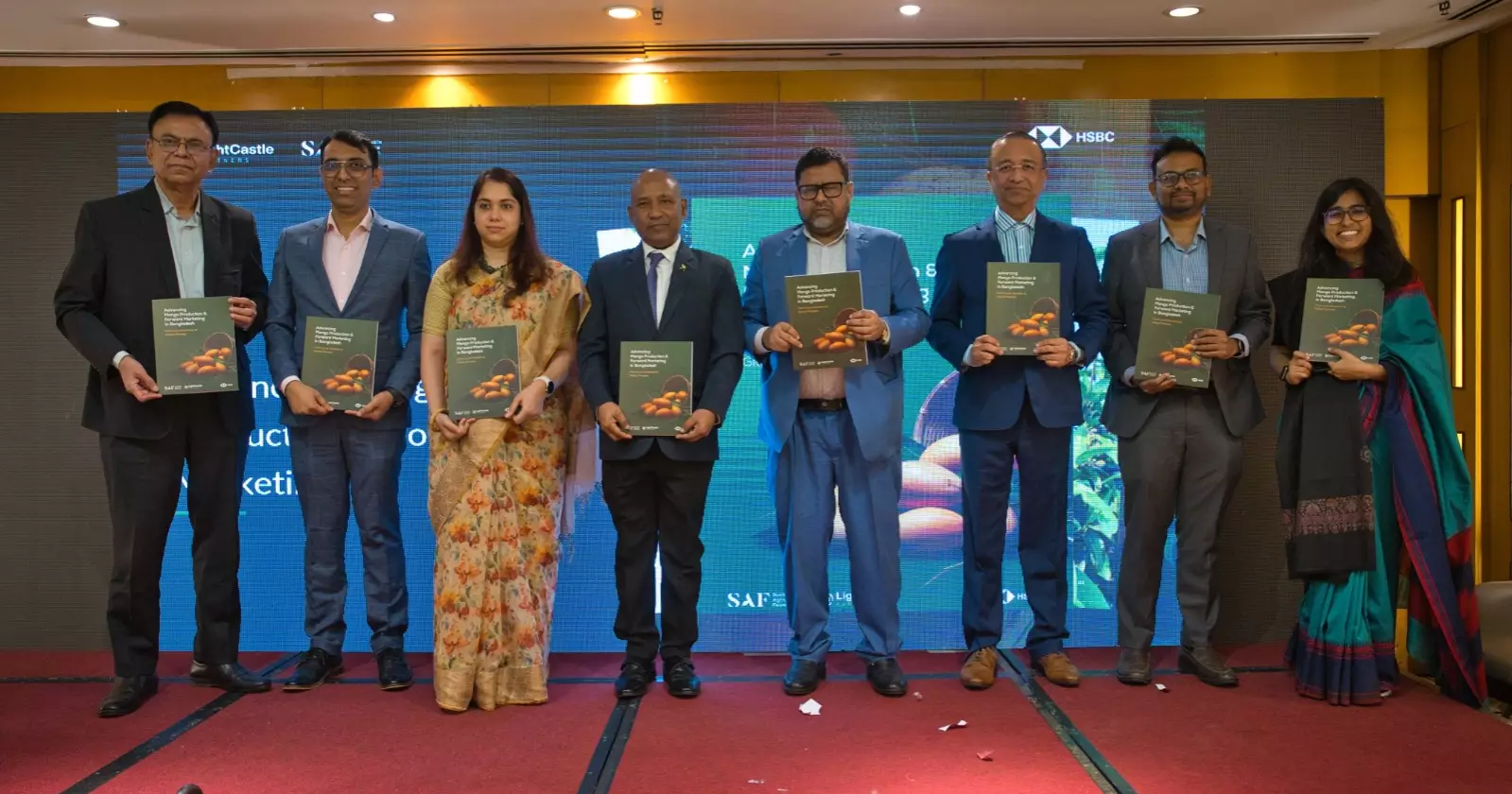
The findings were revealed at the launch of a research report titled ‘Advancing Mango Production & Forward Marketing in Bangladesh: From Local Garden to Global Markets’ at a hotel in Dhaka.
The event was jointly organised by Sustainable Agriculture Foundation Bangladesh (SAF Bangladesh) and LightCastle Partners with support from HSBC Bangladesh.
Nasir-Ud-Doula, Director General (Additional Secretary) of the Department of Agricultural Marketing, said, ““As a representative of the government, it is our responsibility to expand mango exports. For this reason, we are placing strong emphasis on cultivating improved and high-quality mango varieties, and we remain fully committed to this effort”
He further added, “No single organization can achieve this alone. A coordinated and comprehensive approach is essential. Effective collaboration among the Ministry, the National Board of Revenue, airlines, shipping lines, and the private sector is crucial. Only through such joint efforts can we create a competitive and enabling environment for mango exports.”
Davesh Dayal Mathur, COO of HSBC Bank, noted that farmers are increasingly transforming into entrepreneurs, adding that this trend is encouraging for the sector.
The report highlights that Bangladesh produces over 2 million metric tons of mangoes annually, ranking 8th globally in 2022, yet currently exports less than 0.05% of its total production.
Global annual demand stands at around 2.4 million metric tons, with Mexico, Thailand, and Brazil as top suppliers.
Experts said Bangladesh has strong potential to expand in traditional markets in Europe and the Middle East, as well as emerging markets like China.
Key challenges identified include lack of Global Good Agricultural Practices (GAP) certification, inadequate infrastructure for quality control, post-harvest treatment, processing, and cold-chain management, insufficient branding and market positioning, limited government-private sector collaboration, and inadequate policy prioritization for mangoes as a strategic agricultural export.
The panel discussion, moderated by Abdur Rouf, Director of Program Development at SAF Bangladesh, included Ataus Sopan Malik, Managing Director of AR Malik; Kamruzzaman Kamal, Director (Marketing) of PRAAN-RFL Group; Professor M A Rahim, Head of Agricultural Science Department, Daffodil International University; and Mohammad Arifur Rahman, Project Director, Exportable Mango Production Project, Ministry of Agriculture.
Experts said that focusing on diversifying mango varieties and improving quality standards could allow Bangladesh to significantly expand its presence in the U.S., EU, and Middle East markets in the coming years, boosting export earnings and supporting the country’s transition from Least Developed Country (LDC) status by 2026.
Md Farhad Zamil, Executive Director of SAF Bangladesh; Davesh Dayal Mathur, COO of HSBC Bank; and Syeda Afzalun Nessa, Head of Sustainability at HSBC Bank, delivered welcome remarks.