
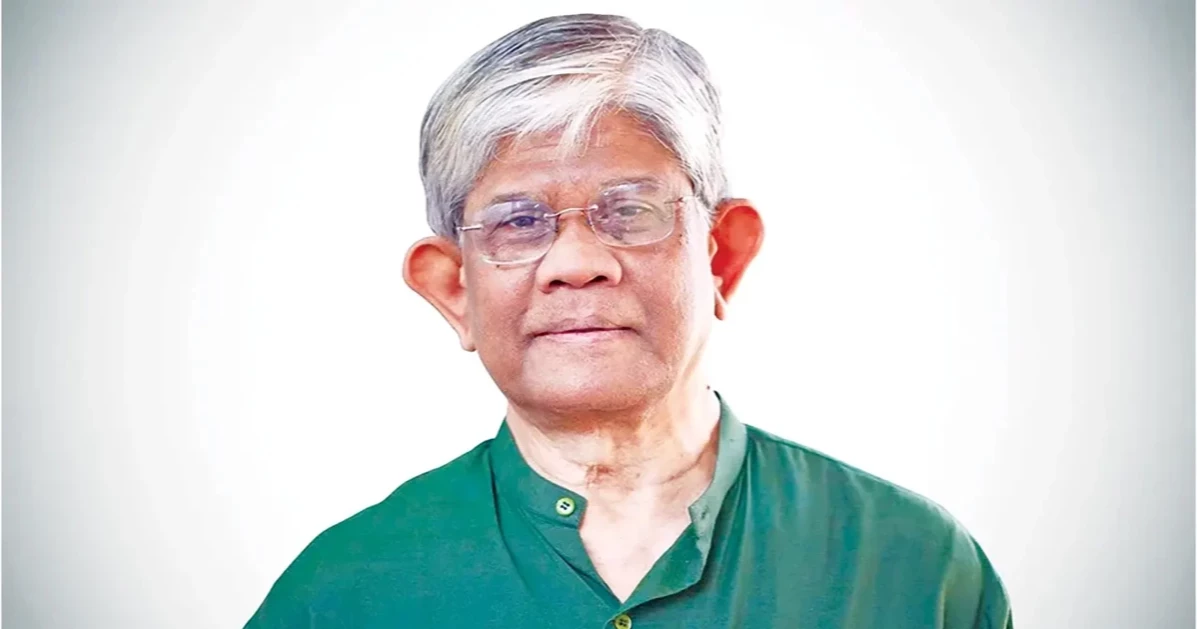
Finance Adviser Dr Salehuddin Ahmed on Wednesday said both the Chief Adviser and he himself are focused on implementing basic reforms in the country, rather than pursuing long- or medium-term ones.
“We the interim government will not be there (in power) for a long time, maybe 7-8 months, especially me and the Chief Adviser are very much serious just to do some basic reforms, we will not do any long-term or medium term reforms,” he said.
He said this while addressing the Accounting and Auditing Summit (A & A Summit) at a city hotel with the theme of ‘FRC’s Role and its impact on economic governance of Bangladesh’.
The Adviser also said they will try to implement the reforms that have started so far. “We are having huge obstacles and hurdles, there are so many issues; you might not understand those from outside, we are trying…” he said.
He also appreciated the businesspeople and lending agencies for their all-out support for these reforms that the interim government has induced. “They have given very good support,” he added.
He strongly criticised the quality of audit reporting in Bangladesh, claiming that most audit reports are presented as unqualified despite discrepancies in actual performance.
“In Bangladesh, most of the audit reports are labelled as unqualified. But if you examine their track record, no one would truly say these are unqualified; most of them are actually qualified,” he said.
All parties unlikely to reach a consensus on all reform issues: Ali Riaz
Dr. Salehuddin alleged that a sort of understanding often exists between auditors and management, leading to misleading reports. “To be blunt, there is often a kind of liaison between the management and the auditors,” he said.
He said auditing and accounting standards alone are not sufficient unless the entire process is conducted with transparency and accountability. “Those who run this process—their quality must be ensured. Otherwise, the reports will lack credibility,” he said.
Dr. Salehuddin stressed the importance of proper auditing for both domestic and foreign investments stating that the role of auditors and chartered accountants must be taken seriously across both public and private sectors.
“Audit and accounting are not just for corporate oversight—they are essential for managing public funds as well,” he noted.
He called upon auditors and chartered accountants to carry out their responsibilities with integrity urging them to stay vigilant and apply their expertise while keeping their “inner eyes open.”
Chairman of the Financial Reporting Council Dr Md Sajjad Hossain Bhuiyan presented the keynote paper.
Anti-Corruption Commission Chairman Dr Mohammad Abdul Momen, Bangladesh Bank Governor Dr Ahsan H Mansur, Country Director (interim) of the World Bank in Dhaka Souleymane Coulibaly were present as special guests.
Finance Division Secretary Dr Md Khairuzzaman Mozumder chaired the opening session where World Bank Lead Governance Specialist Suraiya Zannath delivered the welcome speech.
President of the Institute of Chartered Accountants of Bangladesh (ICAB) NKA Mobin and President of Institute of Cost and Management Accountants of Bangladesh (ICMAB) Mahtab Uddin Ahmed also spoke at the programme.