
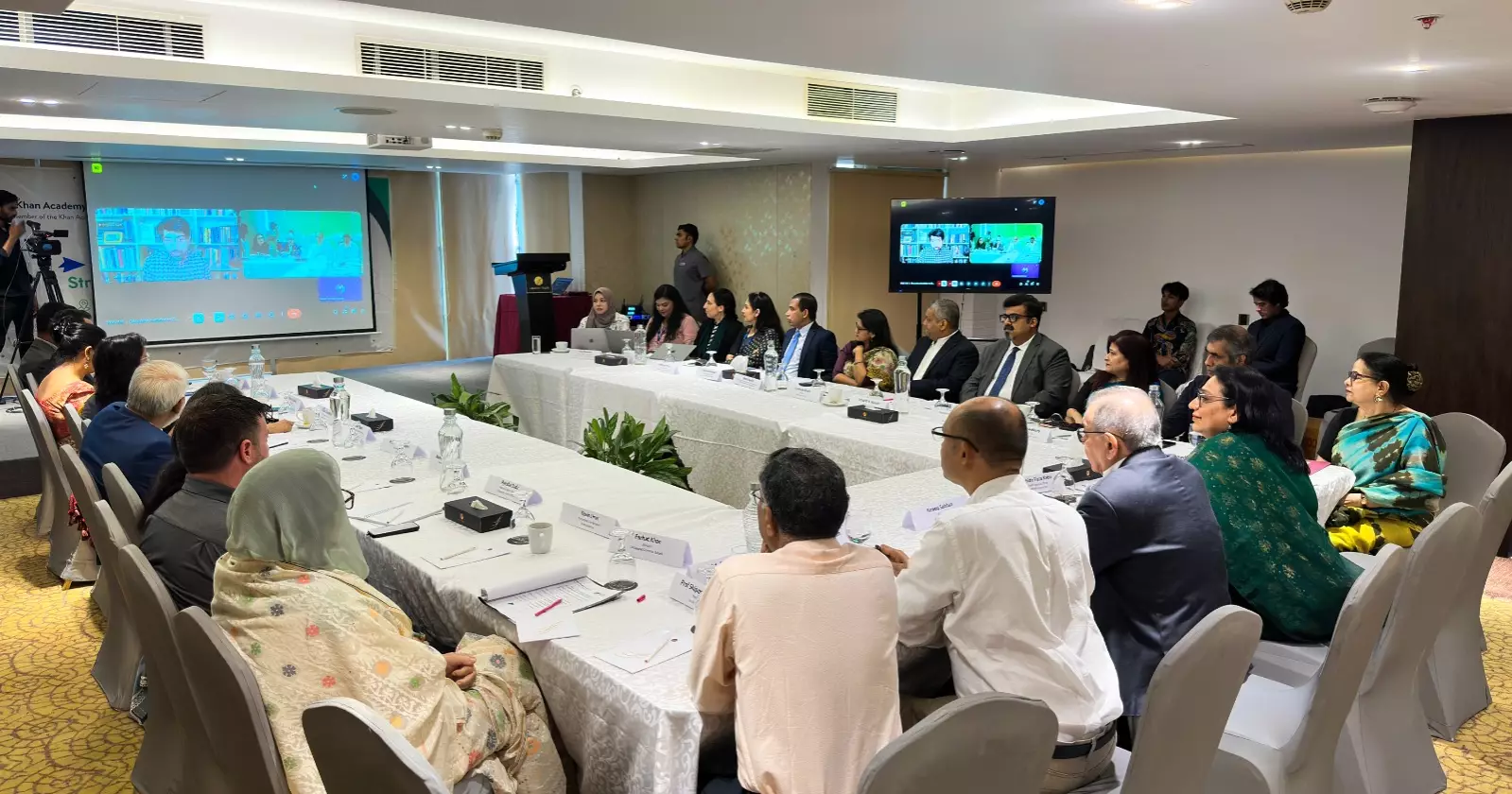
Participants at a roundtable discussion on Wednesday called for collective action to bridge the education-to-employment divide to ensure more productive workforce, higher economic growth, and improved individual well-being.
They suggested forging strategic partnerships and offering innovation funding and in-kind support from both public and private sectors for bridging the gap.
They were speaking at the high-level roundtable discussion titled “From Classrooms to Careers: Strengthening Bangladesh’s Future” organised by SAJIDA Foundation at a hotel in the capital.
While presiding over the discussion, SAJIDA Foundation Chairperson Farooq Sobhan, also a former diplomat, said Bangladesh has lagged behind many countries, whose economy was once weaker than Bangladesh’s, only because of low quality of education.
He said, “Bangladesh was once ahead of four Asian countries – China, South Korea, Malaysia and Vietnam – but they all have surpassed us. The main reason [behind their progress] is education. It was quality education and education for all.”
“We can do it in Bangladesh. But there are many challenges that we need to overcome. We need to take a holistic approach for enhancing the quality of education,” he added calling all stakeholders to work together for quality education.
The roundtable brought together government policymakers, business leaders, academics, and development partners to discuss how Bangladesh can better align education with the needs of a rapidly changing economy.
In her opening remarks, Zahida Fizza Kabir, CEO of SAJIDA Foundation, highlighted that Bangladesh stands at a critical crossroads with one of the world’s youngest populations.
“Our youth are our greatest asset, only if we equip them with the skills and mindsets needed for the future. If education does not keep pace with today’s realities, our demographic dividend could easily turn into a demographic burden,” she said.
Sal Khan, Founder of Khan Academy, spoke at the event virtually. He emphasised the transformative power of technology in democratising education. “When students are given access to high-quality learning tools and teachers are empowered to personalise instruction, transformation happens at scale. Bangladesh has the potential to lead this change by combining innovation, inclusivity, and the dedication of its educators,” he said.
He commended the early success of Khan Academy Bangladesh, calling it “an inspiring example of how local partnerships and global collaboration can reimagine education systems for the future.”
The progress of a pilot project run by Khan Academy Bangladesh was presented at the roundtable, which shows that across 31 pilot schools and 5,342 students, learners on average demonstrated a ninefold increase in learning mastery and a sixfold rise in engagement.
While presenting the progress Azwa Nayeem, CEO of Khan Academy Bangladesh and Strategy Lead for Education at SAJIDA Foundation, said teachers at the schools are now using data and digital tools to tailor instruction to each student’s needs. “The results show that transformation is not only possible, it is happening when teachers are empowered and supported with the right tools,” she added.
Participants shared insights on how the private and public sector could collaborate to make education more relevant to the 21st-century workforce.