President of Bangladesh Enterprise Institute (BEI) and former Ambassador Humayun Kabir on Thursday laid emphasis on reviewing the foreign policy regularly to effectively engage with other countries economically and culturally, noting that Bangladesh has made only minor adjustments over the last five decades.
“You might be surprised to know that in the 54 years since our independence, there have only been two major changes in our foreign policy. In contrast, the United States reviews its foreign and defense policies every four years,” he said while speaking at a dialogue in the city.
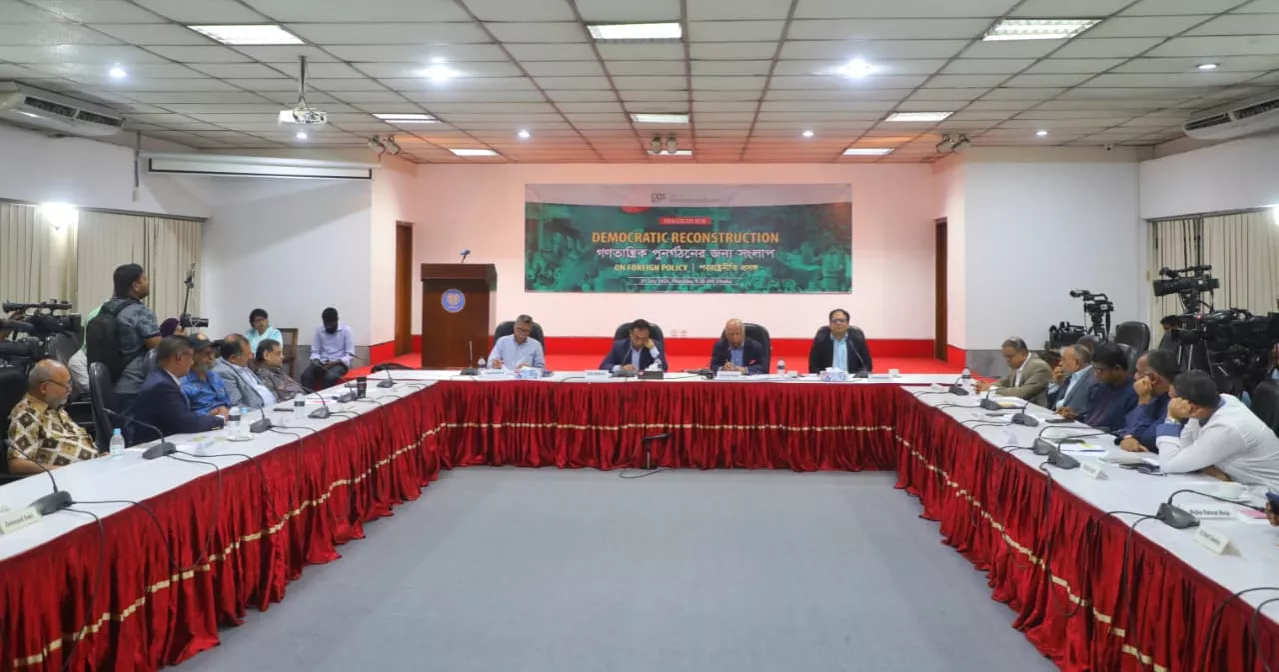
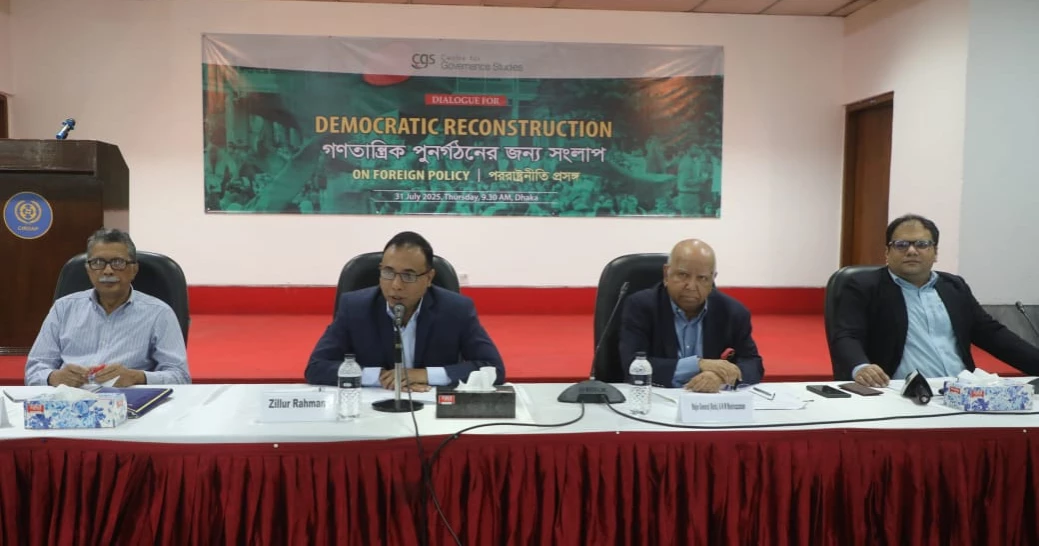
The Centre for Governance Studies (CGS) hosted the dialogue session to discuss Bangladesh’s foreign policy at the CIRDAP (Centre on Integrated Rural Development for Asia and the Pacific) auditorium, moderated by CGS President Zillur Rahman.
The former diplomat said how they can engage economically and culturally with 192 other countries if they do not regularly review the foreign policy.
“We are standing on one leg with our export dependency. We rely heavily on other countries for energy and have failed to diversify in the past 40 years,” Ambassador Kabir said.
Ambassador Kabir said the key element to democratic reconstruction is engaging in conversations and dialogue with key stakeholders.
He said the greatest challenge they face in Bangladeshi diplomacy is Dhaka itself. “I can conduct diplomacy with other countries, but when I return to Dhaka, I face difficulties in getting deals finalised.”
The foreign affairs expert said they (Bangladeshis) have a tendency toward internal conflict, which is a major reason they fail to establish a strong foreign policy.
He said political actors often use external forces to undermine their opposition. “We must remember that foreign policy is a two-way street we only decide half of it; the other half is determined by the country we are negotiating with. In recent global conflicts, it has become increasingly difficult to distinguish allies from adversaries.”
President of Bangladesh Institute of Peace and Security Studies (BIPSS) Maj Gen (Retd) ANM Muniruzzaman; Executive Director of Centre for Governance Studies Parvez Karim Abbasi; former Ambassador M Shafiullah; BNP Chairperson's Advisory Council Member Zahir Uddin Swapon; Secretary General, Jatiya Party Barrister Shameem Haider Patwary; Chairman, AB Party Mojibur Rahman Monju; former Chairman of Bangladesh Institute of International and Strategic Studies Ambassador Munshi Faiz Ahmad; security analyst Major Md Emdadul Islam (Retd); former State Minister Abul Hasan Chowdhury; former diplomat Shahidul Islam; former Foreign Secretary Shamsher Mubin Chowdhury; Organiser, Noitik SAMAJ Bangladesh Major Gen. (Retd) Amsa Amin; Professor, Department of Public Administration, University of Dhaka Dr. Nazmul Ahsan Kalimullah; Honorary Consul General of Mongolia to Bangladesh Nasreen Fatema Awal; Chairman at Nationalist Democratic Movement - NDM Bobby Hajjaj; Senior Research Fellow, Bangladesh Institute of Peace and Security Studies Shafqat Munir; Adviser to the BNP acting Chairperson Mahdi Amin; Chairperson and Founder, Centre for Non-Resident Bangladeshis M S Shekil Chowdhury; Chief Coordinator, Gonosonghoti Andolon Zonayed Saki; President, Gono Odhikar Parishad Nurul Haq Nur; Joint General Secretary and Women wing Coordinator, AB Party Barrister Nasrin Sultana Mili.
Muniruzzaman said the revolutionary aspirations have not been reflected in the Ministry of Foreign Affairs. “Fascism is an ecosystem. To restructure, we must remove the collaborators of fascism within the Foreign Ministry.”
He said the private sector must be included in foreign policy and bureaucrats alone will not suffice. “We must begin working on climate diplomacy.”