
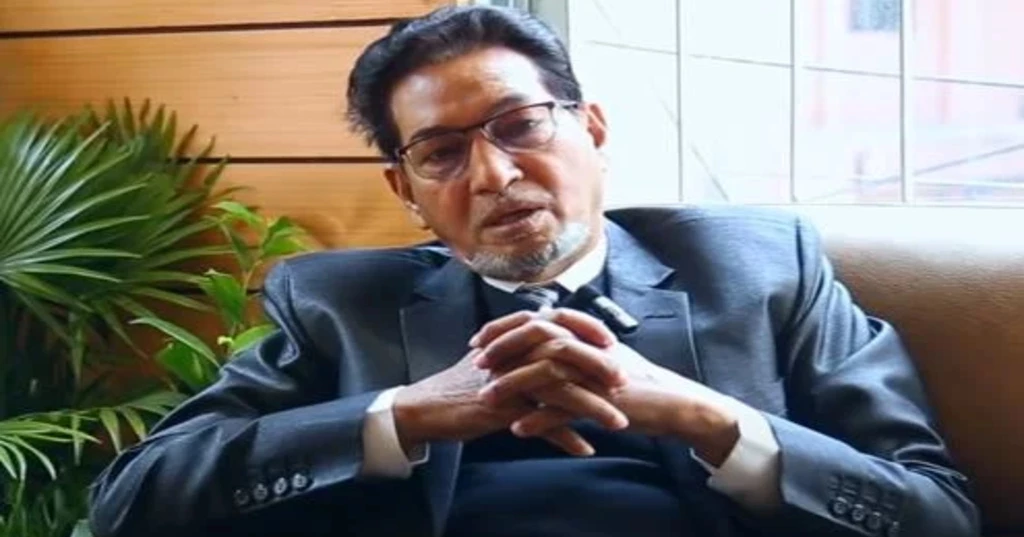
Chief Whip Nurul Islam on Sunday said democracy rests on mutual trust between the government and the opposition, urging all lawmakers to act responsibly and uphold parliamentary norms.
“Democracy is a place of trust. We will trust the opposition, and the opposition will also trust us,” he told reporters on the Parliament premises following the oath-taking ceremony of newly elected Members of Parliament Rezaul Karim Badsha and Mahmudul Haque Rubel .
Referring to remarks made by Prime Minister Tarique Rahman, the Chief Whip urged lawmakers to refrain from taking the law into their own hands under any circumstances.
“If any problem arises, you should seek help from the administration or inform me if necessary. But no one should ever take the law into their own hands,” he quoted the Prime Minister as saying.
The Chief Whip said the government is committed to ensuring public welfare, noting that elected representatives have a responsibility to work both inside and outside parliament to strengthen democracy and build a humane, welfare-oriented state.
Addressing the ongoing energy crisis, Nurul Islam said the government has allocated an additional Tk 36,000 crore in subsidies to stabilise the sector and protect public interests.
He alleged that a previous “autocratic regime” siphoned off Tk 27 lakh crore from the country, stressing that the current government aims to ensure that national resources are used for the welfare of citizens rather than being laundered abroad.
The Chief Whip also expressed concern over the spread of misinformation in parliament, citing a recent incident during a session when an opposition lawmaker claimed that a Jamaat activist had been killed during elections in Sherpur.
“He even recited Inna Lillahi wa inna ilayhi raji'un, but the person was later found to be alive,” Nurul Islam said adding that he would propose expunging the statement from parliamentary records in the next session.
He urged lawmakers to verify facts before making statements, warning that decisions based on false information could mislead the public.
The Chief Whip said a special committee comprising members from both the treasury and opposition benches reviewed 133 ordinances in detail.
“After thorough scrutiny, we agreed that 16 ordinances required amendments, which will be brought as bills later. The remaining 117 ordinances have been passed,” he said.
He described the passage of 117 bills within just five days as “unprecedented” in Bangladesh’s parliamentary history, crediting the efforts of lawmakers, the parliament secretariat, and officials of the state-run printing press who worked tirelessly to meet the deadline.
Despite this, he expressed disappointment over an opposition walkout triggered by what he described as minor amendment issues, although he acknowledged that walkouts are a legitimate democratic right.
The Chief Whip also spoke about plans to develop a “July Museum” that would integrate key historical events including the Liberation War, the 1975 famine, the BAKSAL formation, the 1990 mass uprising, and the 2024 mass movement.
He said the proposed institution would not be a conventional museum but a ‘living entity’ aimed at preserving and presenting the nation’s political and social history dynamically.
“To accelerate the work, ministerial involvement is necessary. Otherwise, who will carry it forward?” he said.