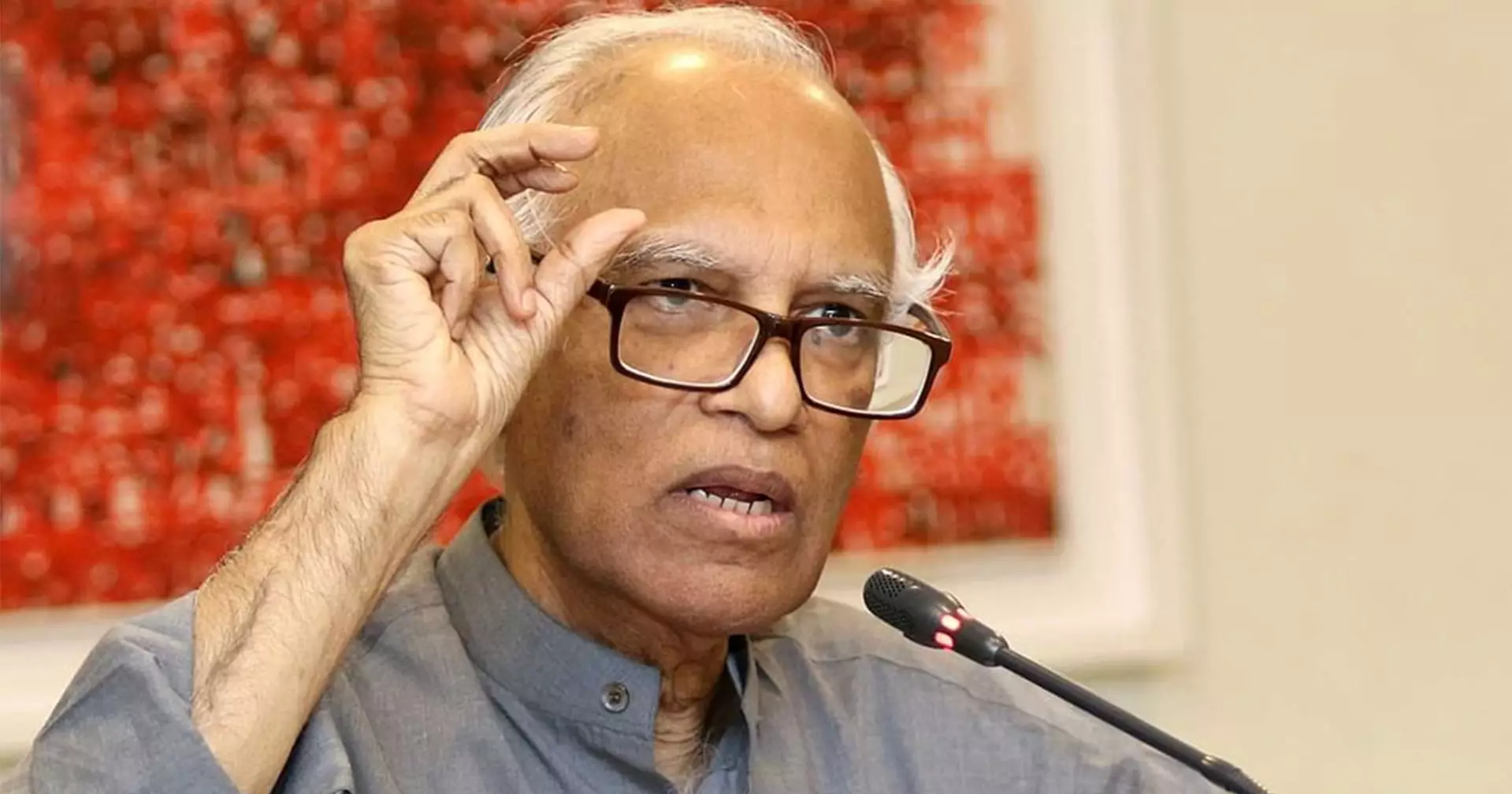
The sluggish pace of development project implementation is likely to continue through the current fiscal year, Planning Adviser Professor Wahiduddin Mahmud said on Monday.
“The implementation slowdown that we had hoped would be temporary has unfortunately continued this year as well,” he told reporters after the National Economic Council (NEC) meeting where the Revised Annual Development Programme was approved.
Prof Wahiduddin said while the quality of projects has improved overall development spending has been constrained by structural, administrative and political factors.
“The government has focused on better quality and accountability even though these reforms have temporarily slowed project execution,” he added.
The NEC approved the RADP with a budget of Tk 2,08,935 crore, about 15 percent lower than the original allocation, reflecting challenges in implementing previous projects and a shortage of well-prepared, viable projects.
“The reduced ADP does not indicate a lack of development needs, but a shortage of implementable projects,” he explained.
He noted that political uncertainty and subdued private investment remain key obstacles to economic momentum.
High interest rates and limited bank lending to small and medium enterprises have further slowed private sector growth, particularly in areas less reliant on remittances, he said.
The Planning Adviser also acknowledged longstanding weaknesses in project management including shortages of competent project directors, delays, and cost overruns. To address this, NEC approved the creation of a pool of trained civil servants for key planning and project management roles.
Besides, all self-financed projects of autonomous and state-owned entities costing over Tk 50 crore will now require approval from the Executive Committee of the NEC (Ecnec), a step aimed at improving accountability and curbing inflated costs.
The adviser noted that stricter conditions for new project approvals including mandatory progress reports and independent evaluations may slow implementation initially but are essential for improving quality and reducing waste.
The rollout of the electronic public procurement system has also temporarily slowed procurement while increasing transparency and competition, he added.