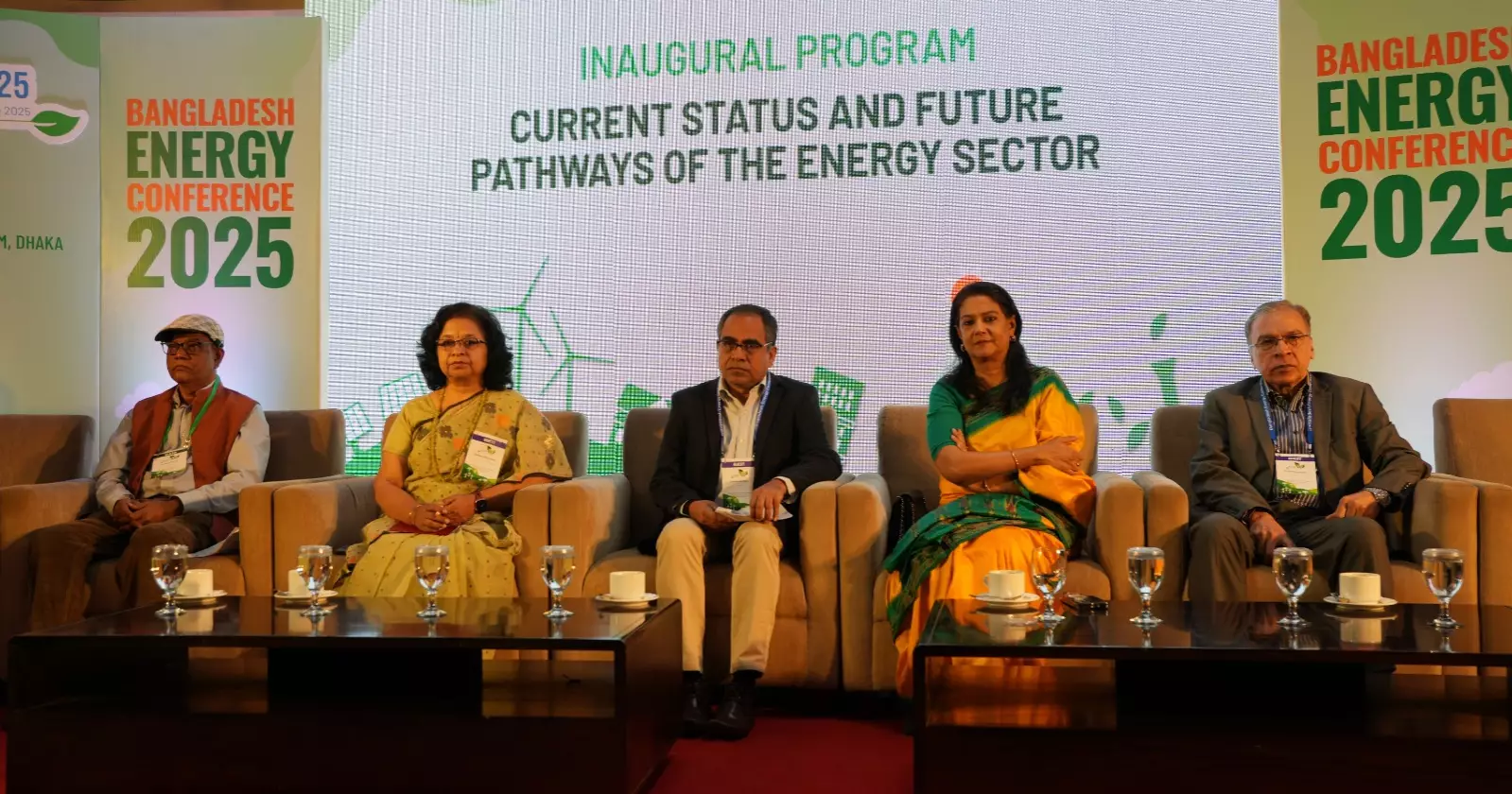
Experts have urged an urgent revision of Bangladesh’s Integrated Energy and Power Master Plan (IEPMP) to increase the share of renewable energy.
They came up with the call during the inauguration of the 3rd Bangladesh Energy Conference 2025 on Saturday at the Bangladesh Military Museum in Dhaka
Environment Adviser Rizwana was present as the chief guest.
Speaking at the event, Syeda Rizwana Hasan said that energy transition is a long-term process.
.”We have initiated multiple policies and programs to expand renewable energy, and these efforts are ongoing. The priority should not just be setting targets but achieving them. In the past, ambitious targets were set, but renewable electricity generation remained minimal. Therefore, a realistic and implementable roadmap is crucial. We have also launched a program to install solar panels on the rooftops of all government buildings, which is progressing rapidly,” she said.
The three-day conference brings together policymakers, experts, researchers, and civil society representatives to discuss Bangladesh’s current energy challenges, potential opportunities, and future energy transition pathways.
Dr. Khandakar Golam Moazzem, Research Director at the Centre for Policy Dialogue (CPD), said, “Effective energy transition requires the integration of technical knowledge, sound policies, and skilled human resources. Reducing reliance on foreign consultants and building institutional capacity while ensuring domestic ownership of policy implementation is now an urgent priority.”
Professor Shahriar Ahmed Chowdhury, Chairman of the Centre for Renewable Energy Services Limited, said , “The government spends $4 billion annually on electricity subsidies. Allocating even half of this to renewable energy could transform the sector. Current electricity policies are not renewable-friendly, slowing progress. These issues must be prioritized in the IEPMP and aligned with domestic expert recommendations for broader acceptance.”
Transparency International Bangladesh (TIB) Executive Director Iftekharuzzaman said energy sector malpractices including policy-level crimes, occurred under previous governments.