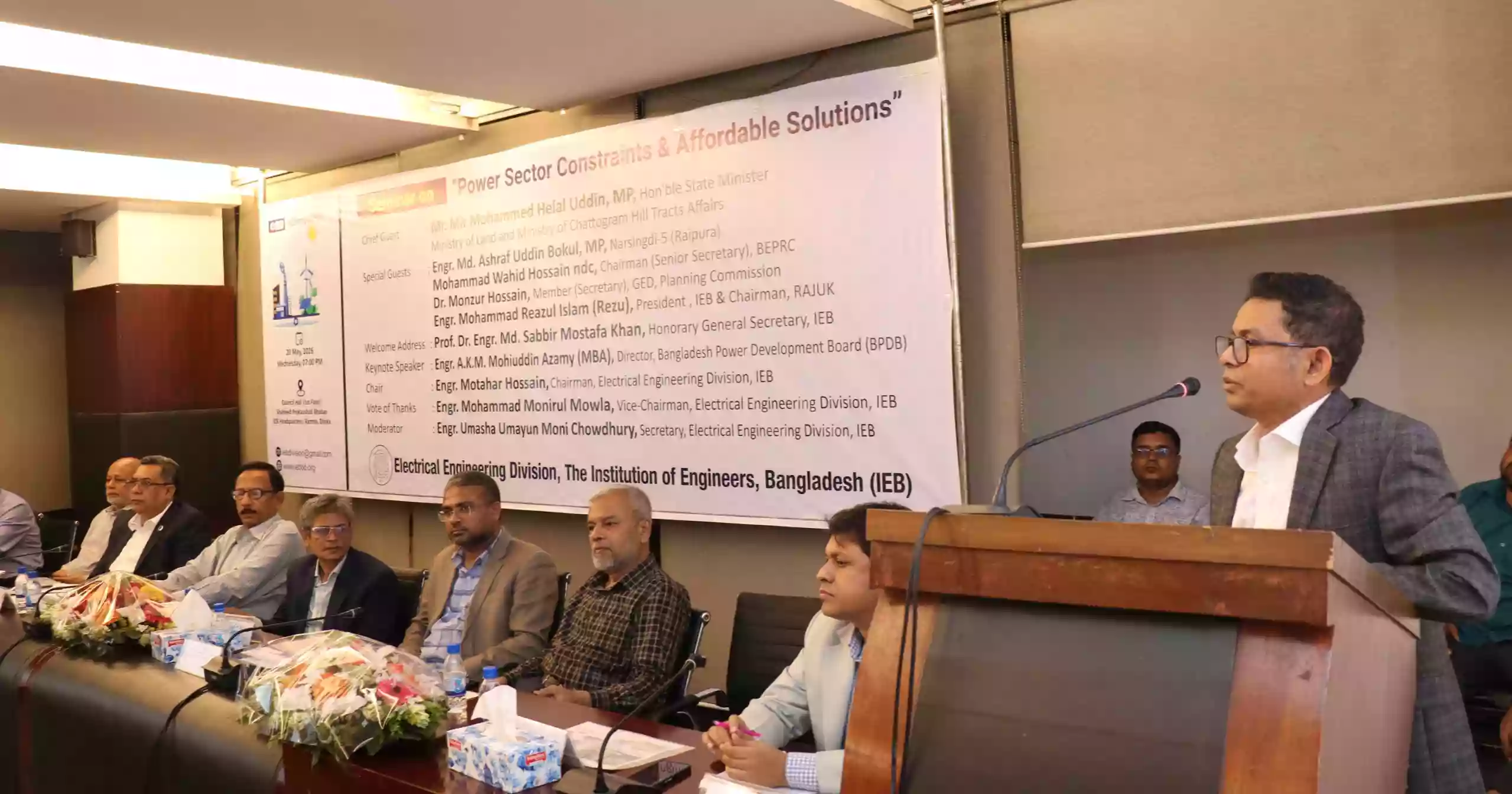
Despite significant expansion in electricity generation capacity over the past decade, Bangladesh is struggling to fully utilise its power infrastructure due to persistent fuel shortages, rising production costs, and growing dependence on imported energy, speakers said at a seminar on Wednesday.
They stressed the need for long-term planning, diversification of energy sources, and greater investment in renewable energy to ensure affordable and sustainable electricity supply.
BPDB seeks up to 21% hike in wholesale power tariff
The seminar titled “Power Sector Constraints & Affordable Solutions” was organised by the Electrical Engineering Division of the Institution of Engineers, Bangladesh (IEB) at its headquarters in Ramna, Dhaka.
Speaking as the chief guest, State Minister for Land and Chittagong Hill Tracts Affairs Mir Mohammed Helal Uddin said Bangladesh must accelerate its transition towards renewable energy to strengthen energy security and reduce environmental impacts.
He emphasised the expansion of rooftop solar systems, solar installations on agricultural land, government khas land, and other unused land.
Helal Uddin said work is already underway to generate 5,000 megawatts of electricity from renewable energy sources, adding that private sector participation would be crucial to achieving the target.
He also highlighted plans to promote electric vehicles (EVs) to reduce fuel consumption and environmental pollution.
Bangladesh Energy and Power Research Council (BEPRC) Chairman Mohammad Wahid Hossain, who attended as a special guest, identified fuel scarcity as the country’s primary energy challenge.
“The main problem in our energy sector is fuel shortage. At the same time, Bangladesh is still lagging behind in the use of renewable energy,” he said.
To address the crisis, Wahid Hossain stressed the importance of long-term planning, increased research and innovation, and effective international negotiations for energy imports and tariff structures to lower procurement costs.
He also suggested that loss-making and unnecessary energy institutions should be gradually restructured or phased out to reduce financial burdens on the state.
Presenting the keynote paper, Engineer AKM Mohiuddin Azmi, Director of the Bangladesh Power Development Board (BPDB), said Bangladesh’s power sector continues to face mounting pressure from rising fuel demand, import dependency, high production costs, and infrastructural weaknesses.
He noted that the country remains heavily reliant on imported LNG, coal, and oil, leaving the sector vulnerable to price fluctuations in the global energy market.
Azmi proposed several cost-effective solutions, including the expansion of rooftop solar systems, solar parks, solar panel installations on agricultural land, and the use of government-owned khas land for solar energy generation.
The seminar was chaired by Engineer Motahar Hossain, Chairman of the Electrical Engineering Division of IEB.
Senior IEB leaders, central council members, engineering chapter representatives, and professionals from various engineering organizations attended the event.