The government on Thursday cleared the Bangladesh Labour Law (Amendment) Ordinance, 2025, introducing a series of reforms that bring domestic workers under legal protection, ease trade union registration and strengthen measures against sexual harassment.
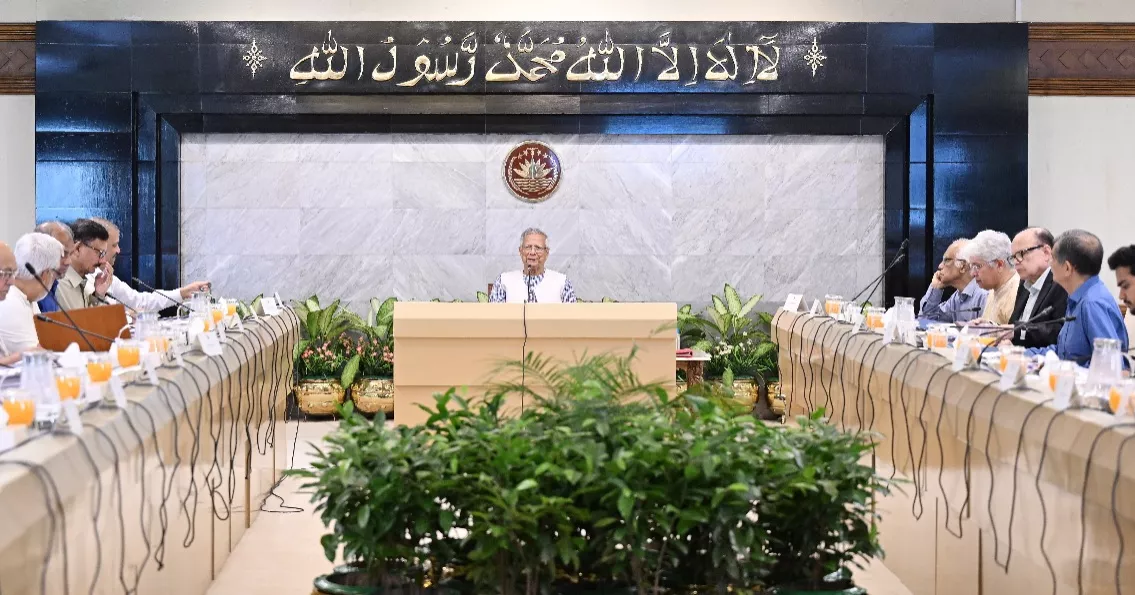
The Council of Advisers approved the proposed amendments at a meeting held at the Chief Adviser’s Office, with Chief Adviser Prof Muhammad Yunus in the chair.
“Many steps have been taken for the welfare of our workers and to protect their interests. Amendments have been brought to 90 sections of the proposed ordinance,” Law Affairs Adviser Dr Asif Nazrul told reporters at a media briefing at the Foreign Service Academy after the meeting.
Chief Adviser’s Press Secretary Shafiqul Alam also spoke at the briefing.
Dr Nazrul said the amendments were drafted in line with recommendations from the ILO Committee of Experts. “There is a complaint procedure against Bangladesh at the International Labour Organization (ILO), and several recommendations have emerged from that process. Everything has been taken into account.”
He said that the tripartite committee—comprising representatives of workers, employers, and the government—held five meetings and three workshops, alongside numerous consultations to finalize the reforms.
The Law Adviser said the labour law will now extend to non-profit organizations, while the definition of ‘labour’ has been broadened to include domestic workers, sailors, and other categories who will now be entitled to legal protection under the labour law.
He pointed out that the long-standing practice of employers blacklisting workers, which prevented them from finding new employment—has been declared illegal.
“Strict measures have been introduced against sexual harassment,” he said, adding that welfare benefits for pregnant workers have been significantly increased.
“Formation and registration of trade unions have been made much easier,” Dr Nazrul added, emphasising that the amendments aim to eliminate discrimination between male and female workers.
He also said that provisions for alternative dispute resolution have been strengthened, while an accident compensation fund will be created for the rehabilitation and treatment of workers injured in workplace accidents.