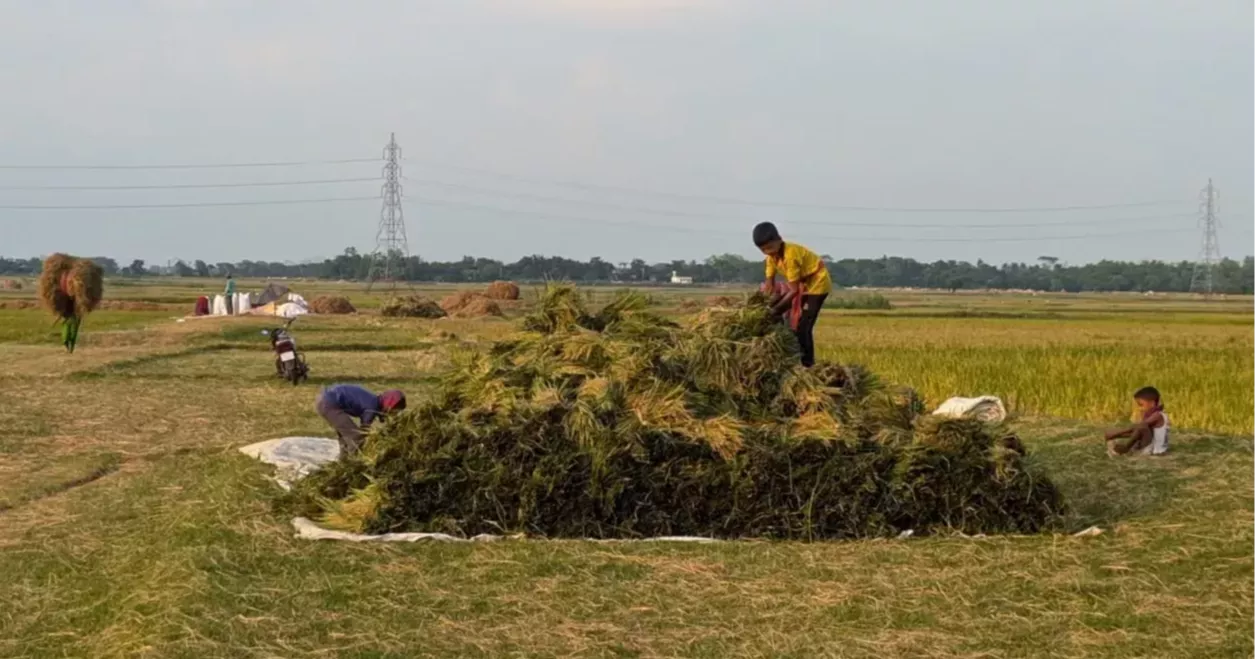
In a move aimed at safeguarding fisheries, livestock, and biodiversity, the Ministry of Fisheries and Livestock has announced plans to regulate and limit pesticide use in agricultural fields across haor areas during the forthcoming Boro rice season.
The decision was taken at the second meeting of an inter-ministerial committee held at the Ministry of Fisheries and Livestock to determine follow-up actions on pesticide use in haor areas.
Fisheries and Livestock Adviser Farida Akhter said after the monsoon, receding water levels in the haor areas mark the start of Robi crop cultivation, particularly Boro rice.
In pursuit of higher yields, she said, many farmers apply pesticides indiscriminately, which poses serious threats to fish resources, livestock and overall biodiversity.
“Urgent measures are needed to regulate and restrict pesticide use to protect fisheries and livestock. Safeguarding haor biodiversity from the harmful impacts of pesticides requires sincere and coordinated efforts from all concerned,” the adviser said.
Sunamganj farmers worry over fair prices for Boro paddy
Senior Secretary of the Ministry of Water Resources Mokabbir Hossain said the highly toxic pesticide carbofuran has already been banned and stressed the need for strict enforcement to prevent its marketing.
He also emphasised promoting bio-pesticides and alternative pest management systems instead of harmful chemical pesticides.
Agriculture Secretary Mohammad Emdad Ullah Mian said effective control of pesticide use would be possible once the relevant regulations are finalised.
He said around 8,100 commercial brands of pesticides under 335 generic names are currently available in the country, all of which are import-dependent.
Health Services Division Secretary Md Saidur Rahman said the absence of clear guidelines has led farmers to excessive pesticide use. To address this, he suggested examining the feasibility of introducing a prescription-based system for pesticide sales.
Fisheries and Livestock Ministry Secretary Abu Tahir Muhammad Zaber said all stakeholders agreed to use laboratories of NIB, BCSIR and BARI for toxicity testing of pesticides. He stressed the importance of ensuring necessary funding and coordination to implement this initiative.
According to the unanimously adopted decisions, pesticide sales will be regulated in seven haor-dominated districts during the upcoming Boro season. Monitoring of pesticide use in agriculture will also be strengthened through district- and upazila-level committees.
The meeting also decided that pesticide bottles and packages must carry clear usage instructions in simple Bangla. Training and awareness programmes will be conducted for farmers in haor districts to promote the safe and proper use of pesticides.
Arrangements will be made at NIB, BCSIR and BARI laboratories to conduct toxicity tests on food and animal feed.
At the same time, environment-friendly alternatives such as bio-pesticides, Integrated Pest Management (IPM) and Good Agricultural Practices (GAP) will be promoted.
An integrated action plan to control pesticide use in the haor regions is set to be implemented by January 31, 2026, the meeting decided.