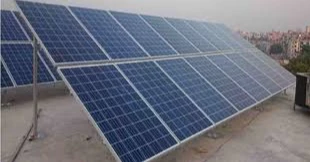
The High Court on Monday asked the relevant authorities to formulate and implement a time-based action plan for the installation of adequate and effective solar panels on the rooftops of every building in Dhaka city.
The HC bench of Justice Md Akram Hossain Chowdhury and Justice Foyej Ahmed passed the order after hearing a writ petition filed by the Bangladesh Environmental Lawyers Association (BELA).
The court also asked the Power Division of Power, Energy and Mineral Resources Ministry, Rajdhani Unnayan Kartripakkha (Rajuk) and the Sustainable and Renewable Energy Development Authority (SREDA) to submit a progress report within six months.
The court also asked the authorities to make functional the solar panels already installed on all residential and commercial buildings in Dhaka city.
It also issued a rule asking the government to explain as to why the failure of the authorities to operate the existing solar panels installed on the roofs of residential and commercial buildings in Dhaka city effectively is contrary to the constitution and existing laws, plans, and policies, should not be declared unconstitutional, illegal and against public interest.
It also issued another rule asking the government to explain as to why an order should not be given to ensure the achievement of the greenhouse gas emission reduction targets promised in various international conventions, treaties and national master plans by installing adequate and effective solar panels on the rooftops of every building in Dhaka city, including making all existing solar panels fully functional.
Advocate S Hasanul Banna stood for BELA while deputy attorney general Mahfuzur Rahman Milon represented the state.
According to BELA, in the context of global climate change, solar energy plays a vital role as a renewable energy source for sustainable development, helping reduce dependence on fossil fuels and lowering carbon emissions.
In densely populated cities like Dhaka, there is no alternative to installing and effectively operating rooftop solar panels as a renewable energy solution.
Utilising unused rooftops for solar panel installation can transform them into energy-generating platforms, which could significantly meet Dhaka’s electricity demand, reduce pressure on the national grid and lower consumer electricity costs.
Despite immense potential, authorities have been slow in implementing rooftop solar initiatives.
In many buildings where solar panels have already been installed, a lack of proper monitoring has rendered them inactive or non-functional.
To reduce fossil fuel consumption and expand the use of renewable energy, thereby cutting carbon emissions and controlling temperature rise, BELA filed the writ petition seeking adequate installation of solar panels on Dhaka’s unused rooftops and the activation of existing idle systems.