With road accidents surging during major festivals like Eid, experts and safety advocates have urged the government to implement a set of comprehensive measures to improve road safety and prevent loss of lives.
Road crashes continue to claim lives across the country every day, official figures suggest.
According to information released by the Bangladesh Road Transport Authority (BRTA), during the Eid-ul-Fitr holidays, 132 people were killed and 208 injured in 110 road crushes over a span of 8 days.
Similarly, BRTA reports that during the last Eid-ul-Azha, 215 people were killed and 278 injured in 216 road crashes over 12 days.
Sylhet records 30 deaths in 29 road accidents in April: Report
Despite numerous measures taken to prevent road crashes in the country, the rate of accidents remains alarmingly high.
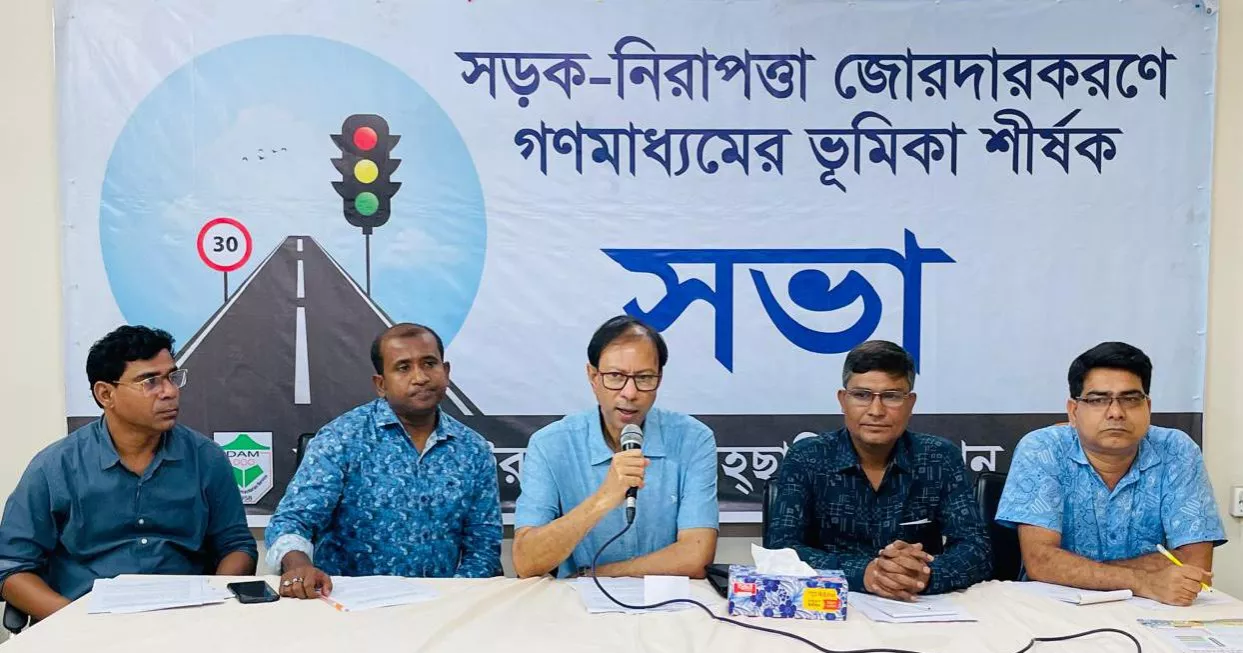
Therefore, for the upcoming Eid-ul-Azha, Dhaka Ahsania Mission has put forward 9 recommendations on Tuesday to prevent road crashes.
During an event titled "The Role of Media in Strengthening Road Safety" organised by the Health Sector of Dhaka Ahsania Mission in Shyamoli, Dhaka, the organisation’s Director, Iqbal Masud, presented these 9 recommendations, including the formulation and implementation of a comprehensive Road Safety Law.
Key among the recommendations is the urgent formulation of a national guideline on speed limit management, ensuring that safe speed limits are not only set but strictly enforced across the country. Advocates emphasised that reckless driving and speeding remain among the top causes of road crashes, especially during Eid travel.
To combat driver fatigue, another major contributor to accidents, it was proposed that driver working hours be regulated, ensuring adequate rest between long journeys.
The recommendations also include restrictions on the movement of battery-operated vehicles such as Nosimon, Korimon, Tempo, and Bhutbhuti on key highways during Eid. On other roads, authorities are urged to designate separate lanes for slow-moving and fast-moving vehicles to avoid collisions.
Pedestrian safety featured prominently in the proposals. Measures such as clearing footpaths of vendors, promoting the use of foot-over bridges and zebra crossings, and discouraging mobile phone use while crossing roads were strongly advocated.
The need for motorcycle safety was also highlighted. During Eid journeys, both riders and passengers must wear standard helmets, with dedicated motorcycle lanes suggested for major highways. An enforcement guideline for quality helmet use was also recommended.
Safety advocates called for the removal of unfit public transport and strict enforcement of laws against driving under the influence of drugs or alcohol. Seatbelt use for all passengers and child safety seats in private vehicles were also emphasized.
To ensure effective implementation of these initiatives, the establishment of a National Road Safety Authority was proposed. Such an authority would oversee coordination among road safety enforcement agencies and contribute to achieving the Sustainable Development Goals related to transport safety.
The call for action comes as the nation prepares for another Eid, with hopes of making travel safer for millions.
Iqbal Masud said that The Road Transport Act of 2018 was expected to prioritise road safety, but that did not happen.
“What we truly need is a dedicated Road Safety Law that gives equal importance to the safety of everyone, including transport operators, drivers, passengers, and pedestrians."