Hypertension is increasingly shifting from high-income countries to low- and middle-income nations including Bangladesh, posing a serious public health challenge, speakers said at a seminar in the capital on Tuesday.
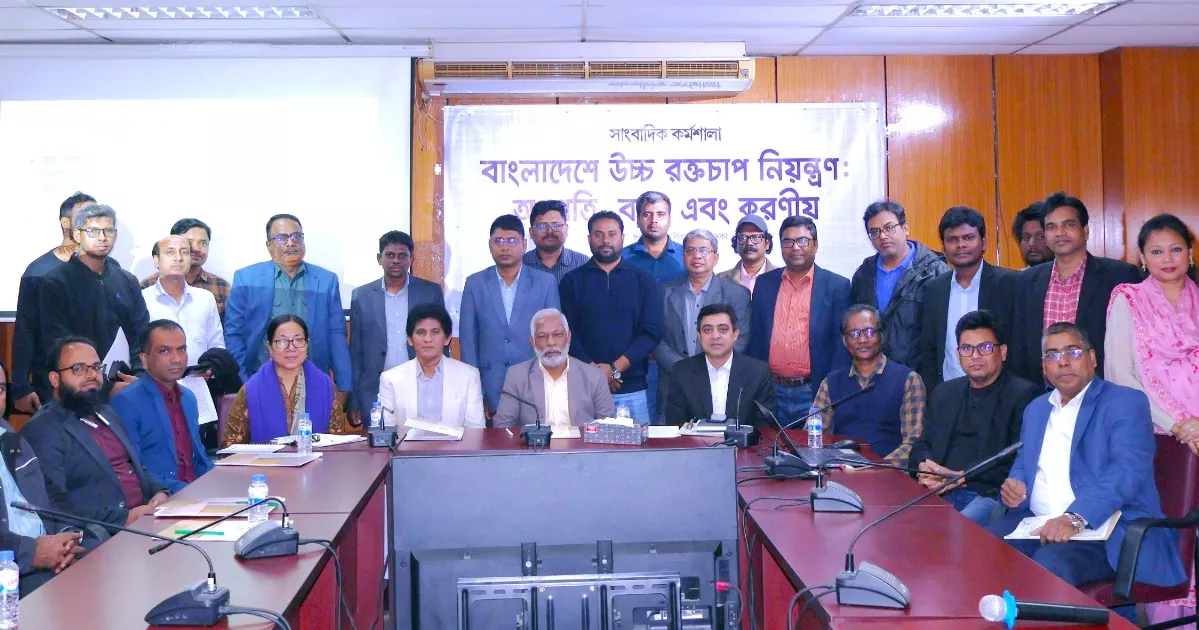
The trend was highlighted with reference to a World Health Organization (WHO) report at a seminar titled “Hypertension Control in Bangladesh: Progress, Barriers and the Way Forward,” held at the Bangladesh Medical Association (BMA) building.
The event was organised by PROGGA (Knowledge for Progress) with support from the Global Health Advocacy Incubator (GHAI) and attended by journalists from print, television and online media.
Citing a WHO report released in September, speakers said around 33 percent of people aged 30–79 worldwide are living with hypertension.
Over the last 34 years, from 1990 to 2024, the number of affected people rose sharply from 650 million to 1.4 billion.
In Bangladesh, one in every four adults is living with hypertension, making it a major contributor to the growing burden of non-communicable diseases (NCDs).
The Bangladesh Bureau of Statistics Health and Morbidity Status Survey 2025 ranks hypertension first among the country’s top 10 diseases, said speakers.
GHAI Bangladesh Country Lead Muhammad Ruhul Quddus Talukder said hypertension is a high-risk condition that often leads to heart attack and kidney failure, adding that although NCDs account for 71 percent of deaths in the country, only 4 percent of the national health budget is allocated to the sector.
PROGGA Executive Director ABM Zubair warned that hypertension has reached epidemic proportions and called for stronger coordination among ministries to prevent the disease.
EDCL Deputy Managing Director Riyad Arefin said there is no shortage of medicines from the company’s side, but distribution problems occur when drugs are not collected from upazila levels.
He added that without proper budgeting and demand planning for NCDs, maintaining a steady drug supply becomes difficult.
The seminar stressed that ensuring free availability of hypertension medicines at primary healthcare facilities, along with sustainable financing, could prevent heart attacks and strokes and save many lives.