
Inflationary pressure in Bangladesh remained elevated at the start of 2026 as rising prices of fish, fruits and vegetables continued to push up food costs, even though rice prices showed signs of easing, according to the latest report of the General Economics Division (GED).
Inflation rose slightly to 8.58 percent in January 2026, up from 8.49 percent in December 2025, reflecting persistent pressure from food prices, the GED said in its Economic Update and Outlook for February 2026.
Food inflation increased to 8.29 percent in January, compared with 7.71 percent in December, while non-food inflation declined to 8.81 percent from 9.13 percent during the same period.
The report said food remained the largest contributor to overall inflation, accounting for 43.06 percent of headline inflation in January, up from 40 percent in December.
Housing and utilities contributed 15.05 percent, while miscellaneous goods and services accounted for 9.31 percent.
Within the food basket, the impact of rice prices eased considerably in January as price growth slowed across all varieties.
The contribution of rice to food inflation dropped sharply to 22.16 percent in January, down from 37.34 percent in December.
Overall rice inflation fell to 7.61 percent in January, compared with 11.92 percent in December, with medium, coarse and fine rice all recording lower price increases.
However, the easing in rice prices was offset by rising costs of vegetables, fruits and fish, which continued to keep food inflation high.
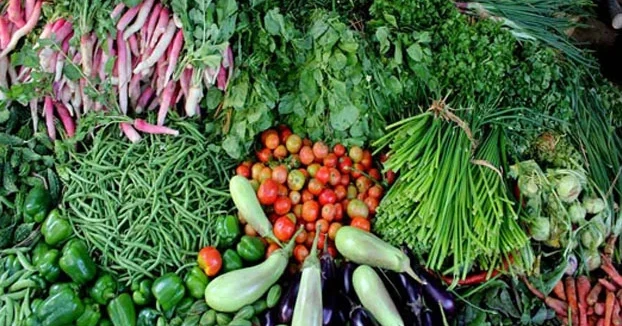
Vegetables, which had a negative contribution to inflation in December, turned positive in January. Fish and dry fish remained among the largest contributors to food inflation.
The GED attributed the increase in vegetable prices largely to higher transportation costs and excessive profit-taking by wholesale and intermediary traders.
Experts, farmers warn of food security crisis over poultry import ban
The report also warned that rising inflation combined with stagnant wage growth is putting pressure on household purchasing power.
While inflation stood at 8.58 percent in January, wage growth remained almost unchanged at 8.08 percent, compared with 8.07 percent in December.
Since September 2025, inflation has consistently outpaced wage growth, creating a widening gap between price increases and income gains.
According to the GED, this trend is eroding real incomes, particularly for low-income households, whose spending is heavily concentrated on essential goods.
Meanwhile, the National Board of Revenue (NBR) failed to meet its revenue target for January despite modest growth in collection.
Against a revised monthly target of Tk 52,545 crore, the NBR collected Tk 37,033 crore, leaving a shortfall of Tk 15,512 crore.
Shortfalls were recorded in all major tax segments, including import and export duties, domestic VAT, and income tax and travel tax.
Overall, the NBR achieved 70.48 percent of its January target, with revenue collection rising slightly from Tk 36,191 crore in December to Tk 37,033 crore in January, marking a 2.3 percent month-to-month growth.
On a year-on-year basis, revenue increased by 3.81 percent compared with January 2025.
The report also highlighted slow implementation of the Annual Development Programme (ADP) in the current fiscal year.
By January 2026, only Tk 50,556 crore, or 21.18 percent of the annual allocation, had been spent—well below the expected 50–58 percent mid-year implementation level.
Although Tk 8,679 crore was spent in January alone, the overall pace remained slow.
The GED warned that even with faster spending in the remaining months, FY2025–26 may record one of the lowest ADP implementation rates in recent years, potentially delaying infrastructure projects and increasing costs.
The slowdown was attributed to weak project preparation, procurement delays, land disputes and coordination challenges.
Despite domestic challenges, the country’s external sector showed relative stability, the report said.
Foreign exchange reserves stood at about $33.18 billion in January 2026, while remittance inflows reached $3.17 billion, significantly higher than the $2.19 billion recorded in January last year.
The GED expects remittance inflows to increase further during Ramadan due to seasonal transfer patterns.
Merchandise exports also grew, mainly driven by the ready-made garments (RMG) sector.
Rice biggest driver of October’s food inflation in Bangladesh: GED
RMG exports increased from $3.23 billion in December to $3.61 billion in January, while non-RMG exports rose to $798.9 million after a slight dip in December.
However, imports of capital machinery remained volatile, suggesting relatively weak private investment despite rising overall imports.
The GED expressed hope that the new government would take prudent measures to ensure macroeconomic stability, including attracting investment, generating employment, controlling inflation and strengthening investor confidence.
It also stressed the importance of improving ADP implementation, maintaining debt sustainability and ensuring policy consistency to support long-term economic growth.
The planned introduction of the government’s Family Card programme was also highlighted as a possible step to strengthen social protection and support vulnerable groups.