
A parliamentary special committee formed to review 133 ordinances issued during the interim government has completed discussions on all of them over two days, although it has identified 20 issues requiring further clarification.
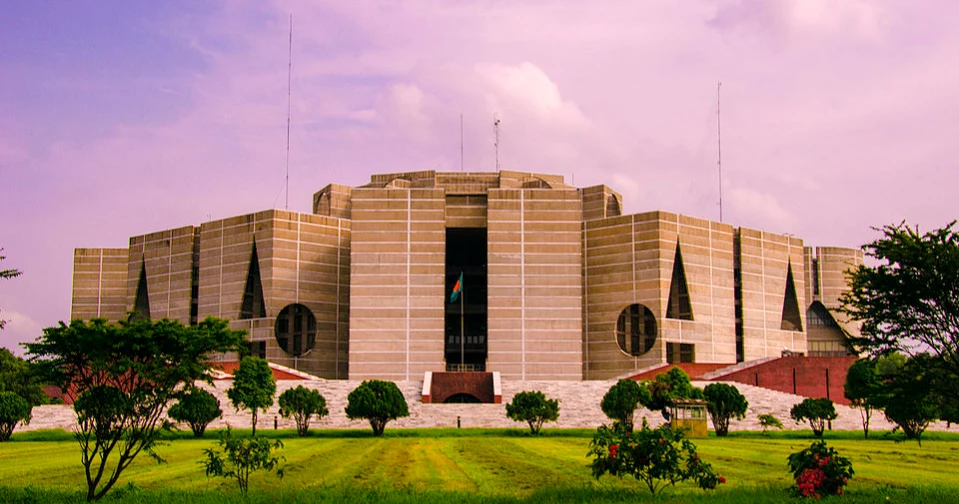
Committee chairman Zainul Abedin disclosed the development to reporters on Wednesday after an adjourned meeting held at the Cabinet Room of the Jatiya Sangsad Bhaban.
“We have examined all 133 ordinances over the past two days,” he said.
According to him, members reached consensus on the majority of the provisions. “On many issues, we are in full agreement. Four issues were identified yesterday, and several more were added today, bringing the total to 20 where we believe further clarification is needed,” he added.
The committee will reconvene on March 29 at 8:30pm, following the parliamentary session, to deliberate further on these outstanding matters.
“We hope that in the meeting on the 29th evening, we will be able to settle everything and reach final decisions,” Zainul Abedin said.
He also noted that there had been no objections from Jamaat members regarding the ordinances that were approved by consensus. “Those we have agreed upon and passed did not face any objections from them,” he said.
The chairman explained that the ordinances requiring additional scrutiny would undergo further examination before any final decision is taken. “We have kept those ordinances for further examination where we felt more detailed analysis is necessary,” he said.
He also referred to the deadline set by parliament for submitting the committee’s report by April 2.
“Parliament has fixed April 2 as the deadline for placing the report. We are working to ensure that it is submitted within that timeframe,” he added.
Zainul Abedin warned that failure to submit the report within the stipulated time would prevent parliamentary discussion on the ordinances. He further noted that, under constitutional provisions, ordinances would automatically lapse if no decision is taken within one month of the commencement of the parliamentary session.
“This is very important. That is why we have carried out thorough and detailed discussions,” he said.
Responding to questions, he said decisions on several key ordinances — including those related to the referendum, the Anti-Corruption Commission, police commission, judicial appointments and the human rights commission — are yet to be finalised.
“On these 20 issues, we will hold further discussions and then place our position,” he said.
When asked whether there had been any proposal to repeal the referendum ordinance, he said, “We have neither proposed to repeal it nor to retain it. We have said it can be discussed.”
He added that issues facing objections could still be brought before parliament in the form of bills after further deliberations.
“We want to proceed in accordance with the Constitution,” he said.
On the question of the age limit for entry into government service, Zainul Abedin said parliament would have the authority to amend it later if necessary.
“The bill has been approved in its current form. Parliament may change it later if it wishes,” he added.
Two ordinances to be enacted into law
A press release from the Parliament Secretariat said that 93 ordinances were discussed in detail in the adjourned meeting on Wednesday. Some 40 ordinances were discussed in the first meeting on Tuesday. A total of 133 ordinances were discussed in the two-day meeting.
The Parliament Secretariat said that the committee has decided to examine the necessity and appropriateness of the ordinances and submit a report to the National Parliament session as soon as possible.
According to the press release, the meeting, chaired by Special Committee Chairman Zainul Abedin, was attended by Home Minister Salahuddin Ahmed, Chief Whip Md. Nurul Islam, Law Minister Md. Asaduzzaman, Muhammad Osman Faruk, A. M. Mahbub Uddin, State Minister for Public Administration Md. Abdul Bari, Muhammad Nowshad Zamir, State Minister for Social Welfare Farzana Sharmin, Md. Mujibur Rahman, Md. Rafiqul Islam Khan and G. M. Nazrul Islam.