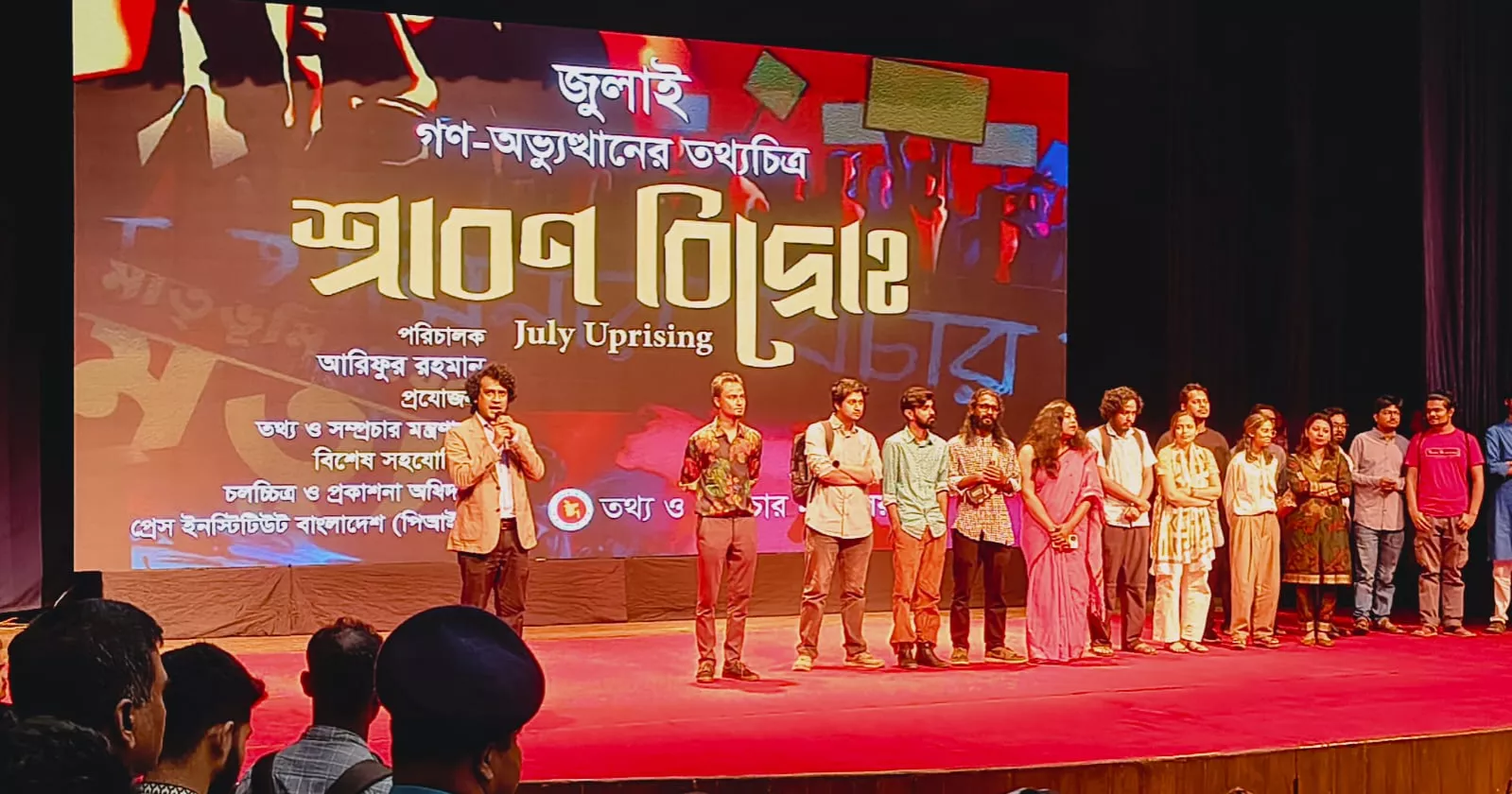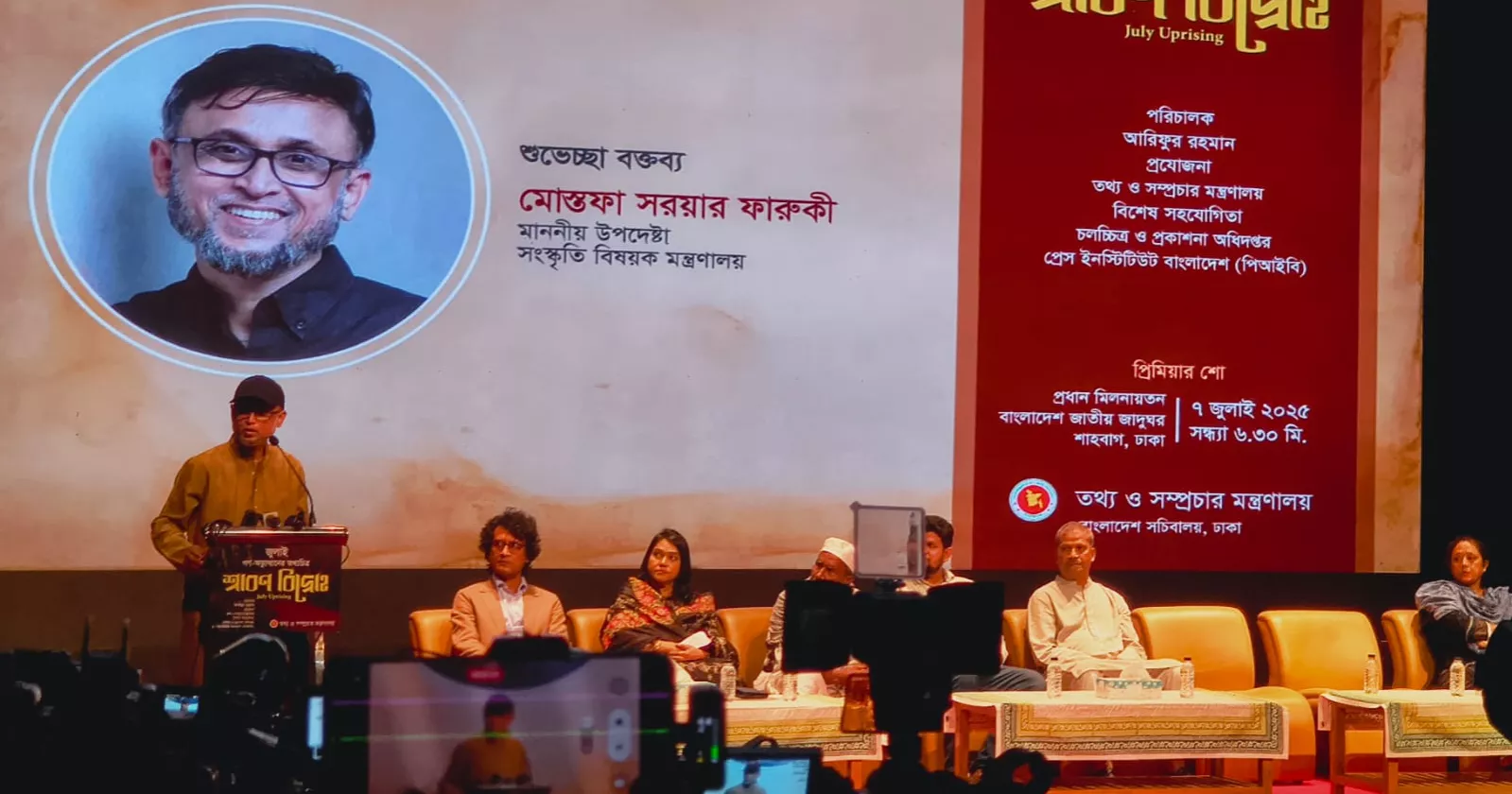
Cultural Affairs Adviser and popular filmmaker Mostofa Sarwar Farooki on Monday said that July is not only about a 36-day protest movement but a 54-year-long struggle against a cultural and social hegemony that persisted in post-independence Bangladesh.
“Our July martyrs envisioned a just and humane state - and to realise their vision, we must work in unity. If political consensus is achieved, we firmly believe that fascism will never return,” he said while addressing the premiere of the documentary 'Shrabon Bidroho' at the main auditorium of the National Museum in the capital's Shahbagh.
The documentary, directed by Arifur Rahman and produced by the Department of Films and Publications under the Ministry of Information and Broadcasting, chronicles the backdrop, events, and sacrifices of the July Uprising.
At the premiere, Information and Broadcasting Affairs Adviser Mahfuz Alam said that the documentary was made to preserve the memory of the martyrs and to remind the new generation of their responsibilities. “We do not want their sacrifices to be forgotten. Their inspiration should be the foundation of our state.”
Speaking at the event, Law Affairs Adviser Dr Asif Nazrul said, “July will never be forgotten. Justice for the genocide has begun to take shape, and it must become more credible. We can never repay the debt of our martyrs, but we hope justice will be served before the upcoming national election.”
Housing and Public Works Affairs Adviser Adilur Rahman Khan stressed that fascism keeps attempting to return and must be resisted each time with a collective voice and action.
Family members of the martyrs also spoke at the event. Mokbul Hossain, father of martyr Abu Sayeed, and Shamsi Ara Zaman, mother of martyred journalist Tahir Zaman Priyo, called for speedy justice and reflected on the sacrifices made.
“In this country, talented journalists often have to work for meagre salaries, which makes them vulnerable and harms their neutrality. I urge the Ministry of Information and others to financially strengthen our journalists and media workers,” said Shamsi Ara Zaman in an emotional address, recalling her late son’s struggles as an aspiring journalist.