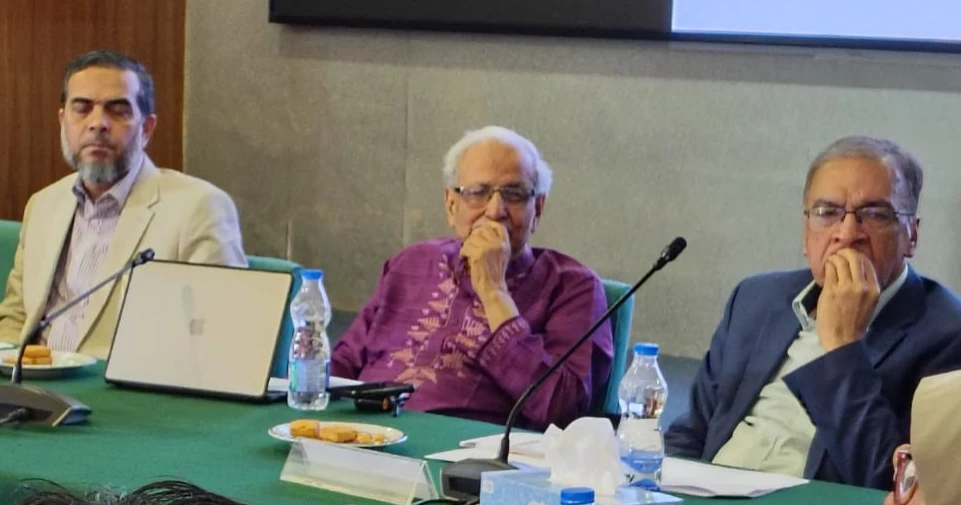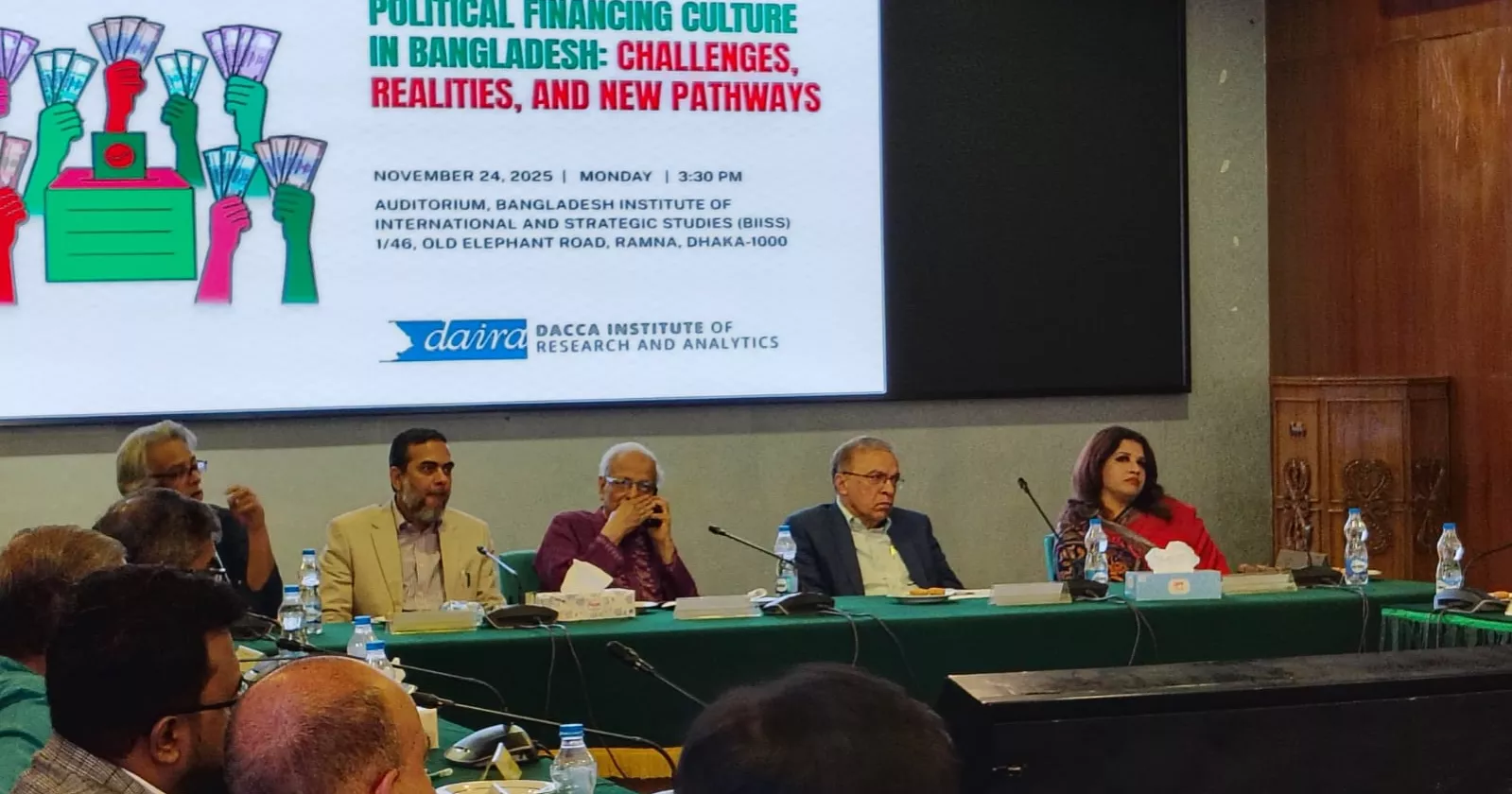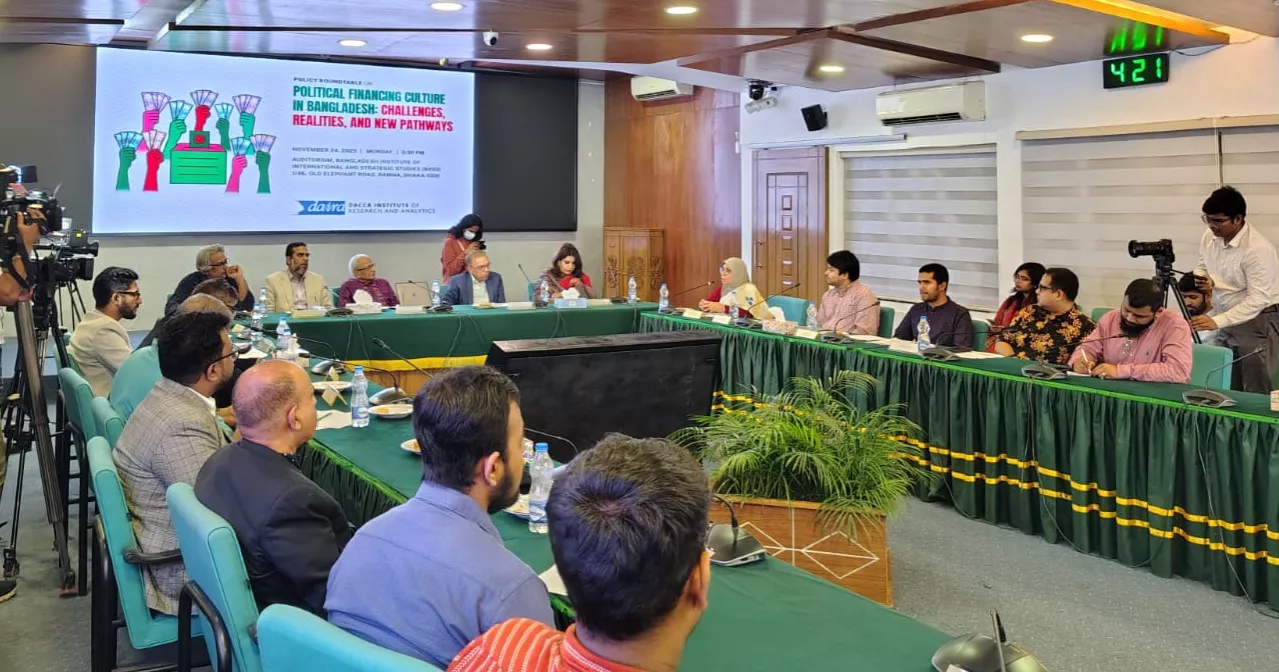
Speakers at a discussion on Monday highlighted the deep-rooted opacity within Bangladesh’s political financing structure, the weaknesses of existing regulatory mechanisms, and the negative implications of pervasive informal transactions.
They discussed how the lack of transparency in party financing affects democratic competition, policy decision-making, and a fair market environment.
The conversation also focused on the inequities created through political–business linkages, weakened accountability, and the emergence of an uncertain and anti-competitive business climate under the guise of “business protection.”
Dacca Institute of Research and Analytics (DAIRA) hosted the discussion titled “Political financing culture in Bangladesh: Challenges, realities and new pathways” at the Bangladesh Institute of International and Strategic Studies (BIISS) auditorium.
The session began with the presentation of a policy brief by DAIRA researchers Ragib Anjum and Ahmudul Haque.
They outlined the patterns and opacity of political parties’ financing practices in Bangladesh, particularly the lesser-researched area of regular income and expenditure beyond election periods.
To explain political parties’ heavy dependence on business actors, they presented three analytical models, discussing both the causes and consequences of such dependence.
Their presentation also highlighted a set of practical policy recommendations aimed at ensuring transparency, accountability, and clearer reporting standards within Bangladesh’s political financing system.