
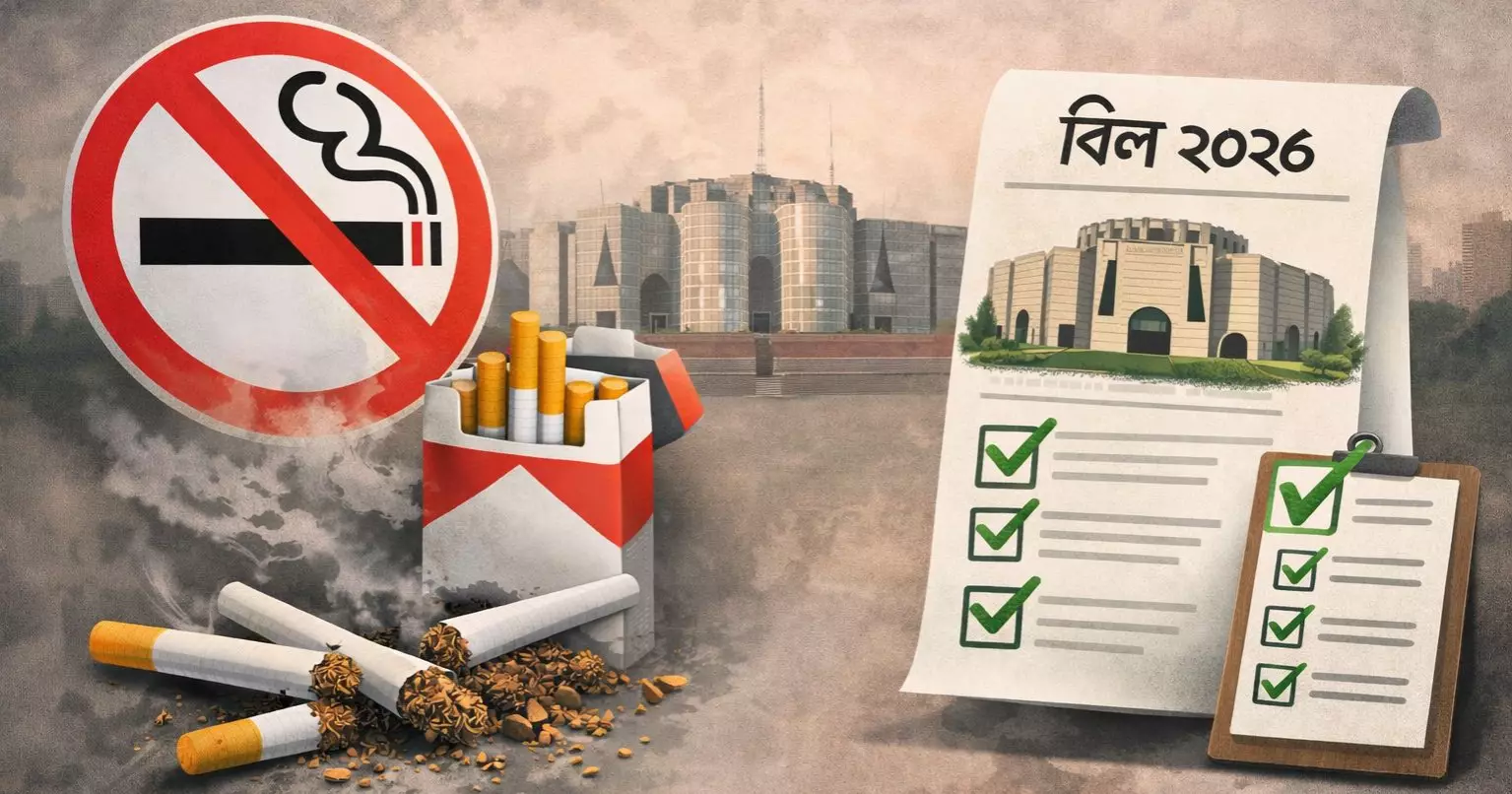
The passage of the Smoking and Tobacco Products Usage Control (Amendment) Bill 2026 in Parliament, which removes the provision banning e-cigarettes, vapes and nicotine pouches, has sparked serious concern among public health experts and anti-tobacco organisations.
The amendment effectively allows these emerging tobacco products to enter the market without what experts describe as adequate regulatory safeguards, raising fears about increased health risks, particularly among young people.
Public health advocates say the decision contradicts a directive issued by the Appellate Division on March 1, 2016 (Civil Appeal No. 204–205/2001), which instructed the government to take steps to reduce tobacco use within a reasonable timeframe.
They also noted that Bangladesh had previously been recognised for its strong stance on tobacco control following the enactment of landmark legislation in 2005. According to them, the removal of the e-cigarette ban represents a setback to those efforts and undermines commitments to public health protection.
The Health and Family Welfare Minister have already indicated that revenue considerations played a role in the policy shift. However, experts argue that such an approach risks creating what they term an “economy of disease,” pointing out that the annual economic cost of tobacco-related harm in Bangladesh—estimated at BDT 87,500 crore—far exceeds the revenue generated from the sector.
Citing global evidence, anti-tobacco groups said a 2023 study by the Institute for Global Tobacco Control found that 132 countries have adopted regulations or bans on e-cigarettes, including 46 that have imposed complete bans.
They further warned that unregulated e-cigarette products could facilitate illicit drug use, with reports indicating that harmful substances are sometimes mixed into vape liquids, increasing risks of addiction and criminal activity.
Concerns were also raised over the approval given to a multinational tobacco company to produce nicotine pouches in Bangladesh with an investment of BDT 61 crore. Public health advocates said the move runs counter to global trends, where many countries are tightening restrictions on such products.
In a joint statement on Saturday, several anti-tobacco and public health organisations urged the Prime Minister to take immediate steps to reinstate the ban on emerging tobacco products, including e-cigarettes and nicotine pouches, and to reconsider the approval for local production of these items.
The statement was issued by a coalition of organisations including Bangladesh Anti-Tobacco Alliance (BATA), Bangladesh Tobacco Control Advocates (BTCA), Bangladesh Network for Tobacco Tax Policy (BNTTP), Bangladesh Tobacco Control Research Network (BTCRN), Bangladesh Cancer Society and others.