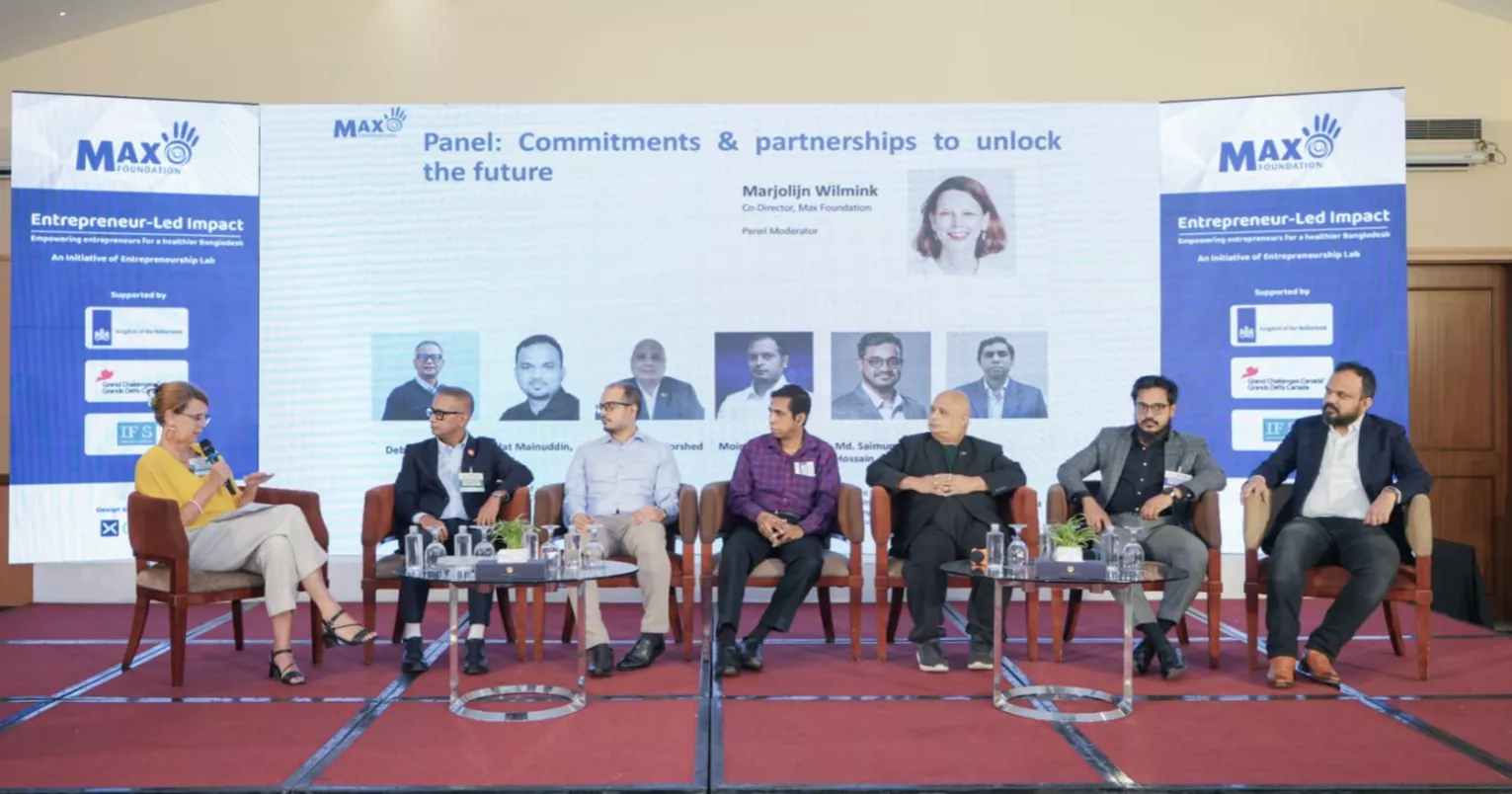
Speakers at a dialogue urged the government to empower micro-entrepreneurs as it is the
backbone of rural and peri-urban livelihoods for ensuring safe water, sanitary solutions, nutritious food access, and basic health products for communities.
They said this at Max Foundation Bangladesh hosted Entrepreneur-Led Impact: National Workshop and Multistakeholder Dialogue, under the theme “Empowering Entrepreneurs for a Healthier Bangladesh,” on Tuesday at a city hotel.
The day-long event brought together over 120 participants, including policymakers, donor agencies, development partners, government representatives, corporates, and ecosystem enablers, alongside micro-entrepreneurs from Khulna, Patuakhali, and Lalmonirhat.
They said Micro-entrepreneurs are a critical but often under-recognized driver of Bangladesh’s economy. The country has more than 10 million CMSMEs (cottage, micro, small, and medium enterprises), which account for nearly 25% of GDP and employ around 30 million people — the backbone of rural and peri-urban livelihoods.
In sectors like WASH, Food & Nutrition Security, and Mother & Adolescent Health (MAH), small entrepreneurs act as last-mile service providers, ensuring safe water, sanitary solutions, nutritious food access, and basic health products for communities otherwise left behind.
By linking household demand with small-scale enterprise solutions, they not only create livelihoods but also deliver measurable improvements in public health and social wellbeing.
The workshop showcased these stories of resilience and innovation through Ignite Talks, an interactive Co-Creation Lab, and two high-level panel discussions. Together, stakeholders examined systemic barriers — from access to finance to weak market linkages — and co-designed practical solutions to strengthen the national entrepreneurial ecosystem.
Tariqul Islam Tariq, country director, Max Foundation Bangladesh, said "This workshop has demonstrated the power of collaboration. By bringing micro-entrepreneurs together with policymakers, banks, corporates, and development partners, we are building a stronger ecosystem that supports entrepreneurship as a driver of both income and health impact."
The dialogue concluded with a shared set of commitments from diverse stakeholders to support micro-entrepreneurs through improved financing options, stronger market linkages, and scalable business models.
The knowledge generated from the sessions will guide future advocacy and programming by Max Foundation, ensuring that entrepreneurs continue to receive the support they need to thrive — and to build a healthier, more inclusive Bangladesh.
Max Foundation Bangladesh operates within the global Max Foundation network, advancing child health through evidence-driven, community-focused, and entrepreneurship-powered solutions. Since 2005, the organisation has delivered integrated programmes in water, sanitation & hygiene, food & nutrition security, and maternal & adolescent health.