The people of Kurigram, a district in northern Bangladesh, are facing severe socio-economic discrimination, leading to it being identified as the country's poorest district.
According to the Bangladesh Bureau of Statistics (BBS), the poverty rate in Kurigram stands at 70.8 percent, with the Bangladesh Institute of Development Studies (BIDS) reporting that 53.2 percent of the population lives in extreme poverty.
A significant factor contributing to this dire situation is river erosion, particularly affecting those living in the chars (river islands).
Stranded for five years, Kurigram villagers await bridge reconstruction
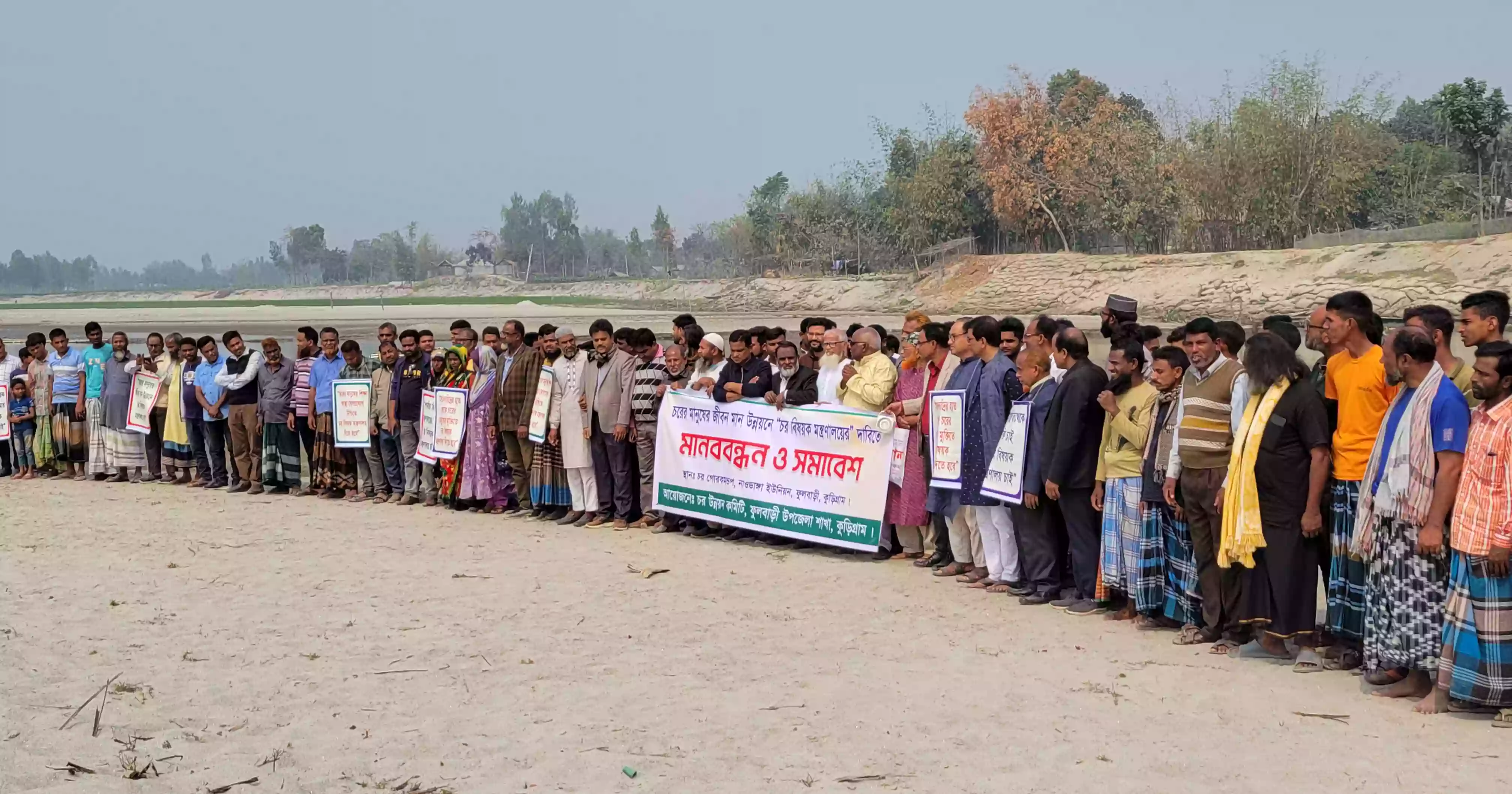
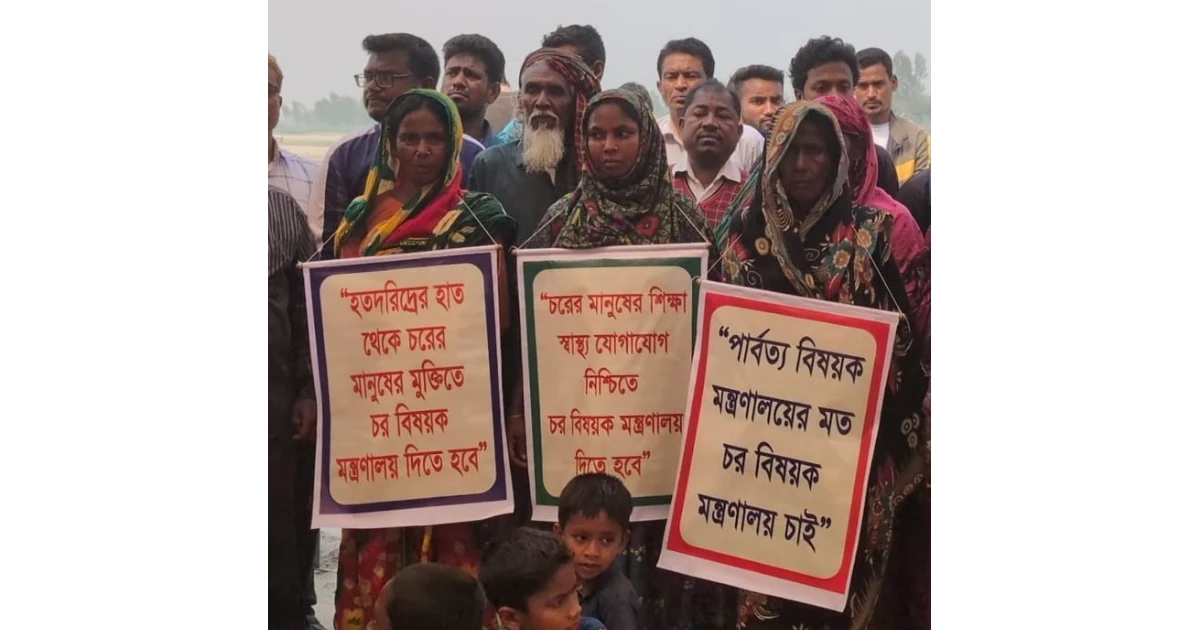
In response, there has been growing demand from local communities for the Ministry of Char Affairs to actively implement the Sustainable Development Goals (SDGs).
The Kurigram District Char Development Committee recently organised a rally and formed a human chain to press for their demands.
Professor Shafiqul Islam Bebu, convener of the Char Development Committee in Kurigram, said that the district has a population of approximately 24 lakh, with 16 rivers, including the Brahmaputra, Dharla, Teesta, Dudhkumar, and Phulkumar, flowing through it.
He said that the district contains over 450 chars, where about 550,000 people reside in an area of 800 square kilometers. Agriculture is the primary source of income for those living in these chars.
“Due to the district’s unique geography, surrounded by rivers and chars, it faces challenges distinct from other regions,” he added.
Clash over khas land in Kurigram leaves one dead, five injured
Most of the chars have been excluded from development activities since the country’s independence, which has led to stagnation in the lives of the people there.
These communities remain marginalized, lacking basic needs like connectivity, healthcare, and education.