
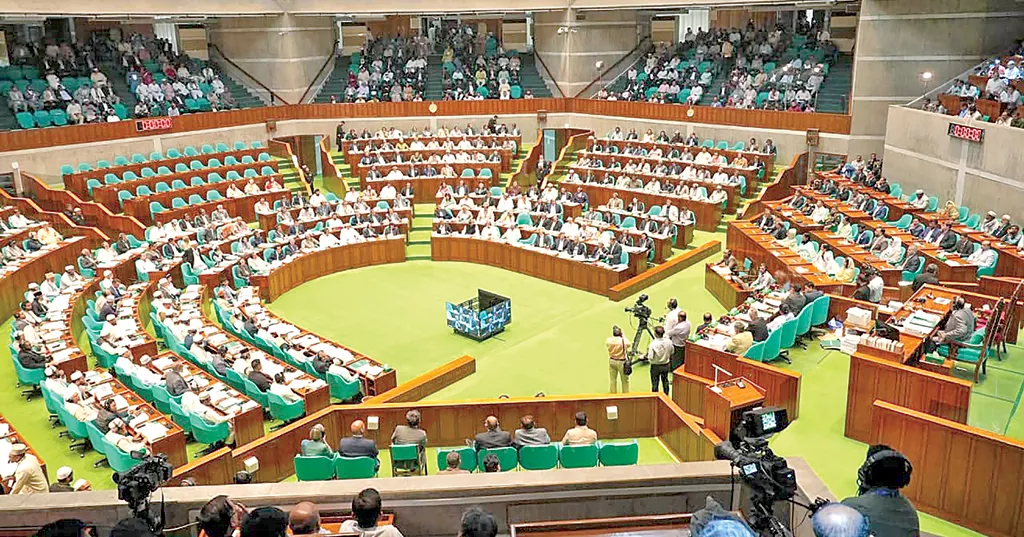
Two opposition lawmakers on Monday pushed for a discussion in Parliament on the country’s ongoing energy situation, describing it as a pressing national issue.
Opposition Leader Dr Shafiqur Rahman and Jamaat lawmaker Nurul Islam (Chapainawabganj-3) gave two separate notices of adjournment motions under Rule 62 of the rules of procedure to discuss almost the similar matters of public importance ‘severe energy crisis and its impacts on power generation, industries and public life.
Deputy Speaker Kayser Kamal, who was presiding over the House, rejected the notices as per the Rule 63 of the rules of procedure, saying the issue could be discussed without adjourning the session as the general discussion on the President’s speech is already ongoing.
He noted that the Power, Energy and Mineral Resources Minister had already made a statement under Rule 300 on the issue, and suggested that the matter could be raised again through appropriate procedural provisions.
Taking the floor, Dr Shafiqur Rahman termed the issue “extremely important” for national life and urged the Speaker to allow a comprehensive discussion.
“Now, if this opportunity is not given, then what will we assume? We will assume that the burning issue, which is the most pressing problem in public life, could not be discussed in this Parliament. Wouldn't that be an unfortunate matter for us?” he said.
About the statement given on energy issue by the minister under the Rule 300 of the Rules of Procedure in the House, Shafiqur Rahman said there is a clear gap between the government’s statements and the realities people are facing.
“We will talk about the most burning issue of the moment. If you don't give this (the opportunity to discuss it), then have we received justice from you (Deputy Speaker)? We didn't,” he said.
The opposition leader requested the Speaker not to settle it like this (turning down the notices), but instead, schedule the matter to be discussed for a day or two days later by adjourning the regular business of the House.
Home Minister Salahuddin Ahmed acknowledged that the issue is important and worthy of discussion but supported the Speaker’s decision not to allow an adjournment motion as there is scope to discuss the issue under the other rules.
He said adjournment motions are traditionally used by opposition parties and are rarely accepted in parliamentary practice, adding that the current Parliament has already set a “rare precedent” by allowing two adjournment motions in the current session.
“In the history of parliamentary politics in Bangladesh, these adjournment motions have been discussed at most two to four times. In the current parliament, two adjournment motions have been discussed in the same session in two sittings, which is a unique precedent in history. If another adjournment motion is introduced in another sitting of this parliament, it will be a different precedent,” he added.
“We, the government, have been forced to increase the price of fuel slightly. There is no crisis in this regard. Therefore, there is no need to hold this discussion in the Parliament session by adjourning the scheduled business of the House,” said the Home Minister adding that there is a scope for a brief discussion by giving notice under the Rule 68.
Shafiqur Rahman disagreed with the remarks of Salahuddin Ahmed, saying the crisis is evident outside Parliament.
If there was no crisis, courts would not have had to go virtual even for two days to save energy, he said, citing it as an example of the prevailing situation.
Following a lengthy exchange, the Deputy Speaker proposed holding a discussion without adjourning the House, potentially extending it up to one to one-and-a-half hours.
Accepting the proposal, the opposition leader said he would submit a fresh notice and hoped the discussion would be scheduled in the presence of the Leader of the House (Prime Minister Tarique Rahman).
He assured that Parliament would take necessary steps to ensure a meaningful discussion.
The Deputy Speaker urged both treasury and opposition benches to work “shoulder to shoulder” on matters of public interest.