A clinical trial led by Bangladeshi researcher Forhad Chowdhury at the University of Oxford has found that procalcitonin-based testing could help reduce unnecessary antibiotic use in Bangladesh, offering a potential tool in the fight against antimicrobial resistance (AMR).
AMR has become a growing global concern due to the widespread misuse and overuse of antibiotics, particularly in low- and middle-income countries where access to advanced microbiology labs remains limited.
Global leaders converge at Oxford to champion sustainable economic futures
Drawing on his experience as a clinician in Bangladesh, Chowdhury observed that antibiotics are often over-prescribed and widely available over the counter, contributing to rising resistance.
Microbiological tests are crucial to help clinicians determine the most appropriate course and length of antibiotic treatment, according to the Ineos Oxford Institute for Antimicrobial Research (IOI).
They allow clinicians to rapidly detect the presence of bacteria in blood and urine samples from patients.
However, high-quality microbiology labs are not always accessible in low-and-middle income countries like Bangladesh.
Instead, clinicians rely on standardised national guidelines.
These recommend predefined durations for using specific antibiotics, which don't vary patient-to-patient and can lead to patients taking the drug for longer than strictly necessary.
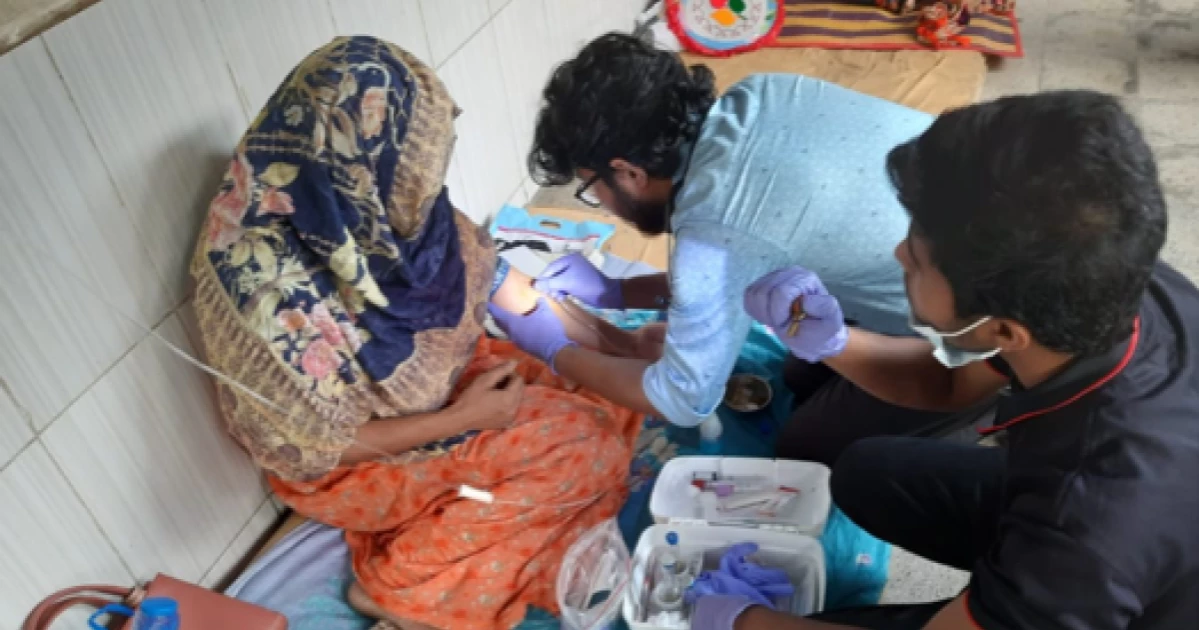
Two clinicians are working to take a blood sample from a patient at the Chittagong Medical College in Bangladesh, as part of a trial run by Oxford DPhil student Forhad Chowdhury.
“By prolonging the use of antibiotics in patients without biological indication or validation, patients and clinicians were overusing antibiotics, which increases the spread of AMR.
The necessary microbiological tests to guide these treatments can often be unavailable to clinicians in resource-limited settings, so in my research I wanted to show that there are viable alternatives,” said Chowdhury.
For his DPhil, he studied other, non-microbiological forms of testing, which can inform the de-escalation of antibiotic treatments without involving the lab.
He chose to use a compound called procalcitonin, which becomes more prevalent in the body when there is a bacterial infection, and decreases after treatment with antibiotics.
“High levels of the biomarker procalcitonin in blood samples indicate an infection, and when antibiotic treatments cause levels to drop below a pre-determined safe target amount, a patient no longer needs antibiotics. Procalcitonin-based diagnostics can provide a more affordable, accessible way of testing for infections than sending samples to labs, ultimately reducing the burden of prolonged antibiotic use in hospitals in Bangladesh,” said Chowdhury.
Starting in 2023, Forhad and a team of researchers ran the PROCALBAN clinical trial to assess the efficacy and safety of procalcitonin as a biomarker to guide antibiotic use.
They recruited over 500 patients with either confirmed or suspected sepsis in the Chittagong Medical College in Bangladesh.
Patients were split into two groups: one group where antibiotic treatment duration was guided by daily procalcitonin tests through, and another where treatment was guided solely by national guidelines.
Forhad and the team found that, on average, treatment duration could be shortened by around 3 days - enough of a reduction to significantly reduce antibiotic overuse in the region.
The team also sent 120 bacterial isolates to the UK for whole genome sequencing, which will fuel further research into sepsis in low-and-middle income countries, and provide site-specific genetic data on the burden of AMR in Bangladesh.
After seeing the huge potential improvements their tests can create, Forhad’s goal now is to encourage even more widespread acceptance among clinicians in Bangladesh.
To achieve this, Forhad was granted the IOI Knowledge Exchange Fund to travel back to Bangladesh, where he shared his findings with researchers, clincians, educators and trainees through an in-person dissemination meeting.
This meeting gave Forhad a chance to communicate the impacts and benefits of procalcitonin tests on everyday hospital decision making, and gave staff the opportunity to ask practical questions about cost-effectiveness, availability and how the tests would fit into hospital workflow.
After completing his DPhil, Forhad intends to continue researching ways to reduce the AMR burden in Bangladesh, creating a research team to investigate other novel techniques like the procalcitonin tests, and inspiring other researchers to do the same.