Bangladesh’s Planning Adviser on Monday underscored the huge scale of reforms undertaken by the interim government across multiple sectors, ranging from public broadcasting and civil administration to procurement and judicial operations, cautioning that the next elected government will face the crucial task of reviewing and absorbing these changes.
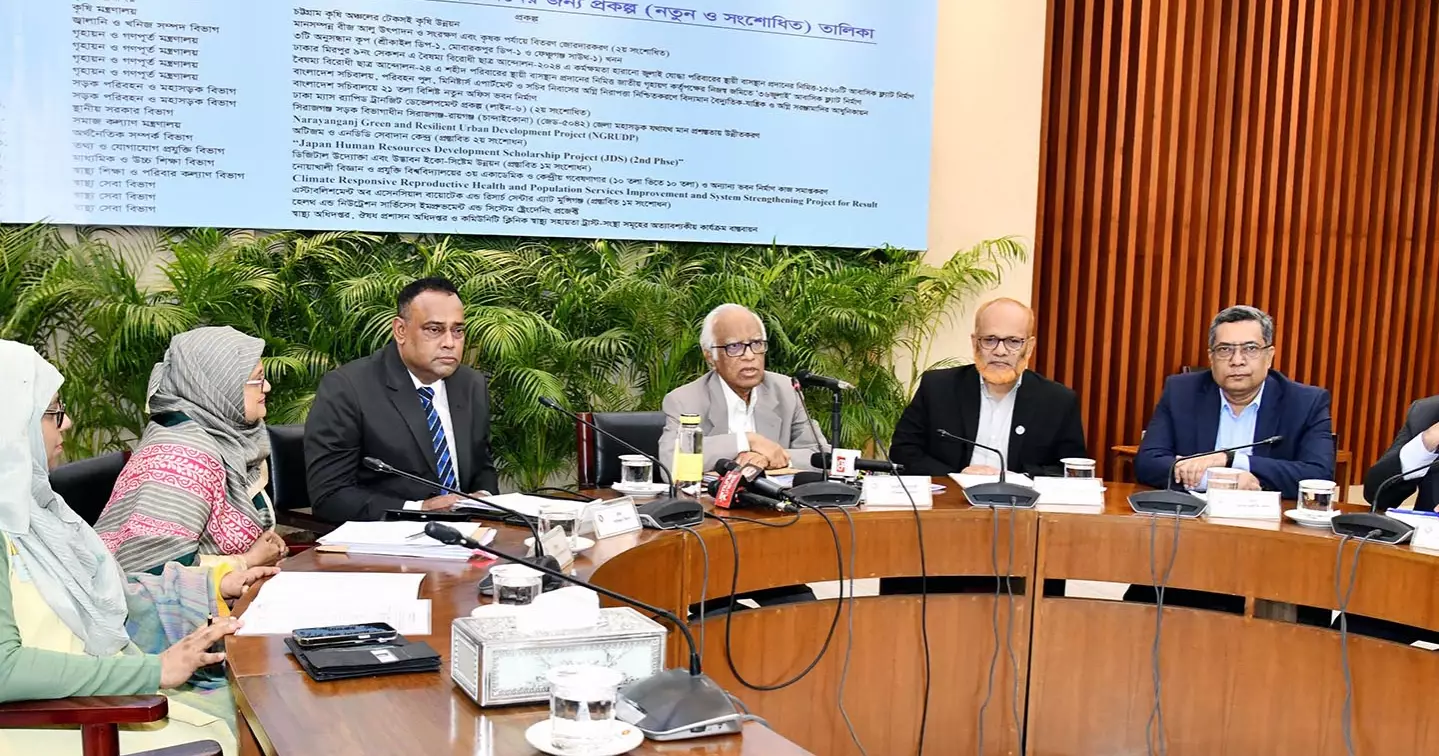
Speaking to reporters after an ECNEC meeting, the Adviser addressed a wide array of questions, including whether state-run media entities such as Bangladesh Television (BTV), Bangladesh Betar, and the Press Information Department (PID) could be merged to reduce operational costs.
He dismissed the possibility of such restructuring in the short term, citing “complexity, capacity constraints, and inevitable labour unrest” as major obstacles.
“There is very little scope to do this now. It would become complicated, and the Secretariat would see demonstrations,” he remarked.
Broadcasting Sector: Independence vs Practical Hurdles
The Adviser noted that BTV’s institutional culture and staffing structure make it difficult to integrate with other government information agencies.
“BTV has always run with its own people; they have never been in any regular service stream. Over time, the pool of qualified people diminished and the institution weakened,” he said.
While acknowledging longstanding proposals to grant BTV greater editorial independence—similar to the BBC model—he emphasised political realities.
“We could issue an ordinance to make BTV independent, but no one can guarantee that an elected government will approve that ordinance. No political government in Bangladesh has historically been comfortable giving BTV BBC-like autonomy.”
Betar, he added, still maintains over 500 surplus officers, making its reform “both essential and difficult”. Integrating Betar with other information services could create “major institutional complications”, though the medium’s declining importance makes restructuring unavoidable.
BBS and Data Transparency
Highlighting reforms within the Bangladesh Bureau of Statistics (BBS), the Adviser said a major overhaul is already underway. “Before I leave, I want to complete this. We have no difficulty issuing an ordinance,” he said.
He stressed the need for complete independence in data release, noting that relevant policy commitments have already been published online:
“BBS must be able to publish everything independently, without seeking ministerial approval. With digitalisation, full transparency is possible.”
While drafting rules is straightforward, he cautioned that ordinances face greater risk. “Any ordinance must be placed before the next Parliament. If the new government does not approve it, the entire ordinance lapses.”
Major Legislative Reforms
The Adviser said the interim government has moved ahead with many reforms that had been pending for years under various committees.
“We have implemented several major reforms through ordinances, often without fully realising their longer-term implications. Even we will need time to fully understand what they mean,” he said.
One of the most influential reforms, he said, is the overhaul of the public procurement regime: “The government’s procurement policy has practically become a book—publicly available everywhere. With digital systems now entrenched, reversing or altering many procedures will be difficult. The ordinance converting this into law is likely to be accepted by the next Parliament.”
He contrasted this with other ordinances that may face greater scrutiny.
Judiciary: A Transformative Step
Perhaps the most consequential change, the Adviser noted, is the ordinance granting greater functional independence to the judiciary, including the magistracy.
“Magistrates who decide on bail, arrests, and sentencing will no longer operate under the Law Ministry. This is now under a fully independent judiciary,” he said.
The Planning and Finance ministries both played roles in determining how judicial project implementation would work, how independent budgeting would function, and how the system would interact with the Planning Commission.
“These are enormous reforms. Some may even create discomfort for the next government because they shift long-standing balances of administrative control,” he added.
Concerns for the Next Government
The Adviser acknowledged that the interim administration may have been “too ambitious” in the volume and scale of reforms introduced. “We may have introduced more and deeper reforms than usual. It might be difficult for a newly elected government to digest all of them.”
However, he expressed hope that the core intentions of the reforms—modernisation, transparency, digitalisation, and institutional autonomy—will be preserved.
“They may not keep everything, but I hope they will retain at least the essence. Elected governments are ultimately the best judges of public demand.”