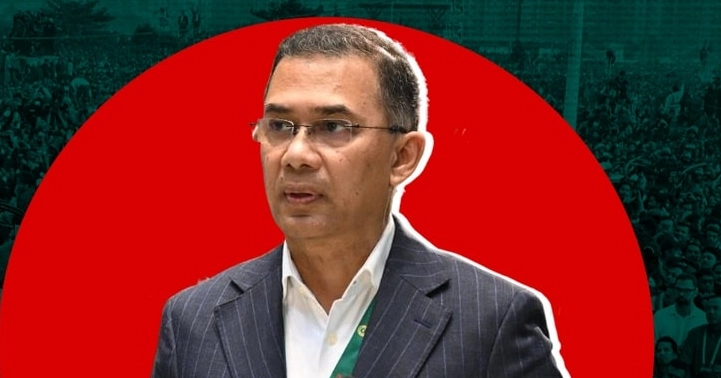
Prime Minister Tarique Rahman is set to visit Dinajpur on Monday to inaugurate a nationwide canal excavation and re-excavation programme aimed at improving irrigation, boosting agricultural production and creating rural employment.
It will be Tarique Rahman’s first visit outside the capital since assuming office as Prime Minister on February 17.
After introducing the Family Card programme, the government is now launching the canal excavation programme to fulfill another election pledge of BNP.
Tarique Rahman will arrive at Syedpur Airport at 10:15am from Dhaka by air, Prime Minister’s Deputy Press Secretary Hasan Shiplu told UNB on Sunday.
From the airport, Shiplu said the Prime Minister will travel by road to Balrampur Sahapara area in Kaharole upazila of Dinajpur.
He said Tarique Rahman will formally inaugurate the nationwide canal excavation and re-excavation programme-2026 by re-excavating the Sahapara canal, marking the start of simultaneous activities across the country.
The Prime Minister is also scheduled to address a public meeting at Sahapara around 12:30pm.
Later, he will offer fateha at the graves of his grandfather Md Iskander Majumder, grandmother Taiba Majumder and aunt Khurshid Jahan Haque at Sheikh Farid Model Graveyard on the outskirts of Dinajpur town.
In the evening, he will attend an iftar gathering and view-exchange meeting with distinguished guests and political leaders at 5:00pm at Dinajpur Circuit House premises before returning to Dhaka by air at night.
Security forces have taken extensive measures ahead of the Prime Minister’s visit, while preparations including stage construction and other logistical arrangements have already been completed.
In the first phase, the canal excavation programme will be implemented in 54 districts across the country.
On the same day, ministers, advisers, the chief whip of the Jatiya Sangsad, state ministers, whips and members of parliament will inaugurate similar activities in the remaining districts.
The Prime Minister’s visit has stirred enthusiasm among BNP leaders, activists, farmers and people from different walks of life in Dinajpur.
Under the government’s plan, about 20,000 kilometres of rivers, canals, water bodies and reservoirs will be excavated or re-excavated across the country over the next five years.
The initiative is expected to improve irrigation facilities, increase agricultural production and create employment opportunities for rural communities.
It will also help increase the use of surface water and reduce dependence on groundwater, contributing to the mitigation of drought, floods and waterlogging in different parts of the country.
Water Resources Minister Md Shahiduddin Chowdhury Anee said the canal excavation programme has been undertaken with the aim of building a self-reliant Bangladesh.
He said late President Ziaur Rahman earned a special place in the hearts of people by initiating canal excavation programmes during his lifetime, which helped many communities become self-reliant.
Describing the government as people-centric, the minister said the Water Resources Ministry would continue to implement projects that benefit the country’s people.
He said the government has already taken a 180-day programme as part of the broader plan to excavate 20,000 kilometres of canals across the country within five years.
“If canals, ponds and water bodies are excavated and re-excavated, it will bring significant changes to people’s lives and livelihoods while strengthening the irrigation system for agriculture,” he said.
Women and Children Affairs Minister AZM Zahid Hossain said canal excavation and re-excavation was one of the key election pledges of Prime Minister Tarique Rahman.
As part of fulfilling that commitment and supporting economic growth and a “green revolution,” the Prime Minister will simultaneously inaugurate canal excavation works in 54 areas across the country from Sahapara in Kaharole upazila, he said.
The minister noted that many canals originally excavated during the tenure of former President Ziaur Rahman have become silted up over time, while previous governments did not take sufficient steps to restore them.
Zahid said re-excavating canals can improve irrigation for farmers, support fisheries, duck farming and tree plantations along canal banks, reduce waterlogging, drain excess rainwater, retain water during dry periods, and increase the use of surface water while reducing dependence on groundwater.