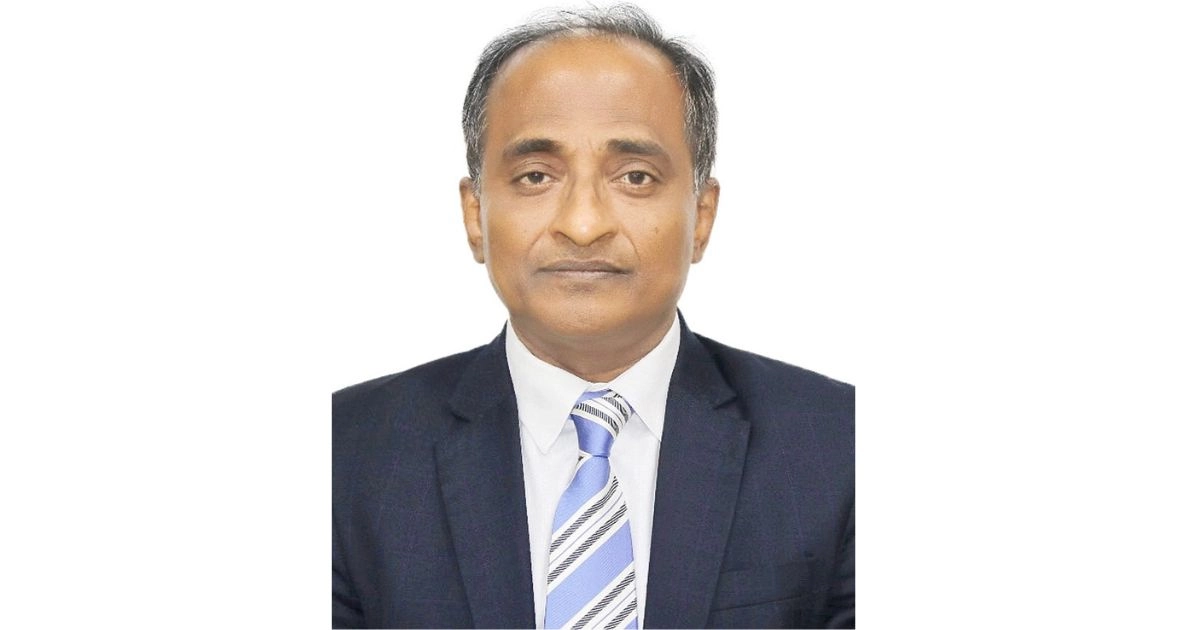
Bangladesh Commerce Secretary Mahbubur Rahman has said a strong political will is the key to transforming South Asia into a major commercial hub.
Speaking at a global and regional trade and investment conference held on Thursday at a city hotel, the commerce secretary said the coming days would present challenges for global trade, making regional unity indispensable.
“Future trade will face more tariff complexities, alongside non-tariff and para-tariff barriers. To tackle these challenges, there is no alternative to bringing heads of state together at a single table,” Mahbubur Rahman added.
The event, jointly organised by the SAARC Chamber of Commerce and Industry (SCCI) and the Federation of Bangladesh Chambers of Commerce and Industry (FBCCI), featured two sessions: ‘Emerging Trades in Global Politics and Implications in the Global Economic Order’ and ‘Increasing South Asia Economic Cooperation: Options for Enhancing Connectivity, Trade, and Investment’.
Speaking on the occasion, SCCI President Jasim Uddin said intra-regional trade in South Asia is relatively low. To remove obstacles, countries must focus on trade facilitation through automation, the removal of cross-border tariff and non-tariff barriers, e-commerce, and fintech adoption, while addressing mutual distrust, he said.
Jasim Uddin also urged SAARC countries to work together to establish South Asia as a strong supply chain hub.
FBCCI Secretary General Md Alamgir highlighted that cooperation in key sectors such as tourism, information technology, and energy would benefit every country in the region.
He also called on nations to take the necessary steps to leverage the demographic dividend.
At the conference’s first session, Dr Mashrur Riaz, Chairman of Policy Exchange Bangladesh, delivered the keynote speech, noting that global political continuity is shifting, increasing economic uncertainty and impacting trade and investment. He stressed the need to restructure systems for global trade and economic growth.
In the second session, Fahmida Khatun, Executive Director of the Centre for Policy Dialogue (CPD), discussed the challenges facing regional trade in Asia, including political instability, tariff and non-tariff barriers, and institutional inefficiencies.
She also offered recommendations to expand trade, including reducing business costs, adopting public-private measures, developing human resources, attracting investment, linking education with industry, and optimising the use of resources and raw materials.
Business leaders from various chambers and associations, economists, researchers and representatives from SCCI and FBCCI attended the conference.