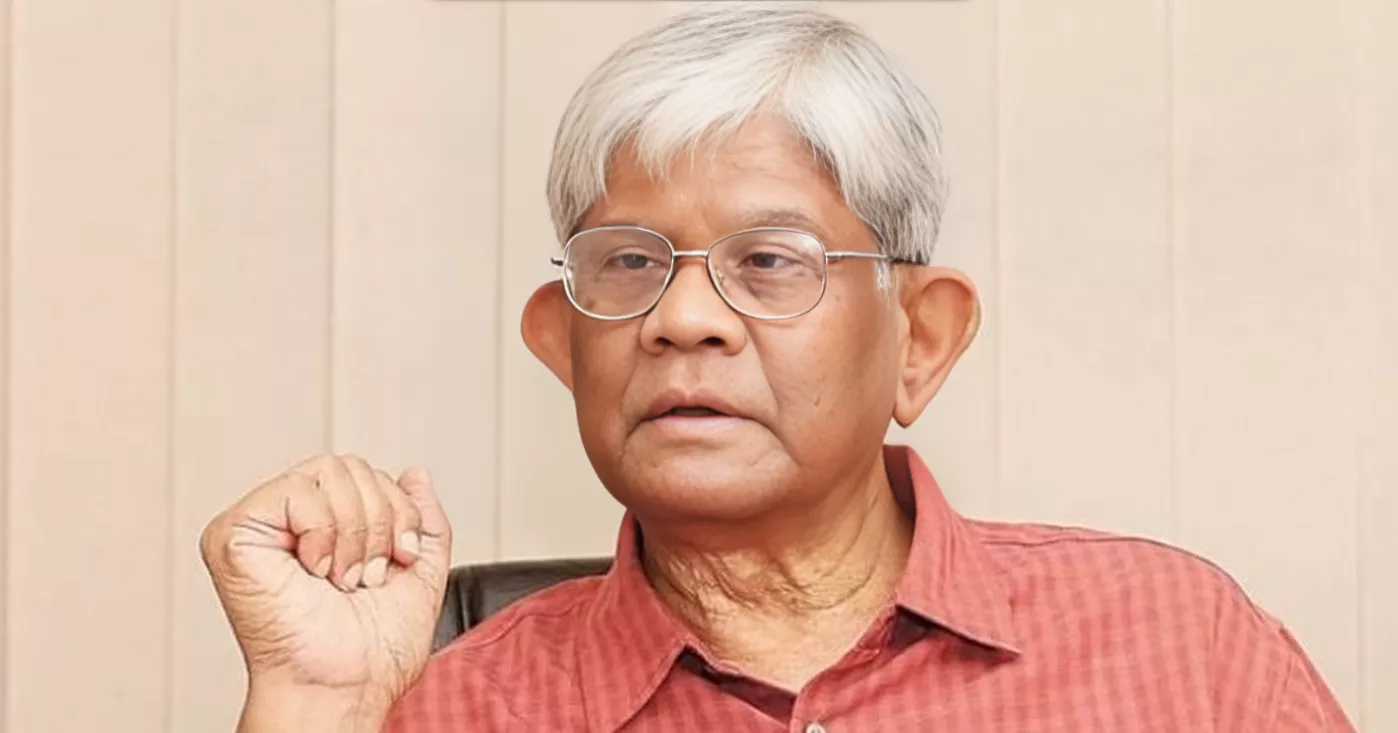
Adviser to the Ministries of Finance, and Science and Technology Dr Salehuddin Ahmed on Monday underscored the need to link research and innovation more closely with the country’s national development priorities to accelerate economic growth and competitiveness.
“Research and innovation must be closely linked with national development priorities. We are moving towards an era where scientific advances and technological applications will be the primary drivers of economic competition,” he said.
He said this while addressing a roundtable titled “Research to Market: Strengthening Bangladesh’s Innovation Ecosystem through Academia–Industry–Research Partnerships” at a city hotel.
The event was organized by the Ministry of Science and Technology and attended by representatives from government and private research institutions, universities, industries, researchers, innovators, and policymakers.
Dr Salehuddin stressed the importance of bridging gaps between research, innovation, and industry, saying that government investments in research must translate into higher productivity, employment generation, and sustainable development.
“Timely initiatives to enhance connectivity among research, innovation, and industry are essential, along with policy and financial incentives,” he added.
Highlighting Bangladesh’s effective use of science in agriculture, livestock, and fisheries, the adviser noted that these successes must now extend to other underdeveloped sectors. He called for stronger coordination among policymakers, the government, and research institutions to achieve inclusive economic progress.
Commerce Secretary Mahbubur Rahman, speaking as a special guest, said Bangladesh continues to lag behind in commercializing research outcomes and emphasized the need to create opportunities and incentives for new innovations.
Speakers at the discussion observed that collaboration among academia, industry, and research institutions is the most effective way to promote innovation, technology transfer, and commercialization. Citing examples from South Korea, Germany, Singapore, and India, they said Bangladesh could develop high-tech industries through similar partnerships adapted to local needs.
They also pointed out that Bangladesh’s spending on research and development (R&D) remains comparatively low in the region. Although research publications have increased, their application in industries is still limited, and private investment in research remains insufficient. Joint research initiatives, policy incentives, and technological support were recommended to bridge these gaps.
Participants also called for the establishment of a National Innovation Council, particularly focused on ICT and artificial intelligence (AI) technologies.
In his concluding remarks, Science and Technology Secretary Md. Anwar Hossain said the ministry now acts not only as a policy overseer but also as a driver of business competitiveness, export diversification, and innovation-led growth.
“Our goal is to transform research into economic strength and embed innovation into daily life,” he said, adding that the ministry has already taken several initiatives, including opening government laboratories to private researchers, launching joint research fellowships, and organizing an “Innovation Fair” in February 2026.
Rooppur Nuclear Power Plant to start trial operations in December: Salehuddin
Other initiatives include forming a Frontier Technology Cell, building global linkages with overseas scientists, and developing a comprehensive database of Bangladeshi researchers and scientists at services.most.gov.bd.
The ministry will also prepare a summary of the roundtable’s recommendations for policy and institutional reforms and form a Ministry–Industry–Academia Working Group to pilot collaborative projects in priority sectors.
The roundtable brought together leaders from biotechnology, pharmaceuticals, fisheries, and other industries, as well as vice-chancellors, academics, government officials, and members of the media.