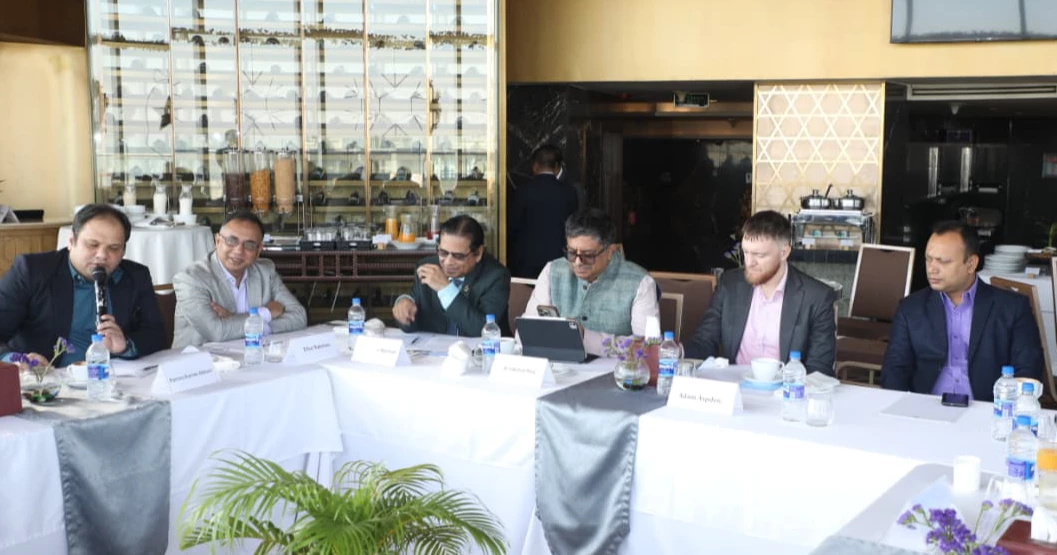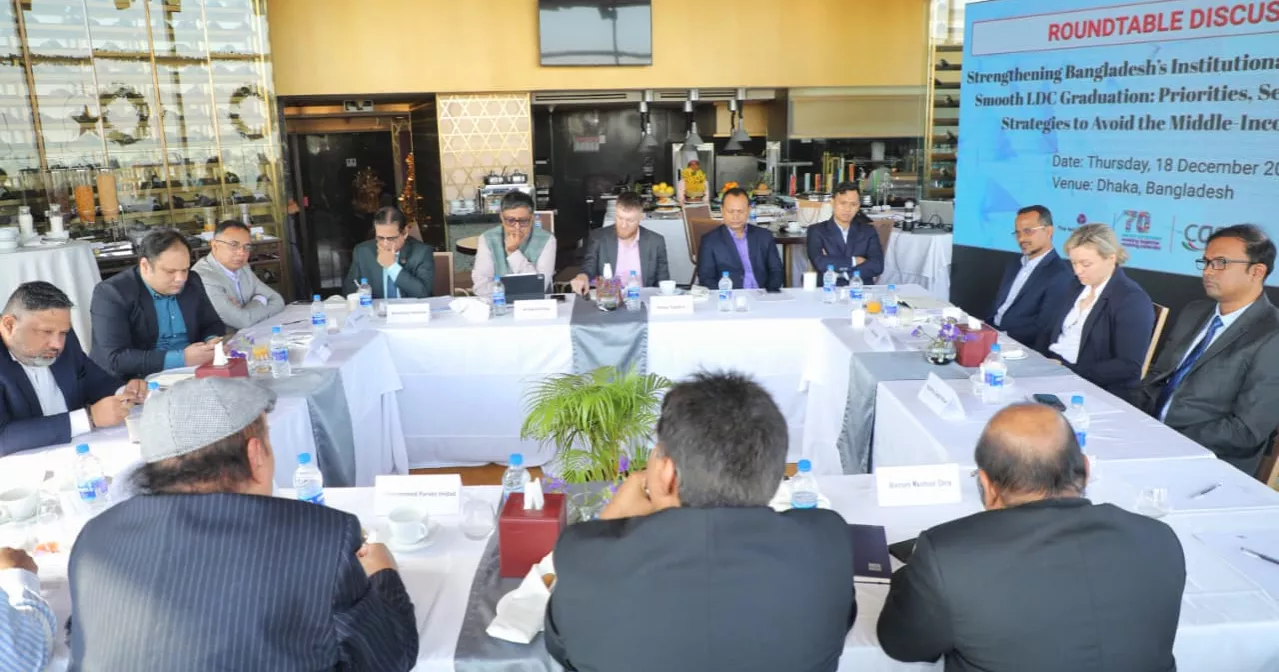
The Centre for Governance Studies (CGS) on Thursday organised a high-level roundtable titled “Strengthening Bangladesh’s Institutional Capacity for a Smooth LDC Graduation: Priorities, Sequencing, and Strategies to Avoid the Middle-Income Trap,” at a hotel in Dhaka. The discussion brought together development partners, diplomatic missions, economists, private sector representatives, and sectoral experts to identify practical and coordinated measures to safeguard competitiveness and strengthen long-term resilience.
This roundtable aims to foster a focused policy conversation on how international cooperation, particularly from foreign missions and development agencies, can support Bangladesh in addressing institutional gaps, realigning assistance frameworks, and building long-term resilience in the post-graduation landscape.
Dr. Selim Raihan, Professor, Department of Economics, University of Dhaka and Executive Director, South Asian Network on Economic Modeling (SANEM); Syed Nasim Manzur, Industrialist, Managing Director, Apex Footwear Limited; Professor Mustafizur Rahman, Distinguished Fellow, Centre for Policy Dialogue (CPD); Mohammed Parvez Imdad, Consultant & Policy Advisor; Nazmus Sadat Khan, Senior Economist, World Bank; Anowarul Haq, Assistant Resident Representative, Democratic Governance Portfolio, UNDP; Barun Kumar Dey, Senior Economic Officer, ADB; Michael Kim McQuay, Chief Strategy and Legal Advisor, The Asia Foundation; Kazi Faisal Bin Seraj, Country Representative, The Asia Foundation; Baiba Zarina, deputy head of mission, Delegation of the European Union to Bangladesh; Zillur Rahman, President, Centre for Governance Studies; and Parvez Karim Abbasi, Executive Director, Centre for Governance Studies, spoke at the event.
CGS Executive Director Parvez Karim Abbasi moderated the discussion.