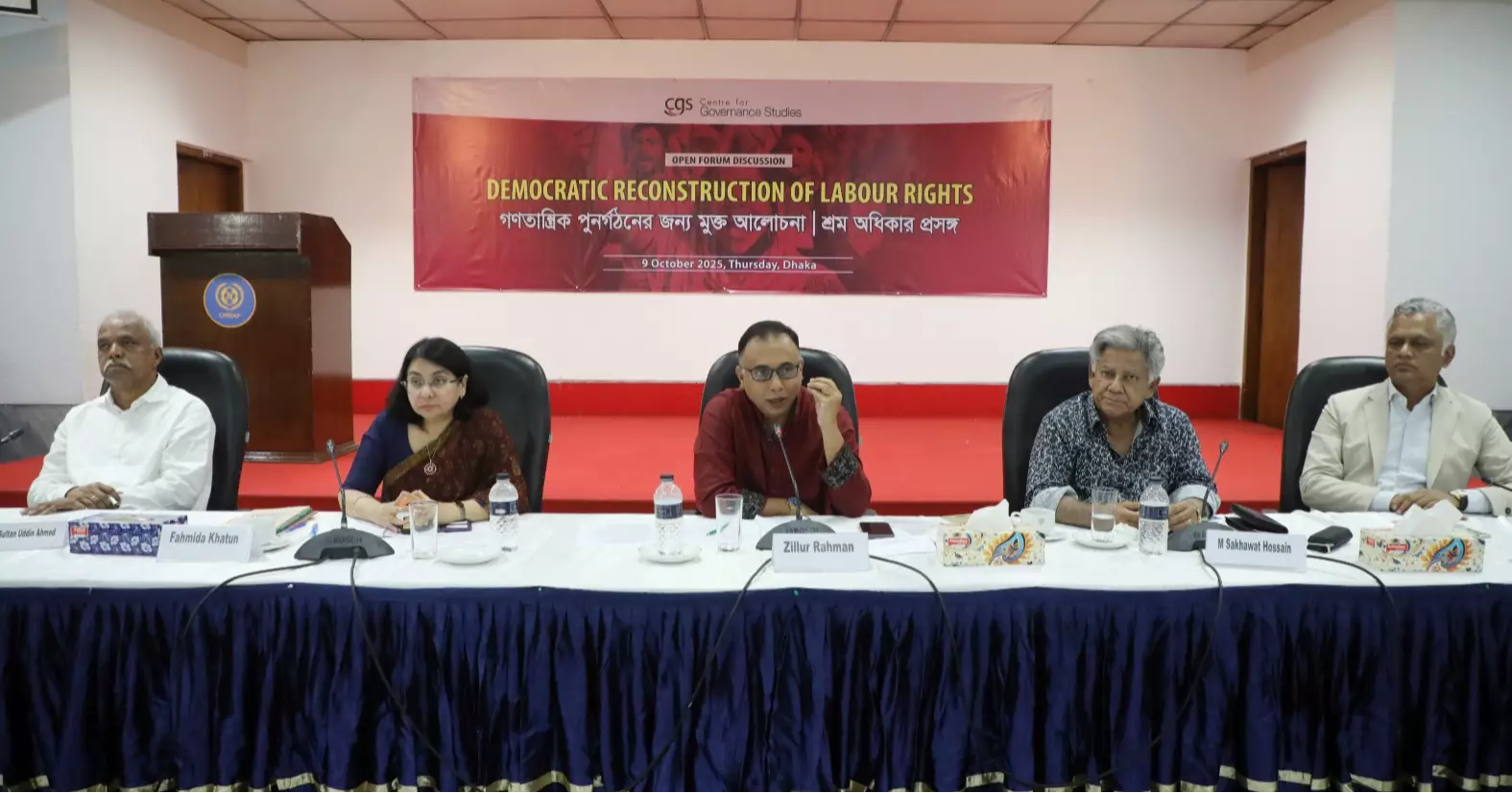
Labour and Employment Adviser Brigadier General (Retd) Dr. M Sakhawat Hossain has said that significant reforms have been made to Bangladesh’s labour laws to meet current demands and protect workers' rights more effectively.
“There were 48,000 cases against workers, which no longer exist. We made that possible — no other government could have done this,” he said.
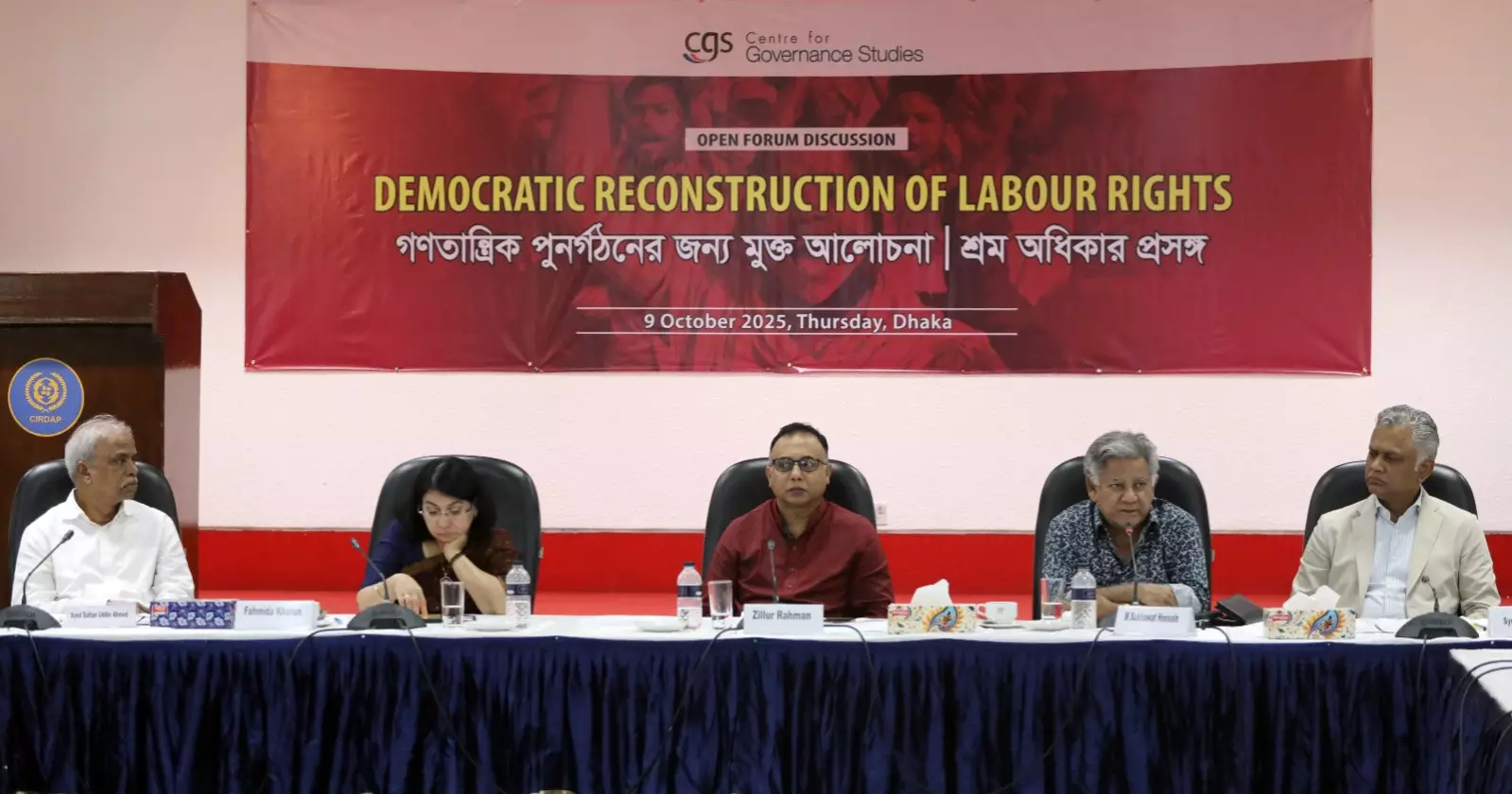
He made the remarks while speaking at a discussion titled “Democratic Reconstruction of Labour Rights”, held at the CIRDAP Auditorium on Thursday. The event was organized by the Centre for Governance Studies (CGS) and moderated by its President, Zillur Rahman.
Highlighting the progress made under his ministry, the adviser said, “We’ve come a long way. We’ve approved three major demands — ensuring workers’ health, protection from harassment, and safety.”
He also pointed out that democratic practices within trade unions are essential and emphasized the need for transparency and accountability.
“I’ve held meetings with the EU and ILO and discussed various issues. Employers can no longer blacklist workers arbitrarily — they must report to the Ministry,” he added.
Addressing the challenges in the informal sector, Sakhawat Hossain said, “Our biggest challenge is how to bring informal sector workers under policy coverage. For example, we’ve begun registering construction workers, and if major construction firms aren’t registered, we’re working to prevent them from receiving government tenders.”
He also mentioned improvements in worker benefits, such as extended maternity leave, while acknowledging the constraints of Bangladesh’s socio-economic reality. “We are trying to do as much as possible within our means. It will take time for factories and industries to meet the required standards,” he said.
The adviser added that the government has taken strict action against unscrupulous employers, including confiscating their passports and properties. “No other government could have taken such bold steps,” he claimed.
Speaking at the event, Dr. Fahmida Khatun, Executive Director of the Centre for Policy Dialogue (CPD), said, “We talk a lot, but our words rarely translate into action — even with the interim government.”