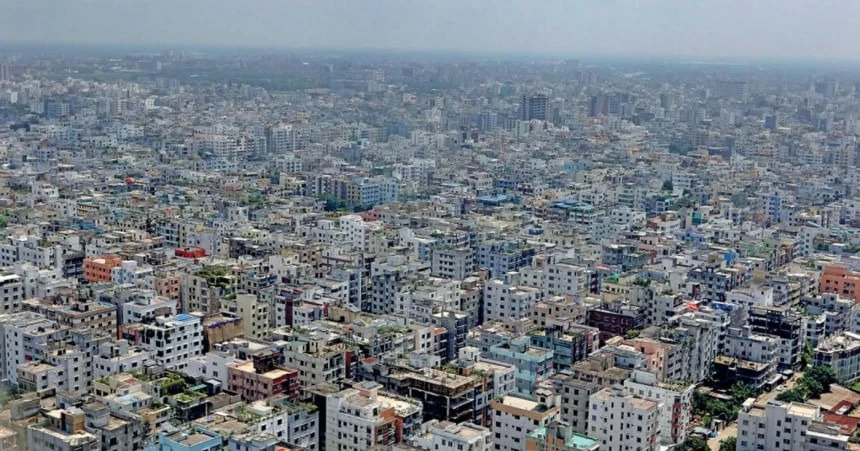
Dr. Hossain Zillur Rahman, Executive Chairman of the Power and Participation Research Centre (PPRC), on Thursday warned that cities in Bangladesh risk facing the same neglect that villages experienced in the 2000s unless urban-focused research and governance reforms are urgently prioritised.
Speaking as Chief Guest at a seminar on “Urbanisation and Bangladesh’s Development: Selected Findings from BIDS-PRI Research”, organised by the Policy Research Institute of Bangladesh (PRI), Dr. Rahman stressed three critical areas: ensuring data quality and stronger policy cycles, addressing interest group dynamics alongside meaningful decentralisation, and reviving district towns through effective management of smaller spaces.
“Managing cities requires specialised skills, which are currently missing at all levels of governance and must be urgently developed,” he added.
The seminar, held at PRI, brought together policymakers, researchers, and development practitioners to examine the role of urbanisation in Bangladesh’s growth trajectory.
PRI Executive Director Dr. Khurshid Alam said Dhaka’s expansion had been “unplanned and reactive, with policies constantly trying to catch up with realities.”
The concentration of opportunities and services in the capital, he noted, has discouraged relocation to other cities.
Delivering the keynote presentation, Dr. Ahmad Ahsan, Director of PRI, shared findings from a joint BIDS-PRI study.
He cautioned that the Dhaka-centric pattern of urbanisation was unsustainable, with excessive concentration of people and industries leading to congestion, pollution, diversion of resources, and economic losses equivalent to 6–10 percent of GDP.
Although industries and workers are beginning to shift out of Dhaka, Dr. Ahsan noted that this largely bypasses secondary cities and flows into smaller towns and rural areas, undermining long-term growth benefits.
He cited Gazipur as an example of industrial dynamism coexisting with poor urban services such as water, sanitation, health, and education.
Attributing the challenges to the absence of a National Urbanisation Policy, lack of a dedicated ministry, and fragmented governance, Dr. Ahsan called for unified, decentralised city governments equipped with authority, resources, and accountability.
He also highlighted opportunities including Chattogram’s port and the Khulna bypass corridor to restore urban dynamism.
As discussants, Dr. Imran Matin, Executive Director of the BRAC Institute of Governance and Development (BIGD), praised the use of highly disaggregated data and urged BBS to regularly produce such datasets.
He also warned against the costly “missing middle” trend, where resources bypass second-tier cities and go straight to rural areas.
Dr. Ashikur Rahman, Principal Economist of PRI, argued that city development authorities had historically weakened city corporations and centralised power.
“Urbanisation has expanded without parallel improvements in services, creating deep mismatches. Without institutional change, both planned urbanisation and decentralisation will remain orphan agendas,” he cautioned.