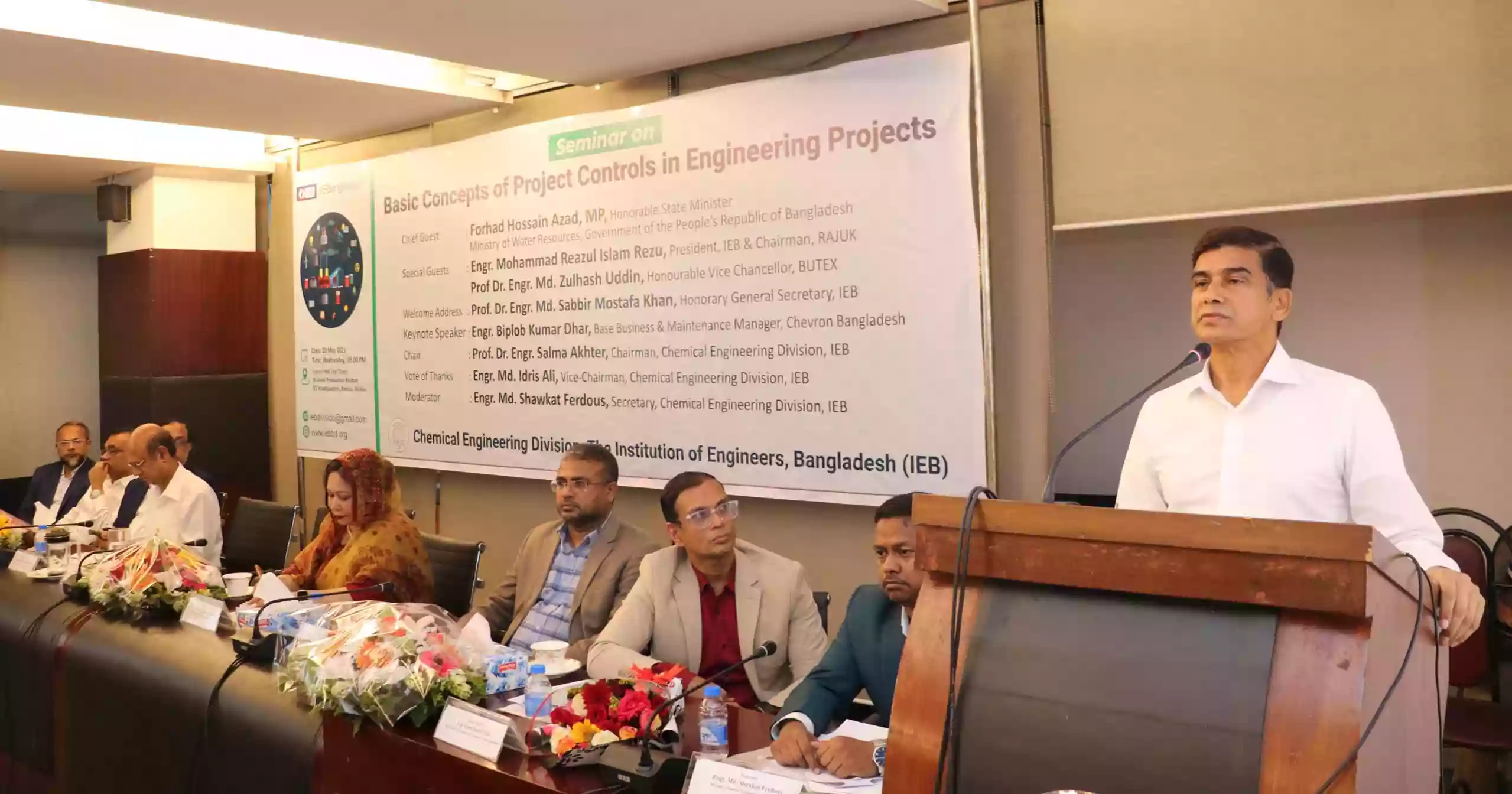
Calling for stronger project controls, better planning and wider adoption of modern technologies, State Minister for Water Resources Forhad Hossain Azad on Wednesday said excessive industrial water consumption and persistent inefficiencies in development project implementation are undermining sustainability and economic efficiency.
He was speaking as the chief guest at a seminar titled “Basic Concepts of Project Controls in Engineering Projects” organised by the Chemical Engineering Division of the Institution of Engineers, Bangladesh (IEB) at its headquarters in Ramna, Dhaka.
The State Minister said Bangladesh’s industrial sector – particularly the garment industry – consumes significantly higher volumes of water in processes such as dyeing, washing and production compared to global benchmarks.
“This excessive use of water is resulting in wastage and is also creating environmental stress,” he said, adding that industries must urgently adopt water recycling systems, low-water-consuming machinery and improved waste management practices.
Azad stressed that efficient water management is now central to sustainable industrialisation, particularly as environmental pressures and resource constraints increase.
Turning to development projects under the Water Resources Ministry, he said delays and cost escalations during implementation have become a recurring challenge, weakening the impact of public investment.
The State Minister also pointed to past incidents of alleged financial irregularities in the name of projects, describing them as “deeply concerning” and detrimental to public trust.
To address these issues, he underscored the need for robust feasibility studies, realistic planning and effective project control systems before project approval.
“Without proper governance, transparency and accountability, project outcomes cannot be ensured as intended,” Azad said, adding that disciplined implementation practices are essential to safeguard public resources and ensure timely delivery of development initiatives.