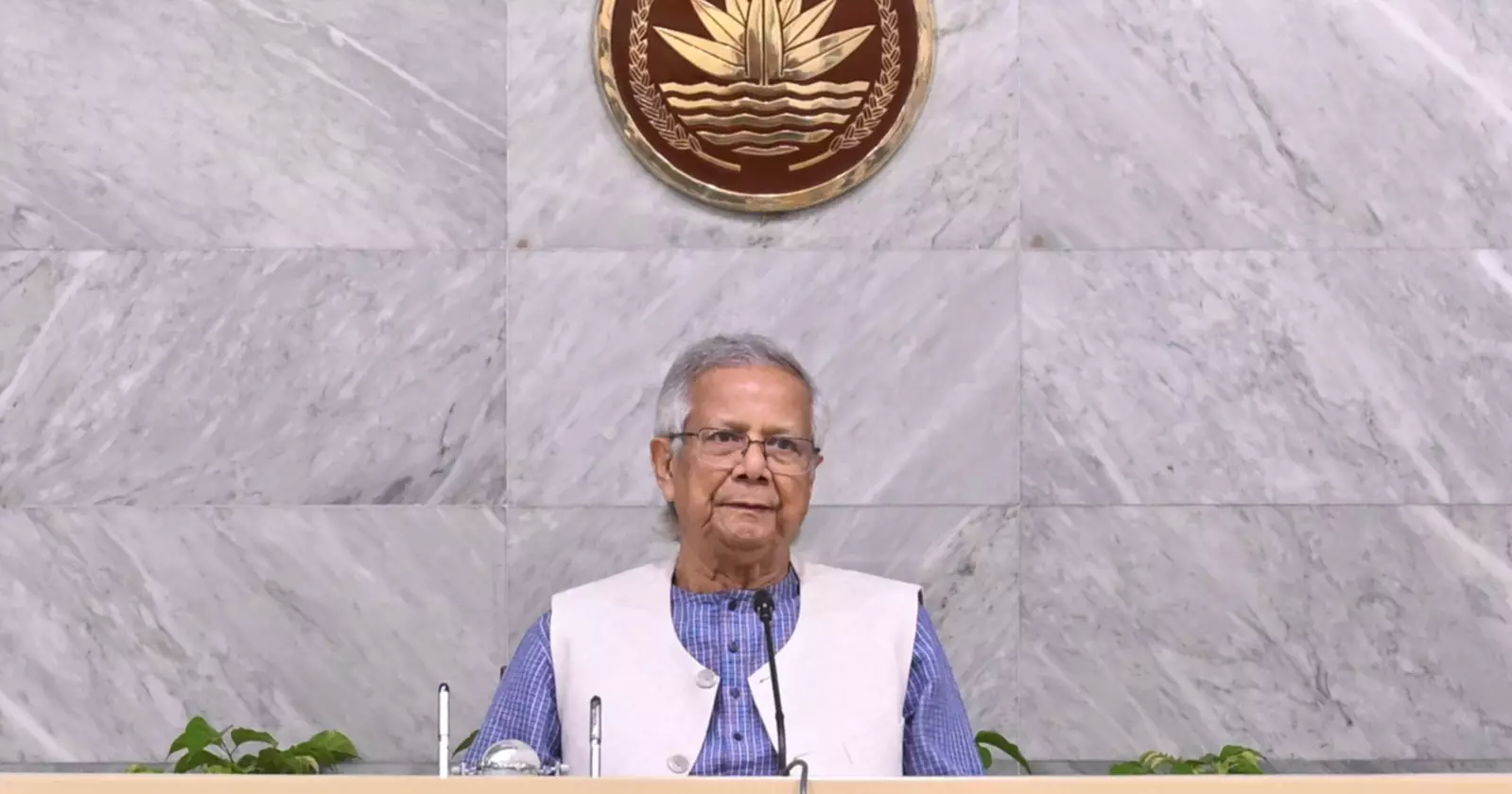
Chief Adviser Prof Muhammad Yunus on Monday held an emergency meeting on earthquake preparedness, where the country’s leading experts, researchers and university professors recommended measures for effectively handling emergencies instead of getting panicked.
They stressed that there is no reason to panic following the recent earthquakes; instead, necessary precautionary steps must be taken.
At the meeting, held in the wake of tremors felt several times last Friday and Saturday, the Chief Adviser urged experts to promptly submit written recommendations outlining what the government should do.
“We do not want to remain idle, nor do we want to take any unscientific steps. Please send us your suggestions in writing quickly; the government is ready to take all necessary measures,” he said.
Prof Yunus said work is underway to form the required expert committees and one or more task forces. “Steps will be taken as soon as we receive the experts’ advice,” he added.
The meeting decided that the government would promptly review the written recommendations and form a task force, according to the Chief Adviser’s press wing.
The task force will include government and private officials as well as subject-matter experts.
Planning Adviser Dr Wahiduddin Mahmud; Law Adviser Dr Afif Nazrul; Disaster and Relief Adviser Farooq-e-Azam; Energy Adviser Muhammad Fouzul Kabir Khan; Housing and Public Works Adviser Adilur Rahman Khan; Environment Adviser Syeda Rizwana Hasan; and Special Assistant to the Chief Adviser Prof Ali Riaz were present at the meeting.
Md Zoynul Abedin of the Military Institute of Science and Technology (MIST); Prof Dr Mehedi Ahmed Ansari and Prof Tahmeed Malik Al-Hussaini of BUET; Prof Md Zillur Rahman of the University of Dhaka; Prof Dr Jahangir Alam of the University of Chittagong; Prof Dr Humayun Akhtar of the University of Dhaka; Prof Dr Tanvir Manzoor of BUET; Bangladesh Meteorological Department Director (Current Charge) Md Mominul Islam; Meteorologist Md Rubaiyat Kabir; Geologist Dr Reshad Md Ikram Ali; Disaster Expert Dr Md Shakhawat Hossain of Dhaka University; Director of the Disaster Management and Risk Reduction Institute of Dhaka University Md Moniruzzaman Khan; and Prof Israt Islam were also present.
Describing the recent deaths and injuries due to the earthquake “a very tragic incident,” the Chief Adviser said, “We must prepare so that such a tragedy does not occur again.”
“You have written in newspapers, shared suggestions, and contributed your expertise. It is our collective responsibility to protect the public from panic. Tell the government what needs to be done in this situation - what preparations are required and what awareness must be raised. Whatever the disaster, we must be fully prepared,” he said.
Prof Yunus emphasised the need for expert guidance on what types of drills are necessary to prepare for earthquakes. “We also need to assess where we currently stand in terms of preparedness.”
He suggested enhancing coordination with Bangladeshi scientists and earthquake experts living abroad, as well as strengthening collaboration between local and international institutions working on earthquakes.
“We have developed an app called ‘Shubechcha’ for expatriate Bangladeshis. Connect with Bangladeshi scientists and experts abroad through this platform. Also advise us on what additional features should be added,” he said.
Experts at the meeting expressed concern about widespread rumors circulating on social media, including claims that a major earthquake will occur “within 48 hours,” “within 10 days,” or “within a month.”
They underscored that no one can predict the exact timing of an earthquake. While long-term risk can be estimated by studying historical seismic activity in a region, they said, it is impossible to specify the exact day, date, or time of an earthquake.