
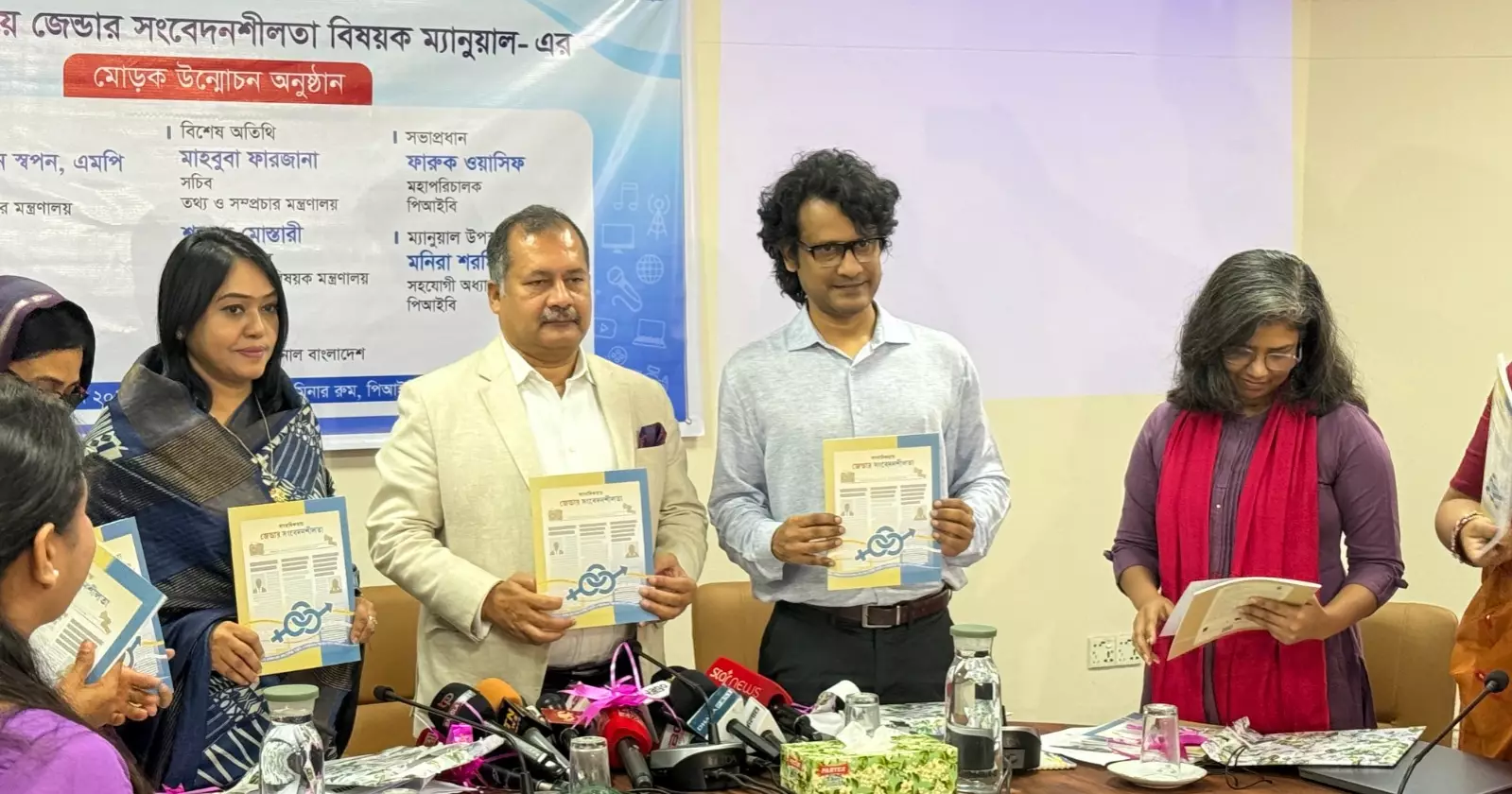
Information and Broadcasting Minister Zahir Uddin Swapan on Wednesday said they must all come to the same page and work together to build a culture of shared values in their society - across news agencies, professional journalists, and media owners.
“Accountability must be at the core of this effort. Without institutionalizing professionalism, harmful practices will persist. Strengthening accountability in both the political and media spheres is essential,” he said.
The Minister said only by fostering a culture of accountability they will ensure independent, responsible media and advance gender-sensitive journalism.
Journalist database to be prepared: Information Minister
A manual on “Gender Sensitivity in Journalism” was officially launched at the Press Institute Bangladesh (PIB), aiming to promote inclusive, ethical, and responsible media practices across Bangladesh.
The initiative has been jointly undertaken by Press Institute Bangladesh (PIB) and Plan International Bangladesh under the “Shomotay Tarunno: Youth for Equality” project, implemented in collaboration with JAAGO Foundation Trust with support from the Embassy of the Kingdom of the Netherlands.
The event brought together policymakers, media professionals, and development partners.
Mahbuba Farzana, Secretary, Ministry of Information and Broadcasting; Shabnam Mostari, Additional Secretary, Ministry of Women and Children Affairs; and Kabita Bose, Country Director, Plan International Bangladesh. The session was chaired by Faruk Wasif, Director General, Press Institute Bangladesh. The manual was presented by Monira Shormin, Associate Professor, Press Institute Bangladesh and the it was reviewed by Nishath Sultana, Director-Influencing, Campaign & Communication, Plan International Bangladesh.
Kabita Bose, Country Director, Plan International Bangladesh, said, “At a time when narratives shape realities, this manual serves as an important guide to making media more inclusive and responsible. Plan International Bangladesh has been consistently working to advance gender equality and, as part of this effort, encourages the media to adopt more sensitive and responsible practices.”
The manual has been developed through an extensive and participatory process, drawing on consultations, workshops, and need assessments conducted with nearly 200 journalists from both central and regional media outlets of the country, including 40 women journalists.
Mahbuba Farzana said this manual reflects their commitment to inclusion, and they must embrace the guidance it provides.
“Journalists need to be more conscious and responsible, as meaningful change will come through your leadership. By working together, we can bridge existing gaps and move towards building a more inclusive society. While laws are in place, true progress requires a shift in our mindset.”
Shabnam Mostari said gender equality cannot remain confined to policies alone, it must be reflected in our everyday practices, particularly in the media.
“From how news is presented, to the language we use, and whose voices we choose to amplify. Sensitivity must be ensured at every level. Only then can we move towards building a more inclusive and equitable society. The manual should include ethical interviewing guidelines, an editorial review process for news verification, and a mechanism for audience feedback.”
Faruk Wasif said, “The way women are portrayed in media needs to change. This manual provides practical guidance to help journalists adopt a more gender-sensitive approach and ensure more balanced representation.”