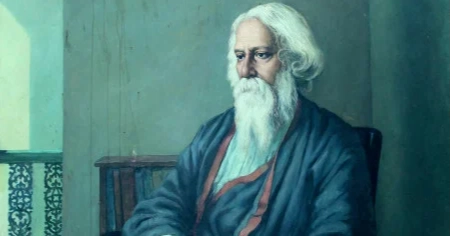
The 165th birth anniversary of Nobel laureate Rabindranath Tagore is being observed at Patisar village, where the poet once spent some of his most creative years, in Atrai upazila of Naogaon today.
BNP Secretary General and Local Government, Rural Development and Co-operatives Minister Mirza Fakhrul Islam Alamgir inaugurated the programme at the Devendra Mancha of Rabindra Kachari Bari at the village in the morning.
The district administration organised the day-long programme in collaboration with the Ministry of Cultural Affairs.
After the inauguration, a discussion titled “Rabindranath and Bangladesh” was held at the Devendra Mancha.
Prof Dr Md Harun -Or - Rashid of the Department of Islamic History and Culture at Rajshahi University was the discussant at the event with Rajshahi Divisional Commissioner Dr ANM Bazlur Rashid in the chair.
Deputy Commissioner of the district Muhammad Saiful Islam delivered the welcome speech.
Land Minister Mizanur Rahman Minu, State Minister for Cultural Affairs Ali Newaz Mahmood Khyom, Whip Advocate Ruhul Quddus Talukder Dulu, Deputy Inspector General of Police Mohammad Shahjahan, Joint Secretary of the Ministry of Cultural Affairs Mohammad Md Harun Ar Rashid, Naogaon Superintendent of Police Mohammad Tarequl Islam, and District Council Administrator Abu Bakar Siddique Nannu were also present.
Lawmakers from Naogaon, Natore, Rajshahi and Bogura, along with Rabindra researchers, poets and writers, attended the programme.
Folk artistes and local cultural researchers from different parts of the district participated in the event.
Located about 40 kilometres from Naogaon town, the quiet village of Patisar became closely associated with Tagore after he first visited the area in 1891 following his inheritance of the Kaligram estate.
The poet continued visiting the Kachari Bari regularly until 1937 and composed numerous poems, stories and essays there.
Although the official programme is being held for one day, the celebrations will continue locally for several days. The Patisar Kachari Bari turned into a gathering place for Tagore’s admirers, while a rural fair was also organised on the occasion, spreading a festive atmosphere across the area.