
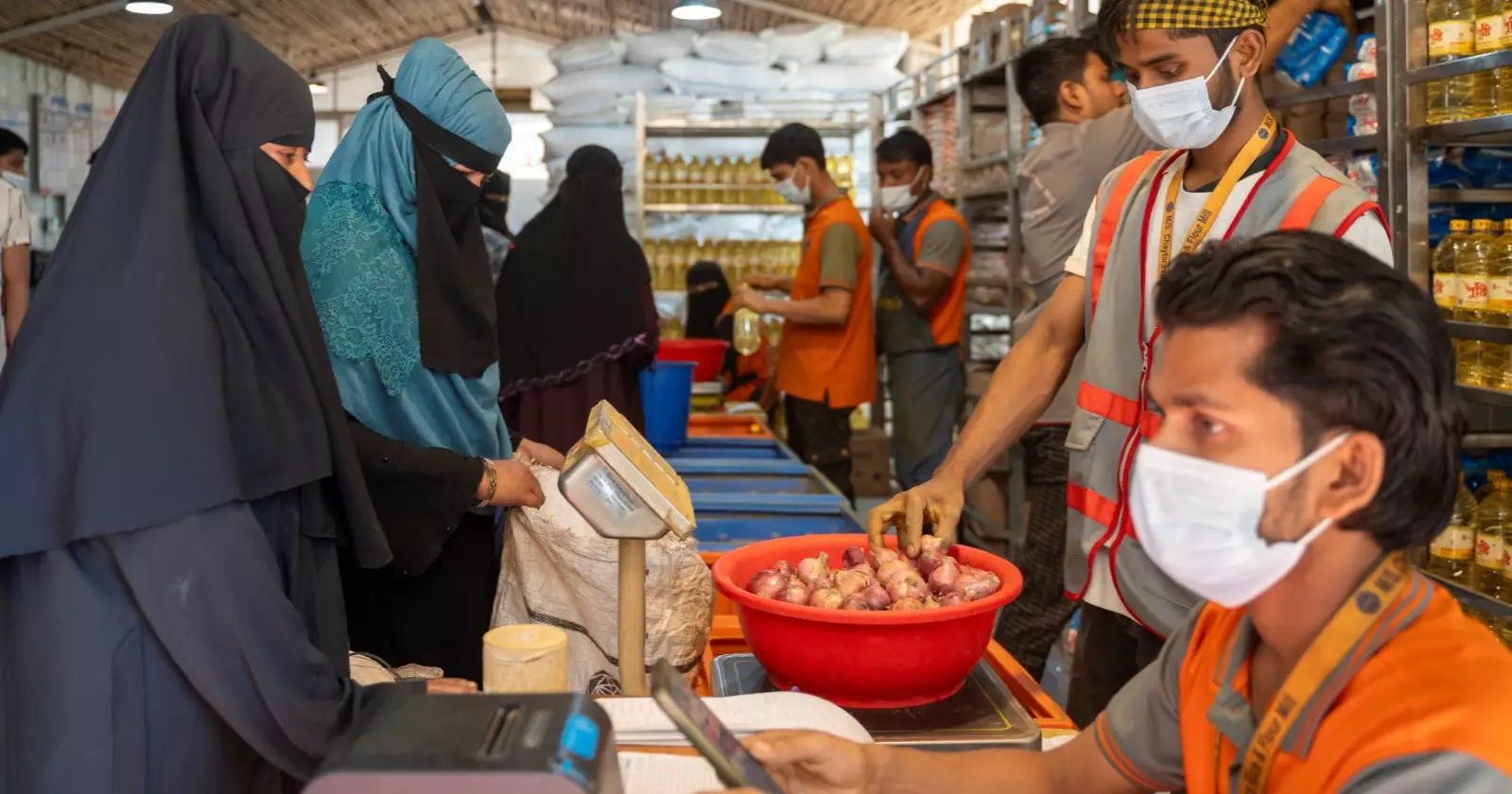
The United Nations World Food Programme (WFP) has begun implementing its Targeting and Prioritization Exercise (TPE) for monthly food assistance across the Rohingya camps, marking an important transition toward needs-based support for over 1.3 million Rohingya people living in Cox’s Bazar and Bhasan Char.
The TPE analysis found that while all Rohingyas are food insecure, levels of food insecurity vary across households.
Under the new approach, food assistance is aligned with household level food security needs, said the WFP.
Extremely food insecure households will continue to receive USD 12 per person per month in Cox’s Bazar (USD 13 in Bhasan Char, reflecting higher market costs).
Highly food insecure households will receive USD 10 (USD 11 in Bhasan Char), and food insecure households will receive USD 7 (USD 8 in Bhasan Char).
Even at the lowest transfer value, assistance remains sufficient to meet minimum food needs, based on the food gap analysis.
This approach reflects global best practice for protracted humanitarian crises. Families facing the greatest barriers to meeting basic food needs, including child headed households, women- and elderly headed households without an able bodied adult, and households with persons with disabilities, continue to receive the highest level of support.
“This alignment reflects our continued commitment to the entire Rohingya community. We will still provide food assistance to everyone in the camps, but will target the highest levels of support to those who need it most. WFP’s food gap analysis shows us that everyone will still be able to meet their minimum food needs,” said Simone Parchment, WFP Country Director a.i.
While not driven by funding considerations, the TPE supports a more effective, equitable, and proportionate allocation of food assistance, aligned with humanitarian food requirements.
This approach contributes to the overall effectiveness of the Joint Response Plan (JRP) for the Rohingya Refugee Crisis, particularly in a context of global funding constraints that require careful prioritization of lifesaving assistance.
During the TPE, WFP consulted Rohingya communities to understand their perspectives on food security needs, which were then incorporated in the analysis.
Community-level sensitizations have been ongoing since 1 March to facilitate understanding and acceptance.
With the TPE, and thanks to recent United States contributions through the OCHA managed Bangladesh Humanitarian Fund (BHF), as well as continued support from the European Union, Australia, and other generous donors, WFP will be able to sustain uninterrupted food assistance for the Rohingya population through November 2026.
In addition to providing monthly food assistance to the entire Rohingya population, including close to 150,000 new arrivals since 2024 fleeing intensified conflict in Myanmar’s Rakhine State - WFP delivers essential nutrition support for children under five and pregnant and breastfeeding women, school feeding programmes, and resilience and disaster preparedness activities to help families meet essential needs while strengthening community capacity.
Host community smallholder farmers also receive resilience support, gaining stronger linkages with local markets as well as with WFP’s food assistance supply chains for the Rohingya response.
“WFP is deeply grateful for the steadfast support of all our partners. It is because of their solidarity and generosity that our lifesaving assistance will have no interruptions in the coming months. However, sustained support remains essential,” added Parchment. “Until a lasting solution can be found, the Rohingya need our continued support to save lives and safeguard dignity and stability.”