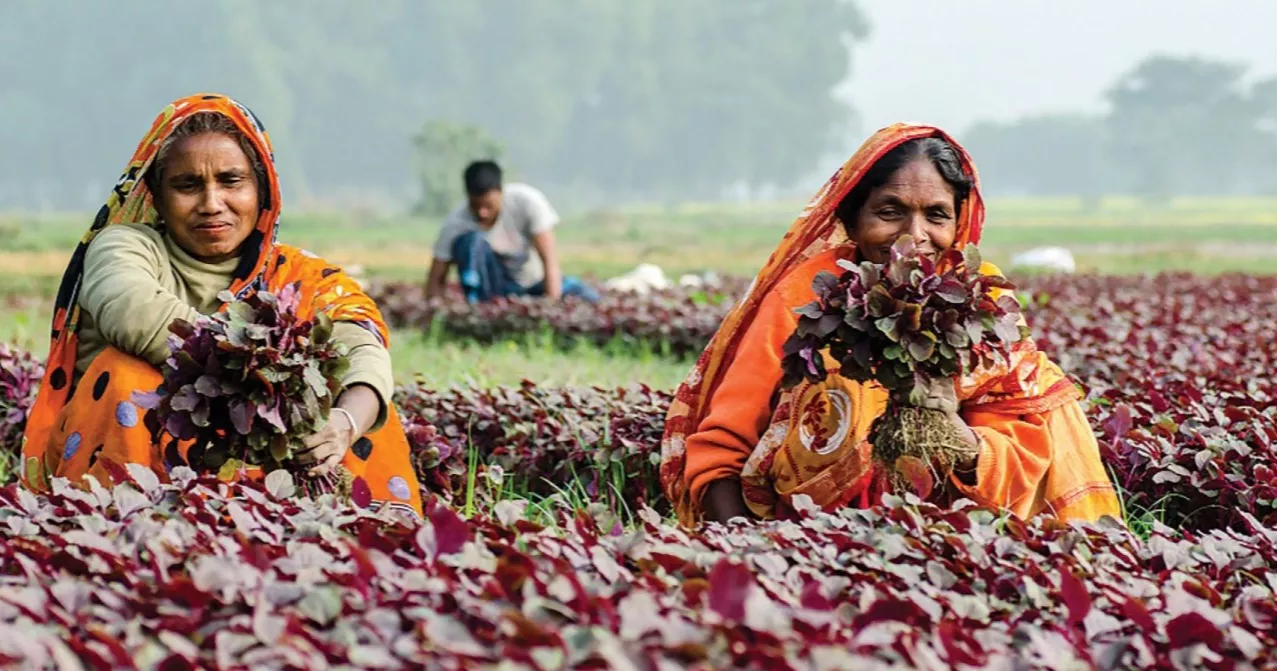
Speakers at a national seminar in the capital on Wednesday urged the government to formally recognise women farmers and ensure their equal access to agricultural services, saying they play the biggest role in the country’s food production but remain the most deprived.
The seminar, titled “Inclusion of Women Farmers in Climate-Resilient Crop Production and the Role of Policymakers,” was organised by AVAS, BINDU, COAST Foundation and Street Child UK with support from the Gates Foundation. It was moderated by COAST Foundation Executive Director Rezaul Karim Chowdhury, while Md. Iqbal Uddin presented the keynote.
Speakers noted that women constitute 58 percent of Bangladesh’s agricultural workforce, yet only 19 percent have land ownership—and just 4–5 percent can actually exercise those rights. As a result, they remain largely excluded from government facilities, agricultural loans and mechanisation support.
In his presentation, Iqbal Uddin said nearly one-third of Bangladesh’s population lives in climate-vulnerable coastal regions, where women continue producing climate-resilient crops despite facing severe challenges. He stressed that recognising coastal women farmers is vital to protecting national food security.
DAE officials Dr. Md. Hazrat Ali and Dr. Md. Jamal Uddin said coastal women farmers are underpaid, lack access to credit due to not owning land, and need to be organised in groups to collectively claim their rights. Former DAE deputy director Dr. Radheshyam Sarkar called for eliminating gender discrimination across the sector.
Professor Mir Mohammad Ali highlighted the need for easy bank loans, low-interest financing and timely weather forecasts for women farmers.
Coastal farmers Mst. Rina Begum, Mst. Asma Begum, Kalpana Rani and Nazma Begum demanded official recognition, Agricultural Cards, women-friendly machinery, interest-free or low-interest loans and saline-water treatment facilities.
Speakers from civil society and journalist forums, including AKM Jasim Uddin, Rahima Sultana Kajol, Jannatul Mouwa, Imtiaz Ridoy and others, urged gender-responsive agricultural extension services and warned of rising salinity that threatens coastal livelihoods. They called for stronger subsidies and urgent mitigation measures to support women farmers’ climate adaptation efforts.