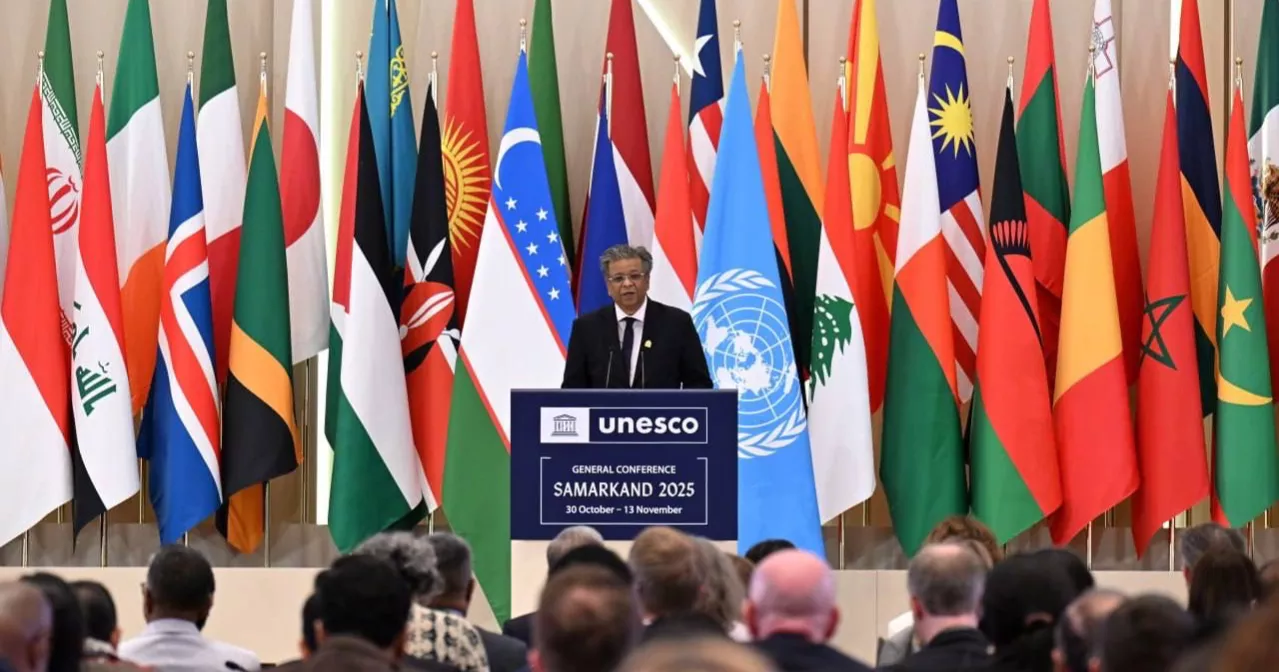
We have become indifferent to human sufferings- conflicts, starvation, wars, genocides”, Khondker Mohammad Talha said at his maiden speech as the President of UNESCO General Conference on Thursday.
While reflecting on the current tumultuous geopolitical discourse he further underlined - ‘cultural diversity is used to further fragment societies and scientific progress is posing even risk of obliterating the entire human race’.
He painted this picture of the state of affairs and called for responsible actions of the global community upholding the values of human dignity and morality.
Ambassador Talha further warned the global community of the uncontrolled use of artificial intelligence, nanotechnology and neuroscience. He noted that after 80 years, the fundamental vision of UNESCO remains relevant, but the world of 2025 is facing new and complex challenges. He finds UNESCO to be a changemaker by promoting culture of peace.
The General Conference of UNESCO elected Ambassador Talha the President following his victory over Japan at an election held earlier in October. He is the first Bangladeshi President in the history of country’s membership to the multilateral organisation that champions education, culture and science.
Audrey Azoulay, the Director General of UNESCO congratulated him for the election and marked this moment historic for Bangladesh. The Director General further recalled Bangladesh’s leadership in promoting and preserving mother language.
The former President of General Conference Ambassador Simona also congratulated Bangladesh at her speech. She marked this a renewed opportunity for UNESCO and the global community to benefit from Ambassador Talha’s vast professional experience.
Bangladesh greeted on election as president of UNESCO’s General Conference
Later in the evening, he presided over the official opening ceremony where Shavkat Mirziyoyev, President of Uzbekistan; Aleksandar Vučić, President of Serbia; and Peter Pellegrini, President of Slovakia attended.
General Conference has further geopolitical and regional significance as the Conference is being hosted outside of UNESCO Secretariat after 40 years.